

GIVE THE PERFECT GIFT
Erin Mills Town Centre Gift Cards are the perfect choice for your gift giving needs.Purchase gift cards at kiosks near the food court or centre court, at Guest Services, or click below to purchase online.PURCHASE HEREHome
Apples to Apples: A Taxonomy of Networks in Public Management and Policy
Indigo
Loading Inventory...
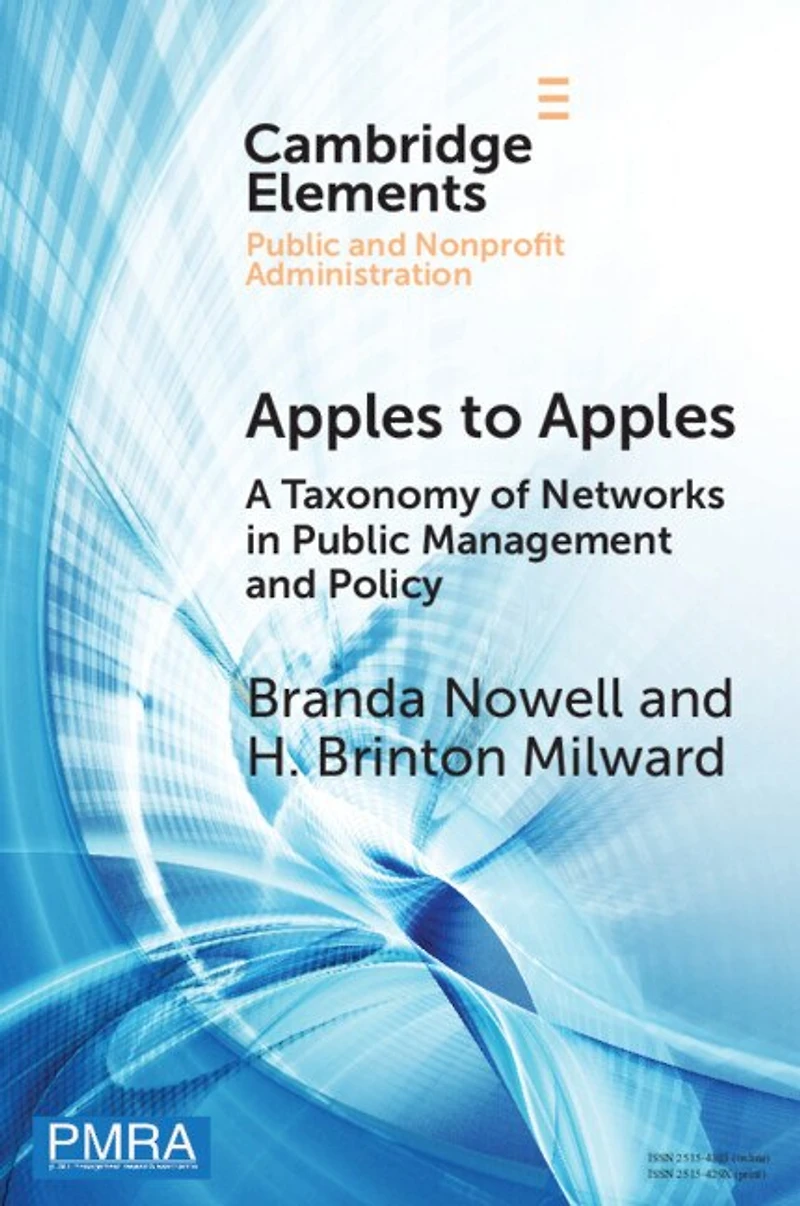
Apples to Apples: A Taxonomy of Networks in Public Management and Policy
Current price: $29.54

Apples to Apples: A Taxonomy of Networks in Public Management and Policy
Current price: $29.54
Loading Inventory...
Size: Paperback
*Product information may vary - to confirm product availability, pricing, shipping and return information please contact Indigo
Interest in networks in the fields of public management and policy has grown to encompass a wide array of phenomena. However, we lack a stable and empirically verifiable taxonomy for delineating one network class from another. The authors propose all networks and multi-organizational collaborative entities can be sorted into three taxonomic classes: structural-oriented, system-oriented, and purpose-oriented. This Element reviews the intellectual disciplinary histories that have informed our understanding of each of the three classes of networks. It then offers a taxonomic description of each of the three classes of networks. Finally, it provides a field guide for empirically classifying networks. The authors hope is the taxonomy presented will serve as a tool to allow the field to quicken the pace of learning both within and across classes. When we are able to compare apples to apples and avoid inadvertent comparison of apples and oranges, we all get smarter faster.
Interest in networks in the fields of public management and policy has grown to encompass a wide array of phenomena. However, we lack a stable and empirically verifiable taxonomy for delineating one network class from another. The authors propose all networks and multi-organizational collaborative entities can be sorted into three taxonomic classes: structural-oriented, system-oriented, and purpose-oriented. This Element reviews the intellectual disciplinary histories that have informed our understanding of each of the three classes of networks. It then offers a taxonomic description of each of the three classes of networks. Finally, it provides a field guide for empirically classifying networks. The authors hope is the taxonomy presented will serve as a tool to allow the field to quicken the pace of learning both within and across classes. When we are able to compare apples to apples and avoid inadvertent comparison of apples and oranges, we all get smarter faster.
You May Also Like













More About Indigo at Erin Mills Town Centre
The largest book retailer in Canada also offers toys, music, home décor, gifts and lifestyle products. What's Inside...Books, Magazines, CD’s and DVD’s, Toys and Gifts, Home Accents, Electronics, Baby’s and Children’s Section, Bath and Body, Kitchen and Bedroom, Stationary Located outside in the exterior plaza.
5015 Glen Erin Dr, Mississauga, ON L5M 0R7, Canada
Find Indigo at Erin Mills Town Centre in Mississauga ON
Visit Indigo at Erin Mills Town Centre in Mississauga ON