

GIVE THE PERFECT GIFT
Erin Mills Town Centre Gift Cards are the perfect choice for your gift giving needs.Purchase gift cards at kiosks near the food court or centre court, at Guest Services, or click below to purchase online.PURCHASE HEREHome
Applications of Learning Classifier Systems
Indigo
Loading Inventory...
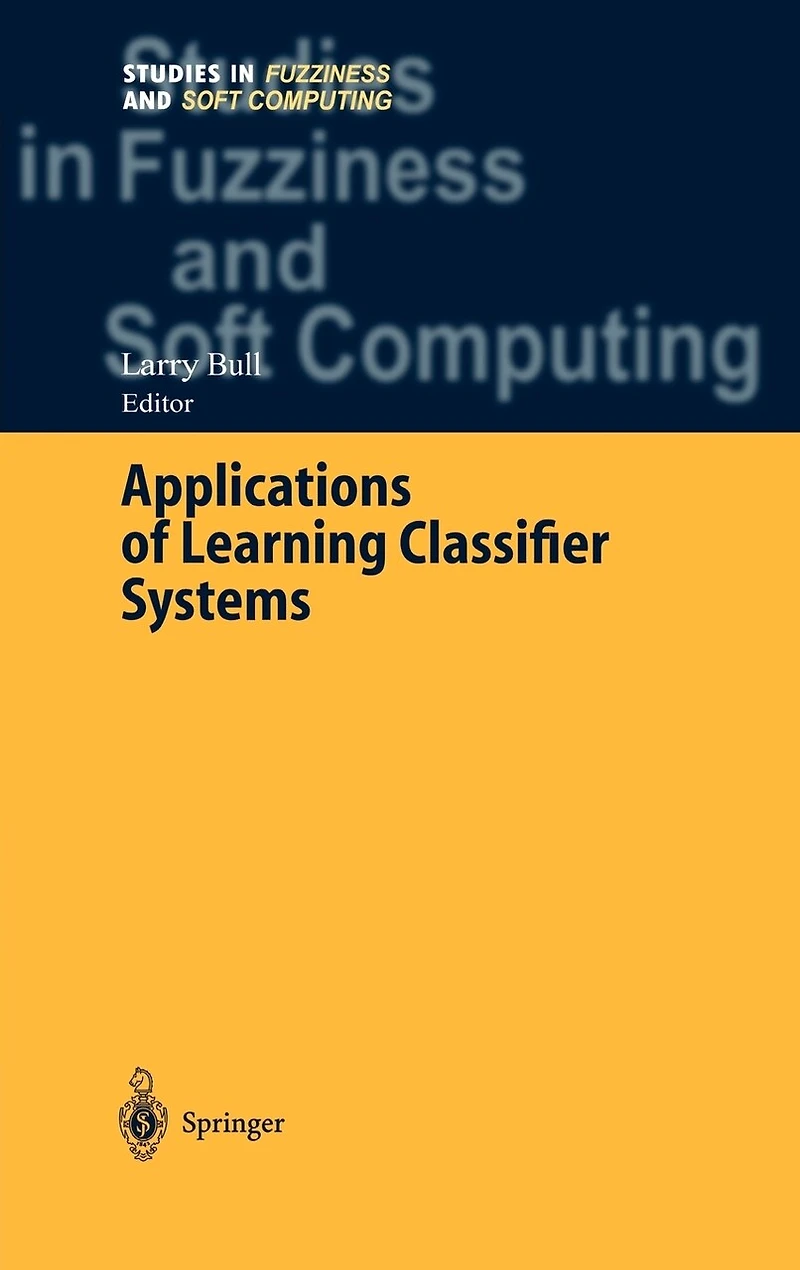
Applications of Learning Classifier Systems
Current price: $248.50

Applications of Learning Classifier Systems
Current price: $248.50
Loading Inventory...
Size: Hardcover
*Product information may vary - to confirm product availability, pricing, shipping and return information please contact Indigo
The field called Learning Classifier Systems is populated with romantics. Why shouldn't it be possible for computer programs to adapt, learn, and develop while interacting with their environments? In particular, why not systems that, like organic populations, contain competing, perhaps cooperating, entities evolving together? John Holland was one of the earliest scientists with this vision, at a time when so-called artificial intelligence was in its infancy and mainly concerned with preprogrammed systems that didn't learn. that, like organisms, had sensors, took Instead, Holland envisaged systems actions, and had rich self-generated internal structure and processing. In so doing he foresaw and his work prefigured such present day domains as reinforcement learning and embedded agents that are now displacing the older "standard Af' . One focus was what Holland called "classifier systems": sets of competing rule like "classifiers", each a hypothesis as to how best to react to some aspect of the environment--or to another rule. The system embracing such a rule "popu lation" would explore its available actions and responses, rewarding and rating the active rules accordingly. Then "good" classifiers would be selected and re produced, mutated and even crossed, a la Darwin and genetics, steadily and reliably increasing the system's ability to cope.
The field called Learning Classifier Systems is populated with romantics. Why shouldn't it be possible for computer programs to adapt, learn, and develop while interacting with their environments? In particular, why not systems that, like organic populations, contain competing, perhaps cooperating, entities evolving together? John Holland was one of the earliest scientists with this vision, at a time when so-called artificial intelligence was in its infancy and mainly concerned with preprogrammed systems that didn't learn. that, like organisms, had sensors, took Instead, Holland envisaged systems actions, and had rich self-generated internal structure and processing. In so doing he foresaw and his work prefigured such present day domains as reinforcement learning and embedded agents that are now displacing the older "standard Af' . One focus was what Holland called "classifier systems": sets of competing rule like "classifiers", each a hypothesis as to how best to react to some aspect of the environment--or to another rule. The system embracing such a rule "popu lation" would explore its available actions and responses, rewarding and rating the active rules accordingly. Then "good" classifiers would be selected and re produced, mutated and even crossed, a la Darwin and genetics, steadily and reliably increasing the system's ability to cope.
You May Also Like









More About Indigo at Erin Mills Town Centre
The largest book retailer in Canada also offers toys, music, home décor, gifts and lifestyle products. What's Inside...Books, Magazines, CD’s and DVD’s, Toys and Gifts, Home Accents, Electronics, Baby’s and Children’s Section, Bath and Body, Kitchen and Bedroom, Stationary Located outside in the exterior plaza.
5015 Glen Erin Dr, Mississauga, ON L5M 0R7, Canada
Find Indigo at Erin Mills Town Centre in Mississauga ON
Visit Indigo at Erin Mills Town Centre in Mississauga ON