

GIVE THE PERFECT GIFT
Erin Mills Town Centre Gift Cards are the perfect choice for your gift giving needs.Purchase gift cards at kiosks near the food court or centre court, at Guest Services, or click below to purchase online.PURCHASE HEREHome
Applying Frequency-Domain Equalization to Code-Division Multiple Access and Transform-Domain Communications Systems
Indigo
Loading Inventory...
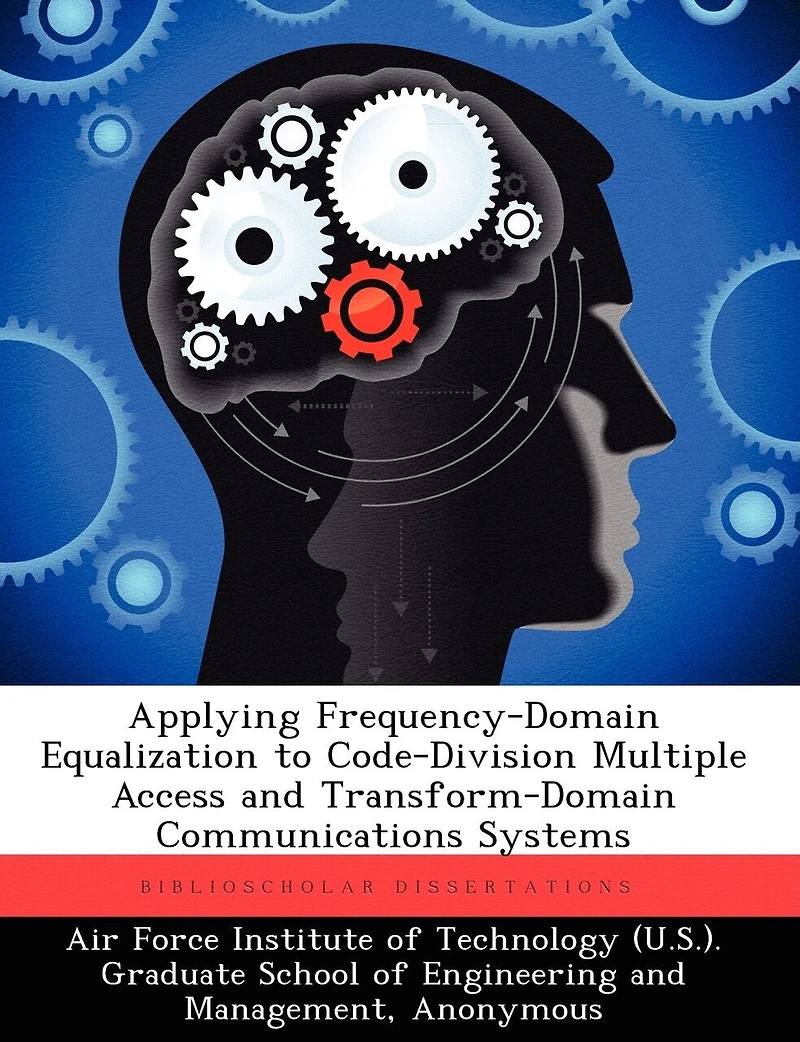
Applying Frequency-Domain Equalization to Code-Division Multiple Access and Transform-Domain Communications Systems
Current price: $59.00

Applying Frequency-Domain Equalization to Code-Division Multiple Access and Transform-Domain Communications Systems
Current price: $59.00
Loading Inventory...
Size: Paperback
*Product information may vary - to confirm product availability, pricing, shipping and return information please contact Indigo
This research examined the theory and application of using discrete multi-tone (DMT) frequency-domain equalization (FEQ) with communications systems that inherently posses null-tones in their respective transmission frequencies. DMT-FEQ relies on null-tones to equalize a non-ideal channel. A Hadamard encoded code division multiple access (CDMA) communications system with up to 32 synchronous users nd a transform domain communications system TDCS) with one user were investigated. Both communications systems were stimulated while operating with real channel data corrupted by noise. Simulation results showed that the Hadamard encoded CDMA system worked well with DMT-FEQ only when the transmission signal obeyed DMT-FEQ null-tone conditions in conjuction with a vector estimation method. Simulation results also showed that modifications to TDCS with a conjugate-symmetric phase component in conjunction with a modified spectral mask with consecutive null-tones and forced null-tones provided acceptable results when equalizing with DMT-FEQ.
This research examined the theory and application of using discrete multi-tone (DMT) frequency-domain equalization (FEQ) with communications systems that inherently posses null-tones in their respective transmission frequencies. DMT-FEQ relies on null-tones to equalize a non-ideal channel. A Hadamard encoded code division multiple access (CDMA) communications system with up to 32 synchronous users nd a transform domain communications system TDCS) with one user were investigated. Both communications systems were stimulated while operating with real channel data corrupted by noise. Simulation results showed that the Hadamard encoded CDMA system worked well with DMT-FEQ only when the transmission signal obeyed DMT-FEQ null-tone conditions in conjuction with a vector estimation method. Simulation results also showed that modifications to TDCS with a conjugate-symmetric phase component in conjunction with a modified spectral mask with consecutive null-tones and forced null-tones provided acceptable results when equalizing with DMT-FEQ.
You May Also Like











More About Indigo at Erin Mills Town Centre
The largest book retailer in Canada also offers toys, music, home décor, gifts and lifestyle products. What's Inside...Books, Magazines, CD’s and DVD’s, Toys and Gifts, Home Accents, Electronics, Baby’s and Children’s Section, Bath and Body, Kitchen and Bedroom, Stationary Located outside in the exterior plaza.
5015 Glen Erin Dr, Mississauga, ON L5M 0R7, Canada
Find Indigo at Erin Mills Town Centre in Mississauga ON
Visit Indigo at Erin Mills Town Centre in Mississauga ON