

GIVE THE PERFECT GIFT
Erin Mills Town Centre Gift Cards are the perfect choice for your gift giving needs.Purchase gift cards at kiosks near the food court or centre court, at Guest Services, or click below to purchase online.PURCHASE HEREHome
Applying the Capital Jury Project Finding to Court-Martial Practice
Indigo
Loading Inventory...
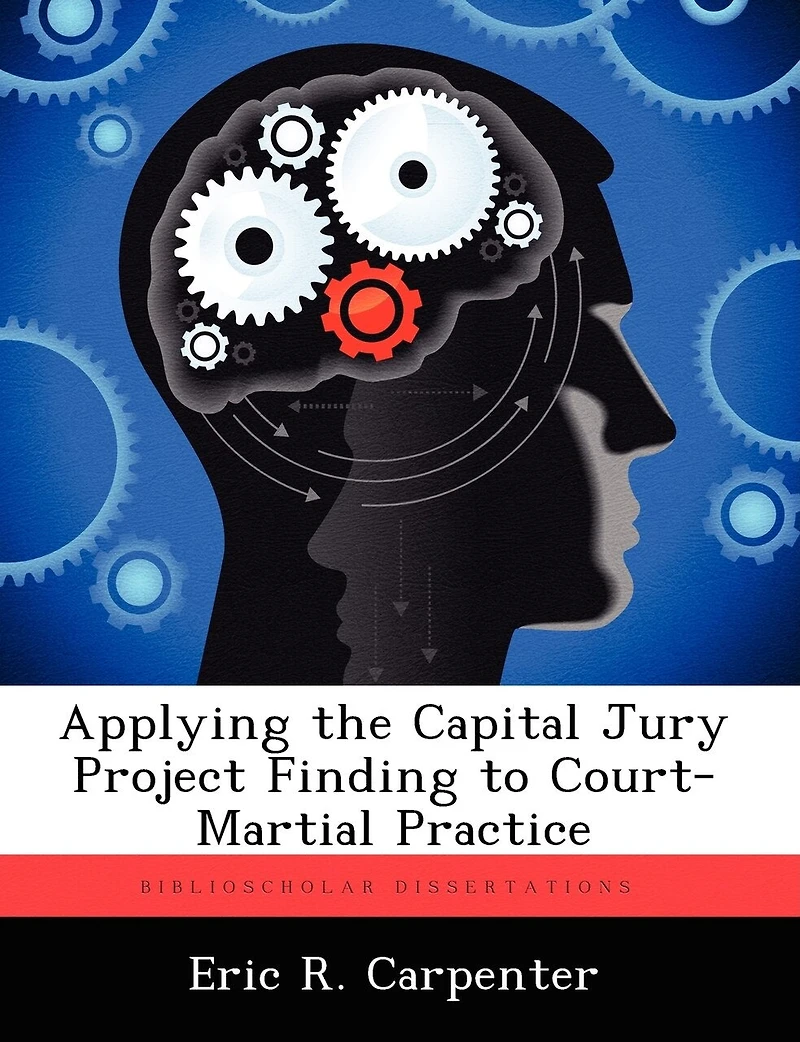
Applying the Capital Jury Project Finding to Court-Martial Practice
Current price: $59.00

Applying the Capital Jury Project Finding to Court-Martial Practice
Current price: $59.00
Loading Inventory...
Size: Paperback
*Product information may vary - to confirm product availability, pricing, shipping and return information please contact Indigo
Starting in 1991, a consortium of criminologists, social psychologists, and law school professors began researching how jurors in capital cases come to their decisions. This body of work, called the Capital Jury Project (CJP), found several trends related to what motivates jurors to either vote for life or death; how jurors interact with one another and what dynamics influence their social relationships; whether jurors understand the law; and whether jurors accept responsibility for their decisions. No such research has been conducted on military panel members. Can military justice practitioners look to the CJP to guide them in framing issues for the panel members? Is there any historical evidence that panel members in capital cases follow the same trends identified by the CJP? How should military practitioners interpret and apply the military-specific procedural rules in light of the CJP findings? This thesis surveys the CJP findings, indentifies examples of the CJP findings in military cases, and then argues that military justice practioners should modify their practice to reflect what the Capital Jury Project has revealed about juror beliefs about aggravation and mitigation; jury dynamics; juror confusion; jury decision making; and juror responsibility.
Starting in 1991, a consortium of criminologists, social psychologists, and law school professors began researching how jurors in capital cases come to their decisions. This body of work, called the Capital Jury Project (CJP), found several trends related to what motivates jurors to either vote for life or death; how jurors interact with one another and what dynamics influence their social relationships; whether jurors understand the law; and whether jurors accept responsibility for their decisions. No such research has been conducted on military panel members. Can military justice practitioners look to the CJP to guide them in framing issues for the panel members? Is there any historical evidence that panel members in capital cases follow the same trends identified by the CJP? How should military practitioners interpret and apply the military-specific procedural rules in light of the CJP findings? This thesis surveys the CJP findings, indentifies examples of the CJP findings in military cases, and then argues that military justice practioners should modify their practice to reflect what the Capital Jury Project has revealed about juror beliefs about aggravation and mitigation; jury dynamics; juror confusion; jury decision making; and juror responsibility.
You May Also Like

















More About Indigo at Erin Mills Town Centre
The largest book retailer in Canada also offers toys, music, home décor, gifts and lifestyle products. What's Inside...Books, Magazines, CD’s and DVD’s, Toys and Gifts, Home Accents, Electronics, Baby’s and Children’s Section, Bath and Body, Kitchen and Bedroom, Stationary Located outside in the exterior plaza.
5015 Glen Erin Dr, Mississauga, ON L5M 0R7, Canada
Find Indigo at Erin Mills Town Centre in Mississauga ON
Visit Indigo at Erin Mills Town Centre in Mississauga ON