

GIVE THE PERFECT GIFT
Erin Mills Town Centre Gift Cards are the perfect choice for your gift giving needs.Purchase gift cards at kiosks near the food court or centre court, at Guest Services, or click below to purchase online.PURCHASE HEREHome
Artificial Intelligence for Scientific Discoveries: Extracting Physical Concepts from Experimental Data Using Deep Learning
Indigo
Loading Inventory...
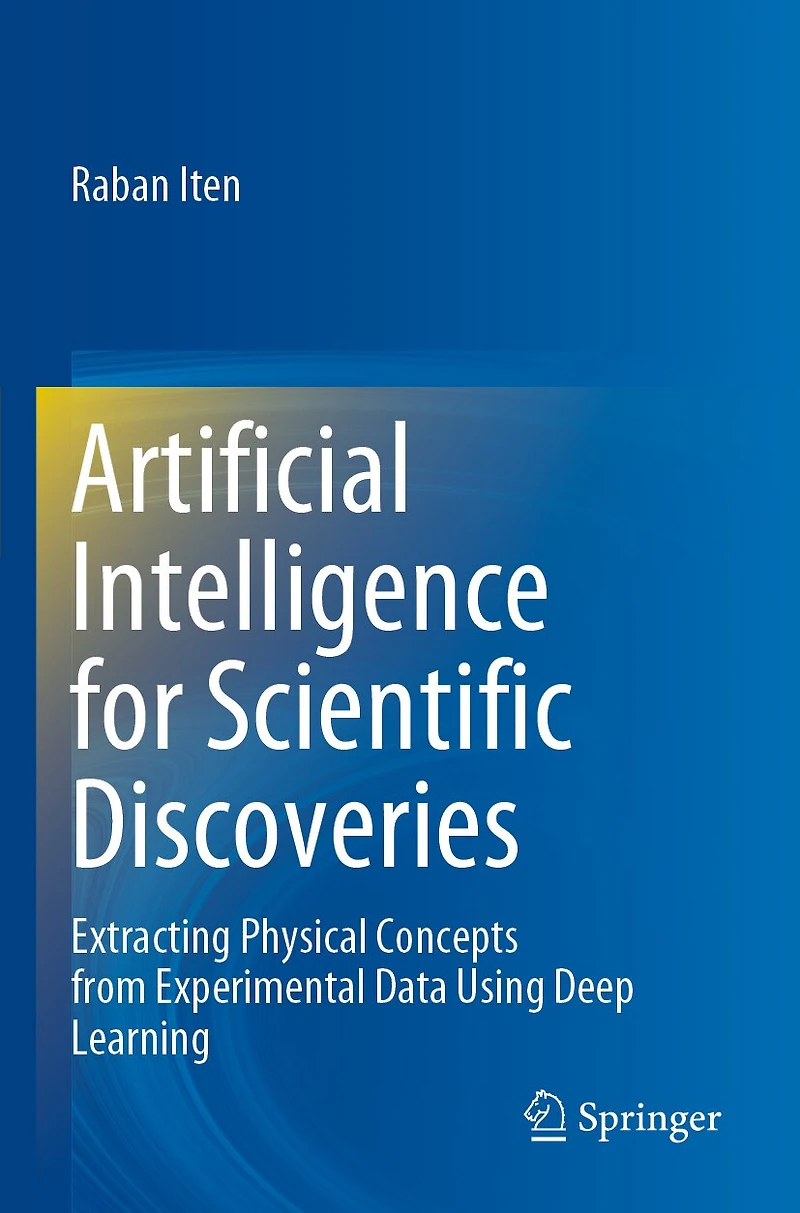
Artificial Intelligence for Scientific Discoveries: Extracting Physical Concepts from Experimental Data Using Deep Learning
Current price: $204.50

Artificial Intelligence for Scientific Discoveries: Extracting Physical Concepts from Experimental Data Using Deep Learning
Current price: $204.50
Loading Inventory...
Size: Paperback
*Product information may vary - to confirm product availability, pricing, shipping and return information please contact Indigo
Will research soon be done by artificial intelligence, thereby making human researchers superfluous? This book explains modern approaches to discovering physical concepts with machine learning and elucidates their strengths and limitations. The automation of the creation of experimental setups and physical models, as well as model testing are discussed. The focus of the book is the automation of an important step of the model creation, namely finding a minimal number of natural parameters that contain sufficient information to make predictions about the considered system. The basic idea of this approach is to employ a deep learning architecture, SciNet, to model a simplified version of a physicist's reasoning process. SciNet finds the relevant physical parameters, like the mass of a particle, from experimental data and makes predictions based on the parameters found. The author demonstrates how to extract conceptual information from such parameters, e.g., Copernicus' conclusion that the solar system is heliocentric.
Will research soon be done by artificial intelligence, thereby making human researchers superfluous? This book explains modern approaches to discovering physical concepts with machine learning and elucidates their strengths and limitations. The automation of the creation of experimental setups and physical models, as well as model testing are discussed. The focus of the book is the automation of an important step of the model creation, namely finding a minimal number of natural parameters that contain sufficient information to make predictions about the considered system. The basic idea of this approach is to employ a deep learning architecture, SciNet, to model a simplified version of a physicist's reasoning process. SciNet finds the relevant physical parameters, like the mass of a particle, from experimental data and makes predictions based on the parameters found. The author demonstrates how to extract conceptual information from such parameters, e.g., Copernicus' conclusion that the solar system is heliocentric.
You May Also Like








More About Indigo at Erin Mills Town Centre
The largest book retailer in Canada also offers toys, music, home décor, gifts and lifestyle products. What's Inside...Books, Magazines, CD’s and DVD’s, Toys and Gifts, Home Accents, Electronics, Baby’s and Children’s Section, Bath and Body, Kitchen and Bedroom, Stationary Located outside in the exterior plaza.
5015 Glen Erin Dr, Mississauga, ON L5M 0R7, Canada
Find Indigo at Erin Mills Town Centre in Mississauga ON
Visit Indigo at Erin Mills Town Centre in Mississauga ON