

GIVE THE PERFECT GIFT
Erin Mills Town Centre Gift Cards are the perfect choice for your gift giving needs.Purchase gift cards at kiosks near the food court or centre court, at Guest Services, or click below to purchase online.PURCHASE HEREHome
Artificial Intelligence, Learning and Computation Economics Finance
Indigo
Loading Inventory...
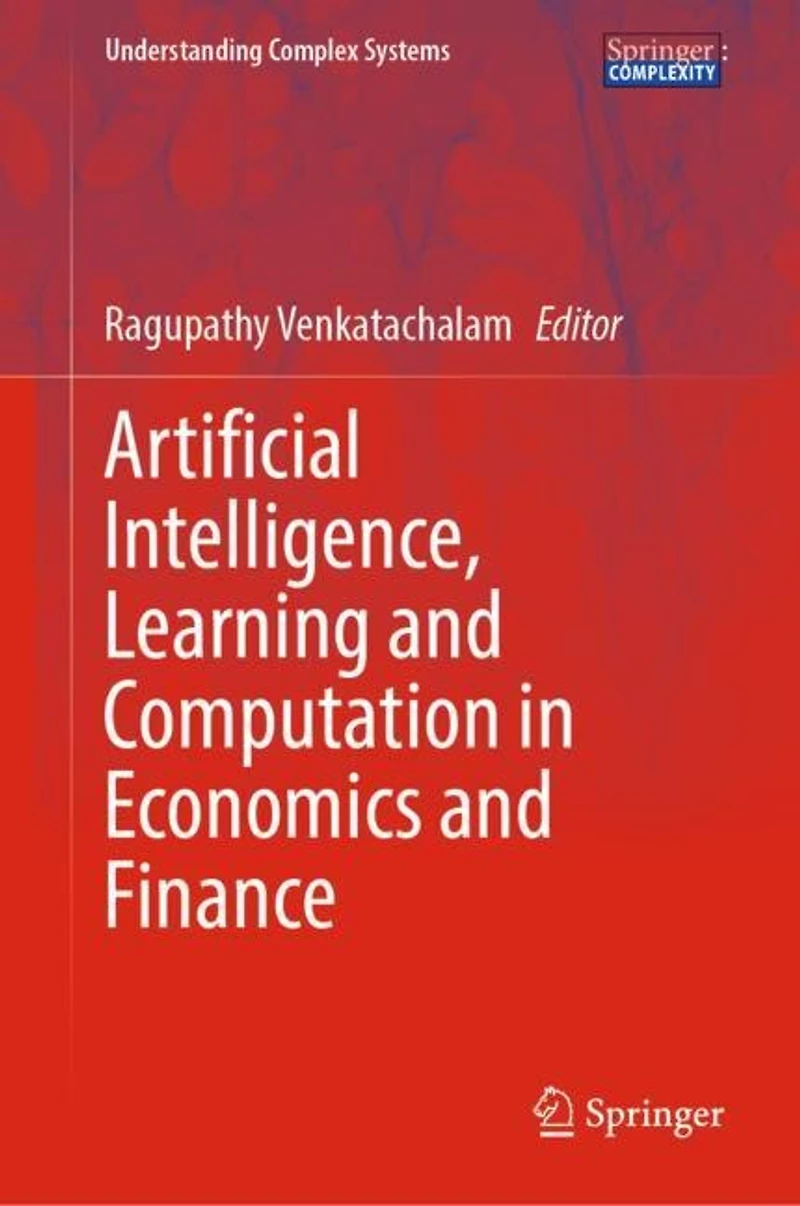
Artificial Intelligence, Learning and Computation Economics Finance
Current price: $248.50

Artificial Intelligence, Learning and Computation Economics Finance
Current price: $248.50
Loading Inventory...
Size: Hardcover
*Product information may vary - to confirm product availability, pricing, shipping and return information please contact Indigo
This book presents frontier research on the use of computational methods to model complex interactions in economics and finance. Artificial Intelligence, Machine Learning and simulations offer effective means of analyzing and learning from large as well as new types of data. These computational tools have permeated various subfields of economics, finance, and also across different schools of economic thought. Through 16 chapters written by pioneers in economics, finance, computer science, psychology, complexity and statistics/econometrics, the book introduces their original research and presents the findings they have yielded. Theoretical and empirical studies featured in this book draw on a variety of approaches such as agent-based modeling, numerical simulations, computable economics, as well as employing tools from artificial intelligence and machine learning algorithms. The use of computational approaches to perform counterfactual thought experiments are also introduced, which help transcend the limits posed by traditional mathematical and statistical tools.
The book also includes discussions on methodology, epistemology, history and issues concerning prediction, validation, and inference, all of which have become pertinent with the increasing use of computational approaches in economic analysis.
This book presents frontier research on the use of computational methods to model complex interactions in economics and finance. Artificial Intelligence, Machine Learning and simulations offer effective means of analyzing and learning from large as well as new types of data. These computational tools have permeated various subfields of economics, finance, and also across different schools of economic thought. Through 16 chapters written by pioneers in economics, finance, computer science, psychology, complexity and statistics/econometrics, the book introduces their original research and presents the findings they have yielded. Theoretical and empirical studies featured in this book draw on a variety of approaches such as agent-based modeling, numerical simulations, computable economics, as well as employing tools from artificial intelligence and machine learning algorithms. The use of computational approaches to perform counterfactual thought experiments are also introduced, which help transcend the limits posed by traditional mathematical and statistical tools.
The book also includes discussions on methodology, epistemology, history and issues concerning prediction, validation, and inference, all of which have become pertinent with the increasing use of computational approaches in economic analysis.
You May Also Like










More About Indigo at Erin Mills Town Centre
The largest book retailer in Canada also offers toys, music, home décor, gifts and lifestyle products. What's Inside...Books, Magazines, CD’s and DVD’s, Toys and Gifts, Home Accents, Electronics, Baby’s and Children’s Section, Bath and Body, Kitchen and Bedroom, Stationary Located outside in the exterior plaza.
5015 Glen Erin Dr, Mississauga, ON L5M 0R7, Canada
Find Indigo at Erin Mills Town Centre in Mississauga ON
Visit Indigo at Erin Mills Town Centre in Mississauga ON