

GIVE THE PERFECT GIFT
Erin Mills Town Centre Gift Cards are the perfect choice for your gift giving needs.Purchase gift cards at kiosks near the food court or centre court, at Guest Services, or click below to purchase online.PURCHASE HEREHome
Atlas of Material Life: Northwestern Europe and East Asia, 15th to 19th century
Indigo
Loading Inventory...
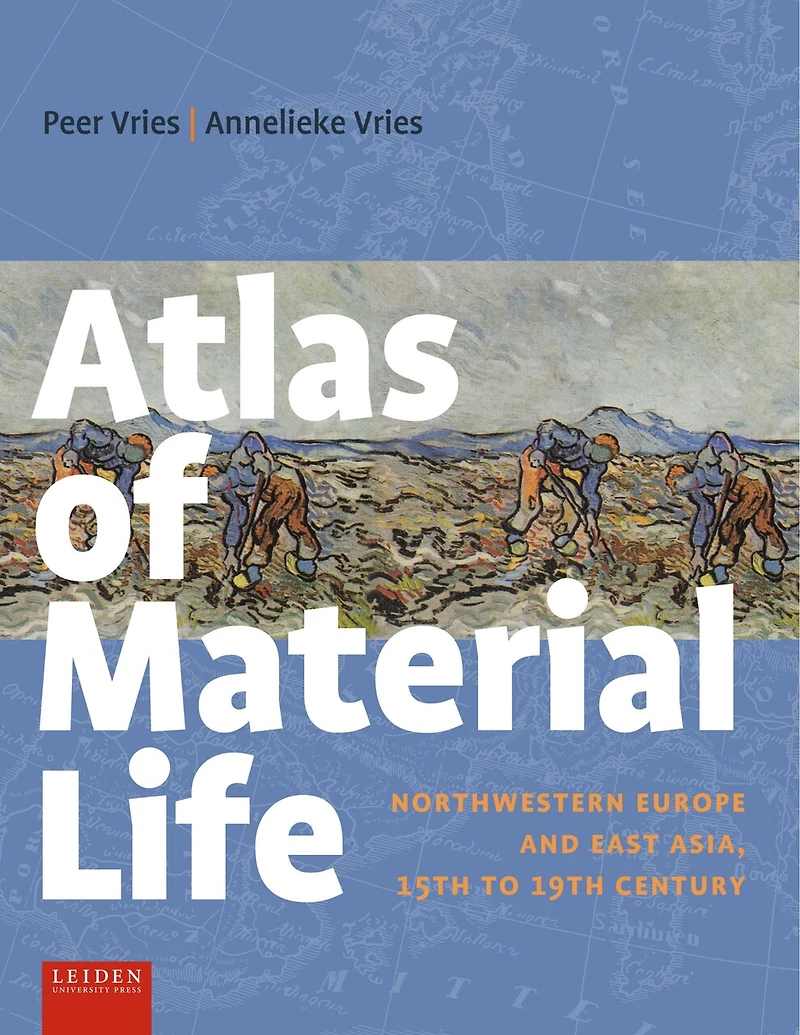
Atlas of Material Life: Northwestern Europe and East Asia, 15th to 19th century
Current price: $81.95

Atlas of Material Life: Northwestern Europe and East Asia, 15th to 19th century
Current price: $81.95
Loading Inventory...
Size: Paperback
*Product information may vary - to confirm product availability, pricing, shipping and return information please contact Indigo
Large-scale comparative economic history of westernmost and easternmost Eurasia can be beneficial for the understanding of global history. This book provides a description of material life in North-western Europe and East Asia, for the period from the late fifteenth to the late nineteenth centuries, with a focus on developments in Great Britain and the Dutch Republic on the one hand and China and Japan on the other hand. With maps, tables, graphs and figures as a prominent and integral part of the book, it provides information, in an accessible format, on the main characteristics of the economic landscape of this period. It demonstrates the constraints to which all pre-industrial economies were subjected because of their dependence on organic natural resources but also the different ways in which the societies discussed dealt with those constraints. To provide a better understanding of this economy of limited possibilities, the final chapter of the book is devoted to the emergence of modern economic growth in Western Europe.
Large-scale comparative economic history of westernmost and easternmost Eurasia can be beneficial for the understanding of global history. This book provides a description of material life in North-western Europe and East Asia, for the period from the late fifteenth to the late nineteenth centuries, with a focus on developments in Great Britain and the Dutch Republic on the one hand and China and Japan on the other hand. With maps, tables, graphs and figures as a prominent and integral part of the book, it provides information, in an accessible format, on the main characteristics of the economic landscape of this period. It demonstrates the constraints to which all pre-industrial economies were subjected because of their dependence on organic natural resources but also the different ways in which the societies discussed dealt with those constraints. To provide a better understanding of this economy of limited possibilities, the final chapter of the book is devoted to the emergence of modern economic growth in Western Europe.
You May Also Like







More About Indigo at Erin Mills Town Centre
The largest book retailer in Canada also offers toys, music, home décor, gifts and lifestyle products. What's Inside...Books, Magazines, CD’s and DVD’s, Toys and Gifts, Home Accents, Electronics, Baby’s and Children’s Section, Bath and Body, Kitchen and Bedroom, Stationary Located outside in the exterior plaza.
5015 Glen Erin Dr, Mississauga, ON L5M 0R7, Canada
Find Indigo at Erin Mills Town Centre in Mississauga ON
Visit Indigo at Erin Mills Town Centre in Mississauga ON