

GIVE THE PERFECT GIFT
Erin Mills Town Centre Gift Cards are the perfect choice for your gift giving needs.Purchase gift cards at kiosks near the food court or centre court, at Guest Services, or click below to purchase online.PURCHASE HEREHome
Atmospheric Pressure Plasma Treatment of Polymers: Relevance to Adhesion
Indigo
Loading Inventory...
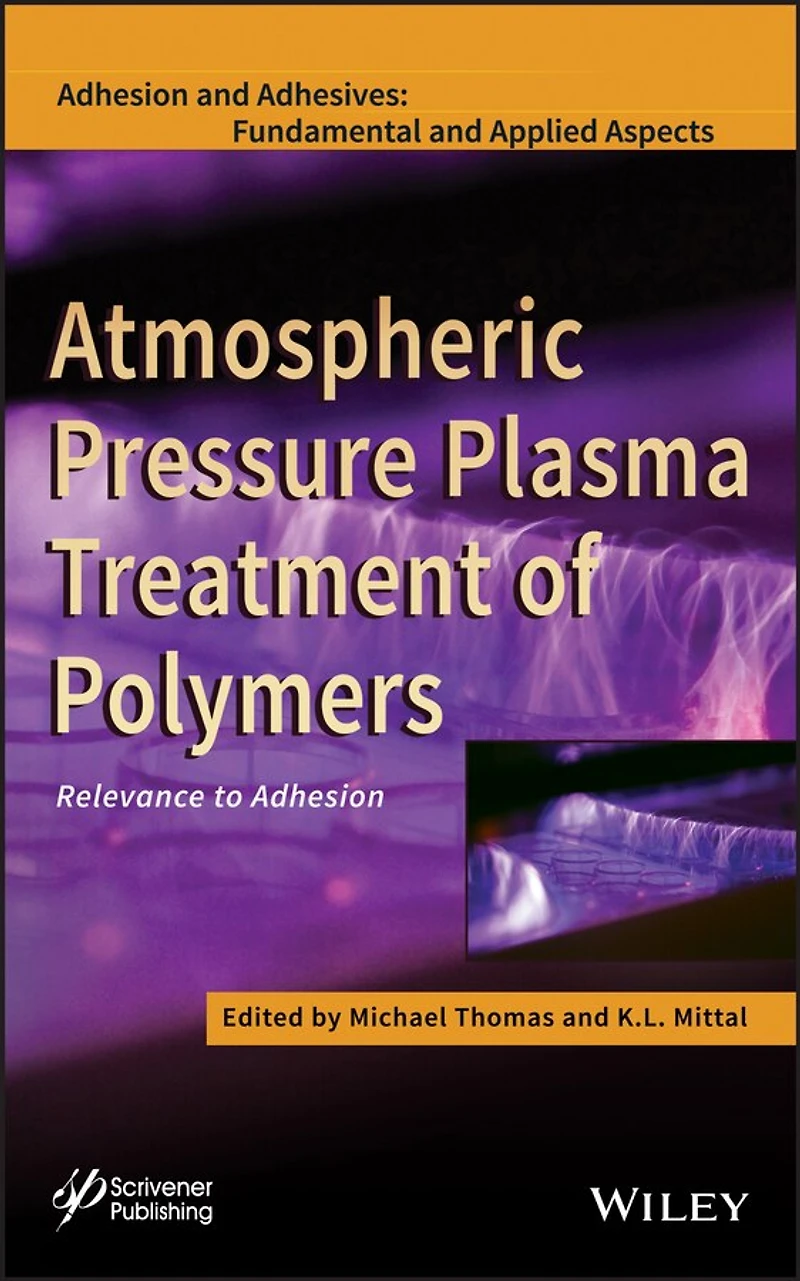
Atmospheric Pressure Plasma Treatment of Polymers: Relevance to Adhesion
Current price: $297.95

Atmospheric Pressure Plasma Treatment of Polymers: Relevance to Adhesion
Current price: $297.95
Loading Inventory...
Size: Hardcover
*Product information may vary - to confirm product availability, pricing, shipping and return information please contact Indigo
An indispensable volume detailing the current and potential applications of atmospheric pressure plasma treatment by experts practicing in fields around the world Polymers are used in a wide variety of industries to fabricate legions of products because of their many desirable traits. However, polymers in general (and polyolefins, in particular) are innately not very adhesionable because of the absence of polar or reactive groups on their surfaces and concomitant low surface energy. Surface treatment of polymers, however, is essential to impart reactive chemical groups on their surfaces to enhance their adhesion characteristic. Proper surface treatment can endow polymers with improved adhesion without affecting the bulk properties. A plethora of techniques (ranging from wet to dry, simple to sophisticated, vacuum to non-vacuum) for polymer surface modification have been documented in the literature but the Atmospheric Pressure Plasma (APP) treatment has attracted much attention because it offers many advantages vis-a-vis other techniques, namely uniform treatment, continuous operation, no need for vacuum, simplicity, low cost, no environmental or disposal concern, and applicability to large area samples. Although the emphasis in this book is on the utility of APP treatment for enhancement of polymer adhesion, APP is also applicable and effective to modulate many other surface properties of polymers: superhydrophilicity, superhydrophobicity, anti-fouling, anti-fogging, anti-icing, cell adhesion, biocompatibility, tribological behavior, etc. The key features of Atmospheric Pressure Plasma Treatment of Polymers : Address design and functions of various types of reactors Bring out current and potential applications of APP treatment Represent the cumulative wisdom of many key academic and industry researchers actively engaged in this key and enabling technology
An indispensable volume detailing the current and potential applications of atmospheric pressure plasma treatment by experts practicing in fields around the world Polymers are used in a wide variety of industries to fabricate legions of products because of their many desirable traits. However, polymers in general (and polyolefins, in particular) are innately not very adhesionable because of the absence of polar or reactive groups on their surfaces and concomitant low surface energy. Surface treatment of polymers, however, is essential to impart reactive chemical groups on their surfaces to enhance their adhesion characteristic. Proper surface treatment can endow polymers with improved adhesion without affecting the bulk properties. A plethora of techniques (ranging from wet to dry, simple to sophisticated, vacuum to non-vacuum) for polymer surface modification have been documented in the literature but the Atmospheric Pressure Plasma (APP) treatment has attracted much attention because it offers many advantages vis-a-vis other techniques, namely uniform treatment, continuous operation, no need for vacuum, simplicity, low cost, no environmental or disposal concern, and applicability to large area samples. Although the emphasis in this book is on the utility of APP treatment for enhancement of polymer adhesion, APP is also applicable and effective to modulate many other surface properties of polymers: superhydrophilicity, superhydrophobicity, anti-fouling, anti-fogging, anti-icing, cell adhesion, biocompatibility, tribological behavior, etc. The key features of Atmospheric Pressure Plasma Treatment of Polymers : Address design and functions of various types of reactors Bring out current and potential applications of APP treatment Represent the cumulative wisdom of many key academic and industry researchers actively engaged in this key and enabling technology
You May Also Like









More About Indigo at Erin Mills Town Centre
The largest book retailer in Canada also offers toys, music, home décor, gifts and lifestyle products. What's Inside...Books, Magazines, CD’s and DVD’s, Toys and Gifts, Home Accents, Electronics, Baby’s and Children’s Section, Bath and Body, Kitchen and Bedroom, Stationary Located outside in the exterior plaza.
5015 Glen Erin Dr, Mississauga, ON L5M 0R7, Canada
Find Indigo at Erin Mills Town Centre in Mississauga ON
Visit Indigo at Erin Mills Town Centre in Mississauga ON