

GIVE THE PERFECT GIFT
Erin Mills Town Centre Gift Cards are the perfect choice for your gift giving needs.Purchase gift cards at kiosks near the food court or centre court, at Guest Services, or click below to purchase online.PURCHASE HEREHome
Attic Pinakes: Votive images in clay
Indigo
Loading Inventory...
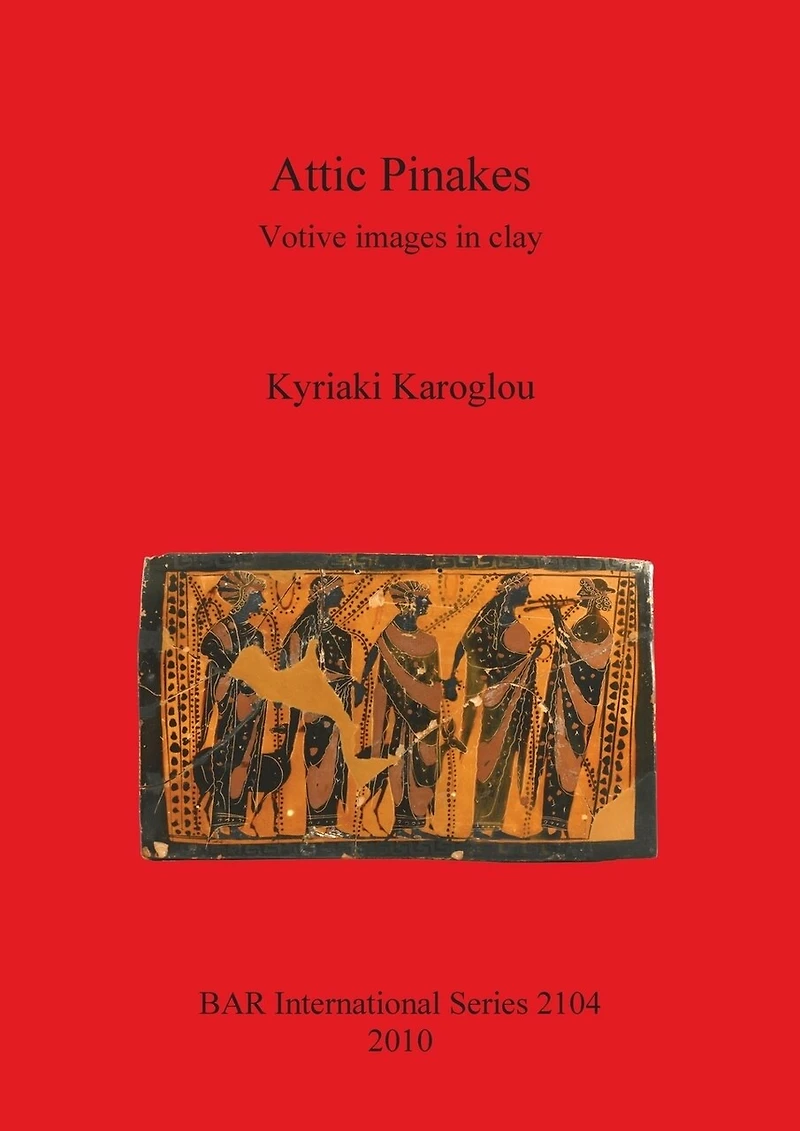
Attic Pinakes: Votive images in clay
Current price: $95.22

Attic Pinakes: Votive images in clay
Current price: $95.22
Loading Inventory...
Size: Paperback
*Product information may vary - to confirm product availability, pricing, shipping and return information please contact Indigo
In modern studies pinax refers to a flat, rectangular, painted slab of clay placed in a sanctuary or tomb. In this study the author presents the various occurrences and possible meanings of the word pinax in the sources and examines the representation of pinakes on vases. A synthesis of pinakes is much needed since it can provide valuable information about ancient Greek religious and social practices. To this end, this book by concentrating on Attic pinakes fills a substantial gap in scholarship since Attic pinakes have not been methodically studied before, although they form one of the largest corpora of pinakes, and are hence a rich and reliable source of information. Chapter one examines the terminology, usage, and placement of pinakes drawing upon ancient testimonia found in literary sources, inscriptions, and representations in vase-painting. This chapter focuses on pinakes as a special category of offering regardless of the material of manufacture, be it wood, metal, or clay. Chapter two presents the corpus of surviving Attic pinakes. A discussion of their archaeological context is followed by an analysis of their iconographic themes in relation to Attic vase-painting in general and in conjunction with various contemporary Attic cults. Chapter three considers the inscriptions, techniques of manufacture, and decoration of Attic pinakes, as well as the attributions to Attic black-figure and red-figure painters. Questions of import, circulation, and dating are also addressed. Chapter four places the dedication of pinakes in the context of Athenian 'votive religion' and society by correlating them with other classes of votives dedicated in Attic sanctuaries, notably the Athenian Acropolis. By examining the iconography of genre scenes on Attic pinakes in light of current modes of representation of specific social groups, chapter four contributes to a sociology of dedication in ancient Greece, an under-explored subject of inquiry. Finally, an appendix correlates the Corinthian pinakes from Penteskouphia and the Potters' Quarter with the Attic material.
In modern studies pinax refers to a flat, rectangular, painted slab of clay placed in a sanctuary or tomb. In this study the author presents the various occurrences and possible meanings of the word pinax in the sources and examines the representation of pinakes on vases. A synthesis of pinakes is much needed since it can provide valuable information about ancient Greek religious and social practices. To this end, this book by concentrating on Attic pinakes fills a substantial gap in scholarship since Attic pinakes have not been methodically studied before, although they form one of the largest corpora of pinakes, and are hence a rich and reliable source of information. Chapter one examines the terminology, usage, and placement of pinakes drawing upon ancient testimonia found in literary sources, inscriptions, and representations in vase-painting. This chapter focuses on pinakes as a special category of offering regardless of the material of manufacture, be it wood, metal, or clay. Chapter two presents the corpus of surviving Attic pinakes. A discussion of their archaeological context is followed by an analysis of their iconographic themes in relation to Attic vase-painting in general and in conjunction with various contemporary Attic cults. Chapter three considers the inscriptions, techniques of manufacture, and decoration of Attic pinakes, as well as the attributions to Attic black-figure and red-figure painters. Questions of import, circulation, and dating are also addressed. Chapter four places the dedication of pinakes in the context of Athenian 'votive religion' and society by correlating them with other classes of votives dedicated in Attic sanctuaries, notably the Athenian Acropolis. By examining the iconography of genre scenes on Attic pinakes in light of current modes of representation of specific social groups, chapter four contributes to a sociology of dedication in ancient Greece, an under-explored subject of inquiry. Finally, an appendix correlates the Corinthian pinakes from Penteskouphia and the Potters' Quarter with the Attic material.
You May Also Like












More About Indigo at Erin Mills Town Centre
The largest book retailer in Canada also offers toys, music, home décor, gifts and lifestyle products. What's Inside...Books, Magazines, CD’s and DVD’s, Toys and Gifts, Home Accents, Electronics, Baby’s and Children’s Section, Bath and Body, Kitchen and Bedroom, Stationary Located outside in the exterior plaza.
5015 Glen Erin Dr, Mississauga, ON L5M 0R7, Canada
Find Indigo at Erin Mills Town Centre in Mississauga ON
Visit Indigo at Erin Mills Town Centre in Mississauga ON