

GIVE THE PERFECT GIFT
Erin Mills Town Centre Gift Cards are the perfect choice for your gift giving needs.Purchase gift cards at kiosks near the food court or centre court, at Guest Services, or click below to purchase online.PURCHASE HEREHome
Autopoiesis and Cognition: the Realization of Living
Indigo
Loading Inventory...
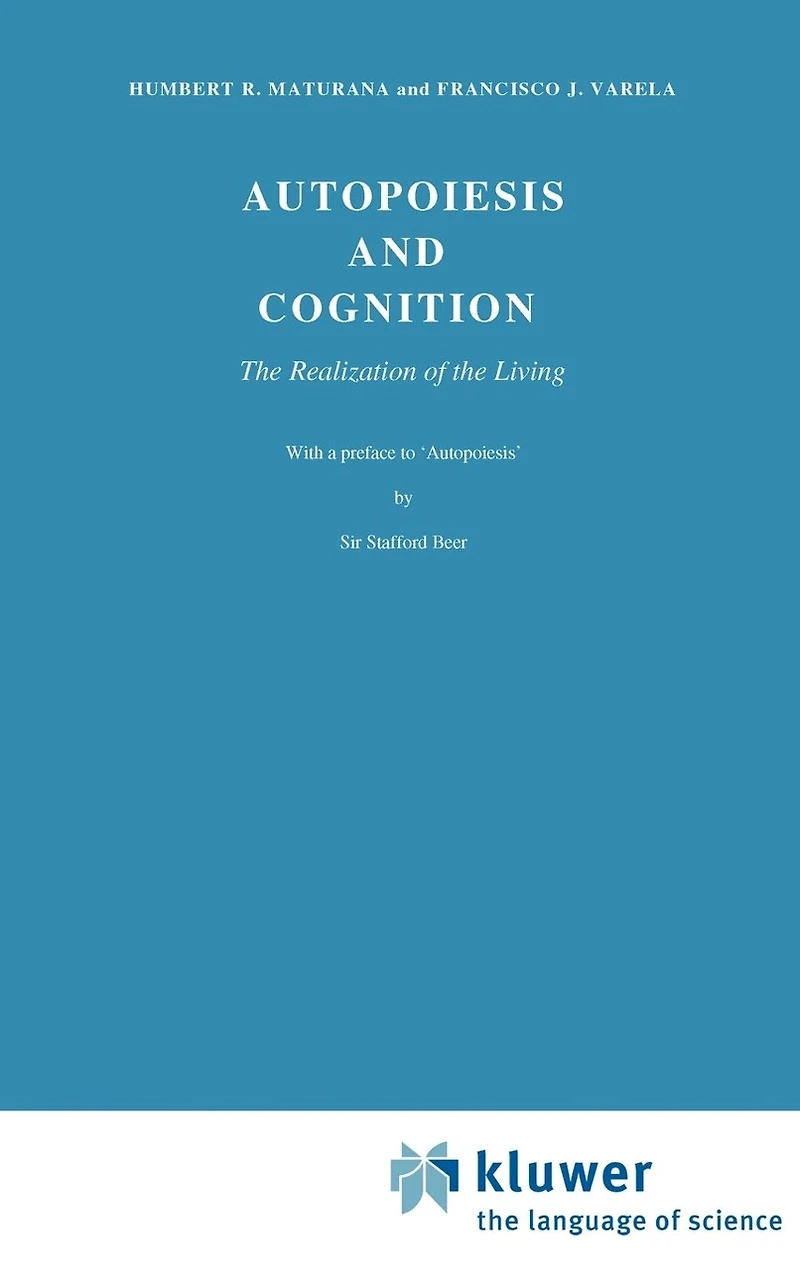
Autopoiesis and Cognition: the Realization of Living
Current price: $285.95

Autopoiesis and Cognition: the Realization of Living
Current price: $285.95
Loading Inventory...
Size: Hardcover
*Product information may vary - to confirm product availability, pricing, shipping and return information please contact Indigo
This is a bold, brilliant, provocative and puzzling work. It demands a radical shift in standpoint, an almost paradoxical posture in which living systems are described in terms of what lies outside the domain of descriptions. Professor Humberto Maturana, with his colleague Francisco Varela, have undertaken the construction of a systematic theoretical biology which attempts to define living systems not as they are objects of observation and description, nor even as in teracting systems, but as self-contained unities whose only reference is to them selves. Thus, the standpoint of description of such unities from the 'outside', i. e. , by an observer, already seems to violate the fundamental requirement which Maturana and Varela posit for the characterization of such system- namely, that they are autonomous, self-referring and self-constructing closed systems - in short, autopoietic systems in their terms. Yet, on the basis of such a conceptual method, and such a theory of living systems, Maturana goes on to define cognition as a biological phenomenon; as, in effect, the very nature of all living systems. And on this basis, to generate the very domains of interac tion among such systems which constitute language, description and thinking.
This is a bold, brilliant, provocative and puzzling work. It demands a radical shift in standpoint, an almost paradoxical posture in which living systems are described in terms of what lies outside the domain of descriptions. Professor Humberto Maturana, with his colleague Francisco Varela, have undertaken the construction of a systematic theoretical biology which attempts to define living systems not as they are objects of observation and description, nor even as in teracting systems, but as self-contained unities whose only reference is to them selves. Thus, the standpoint of description of such unities from the 'outside', i. e. , by an observer, already seems to violate the fundamental requirement which Maturana and Varela posit for the characterization of such system- namely, that they are autonomous, self-referring and self-constructing closed systems - in short, autopoietic systems in their terms. Yet, on the basis of such a conceptual method, and such a theory of living systems, Maturana goes on to define cognition as a biological phenomenon; as, in effect, the very nature of all living systems. And on this basis, to generate the very domains of interac tion among such systems which constitute language, description and thinking.
You May Also Like










More About Indigo at Erin Mills Town Centre
The largest book retailer in Canada also offers toys, music, home décor, gifts and lifestyle products. What's Inside...Books, Magazines, CD’s and DVD’s, Toys and Gifts, Home Accents, Electronics, Baby’s and Children’s Section, Bath and Body, Kitchen and Bedroom, Stationary Located outside in the exterior plaza.
5015 Glen Erin Dr, Mississauga, ON L5M 0R7, Canada
Find Indigo at Erin Mills Town Centre in Mississauga ON
Visit Indigo at Erin Mills Town Centre in Mississauga ON