

GIVE THE PERFECT GIFT
Erin Mills Town Centre Gift Cards are the perfect choice for your gift giving needs.Purchase gift cards at kiosks near the food court or centre court, at Guest Services, or click below to purchase online.PURCHASE HEREHome
Bayesian Compendium
Indigo
Loading Inventory...
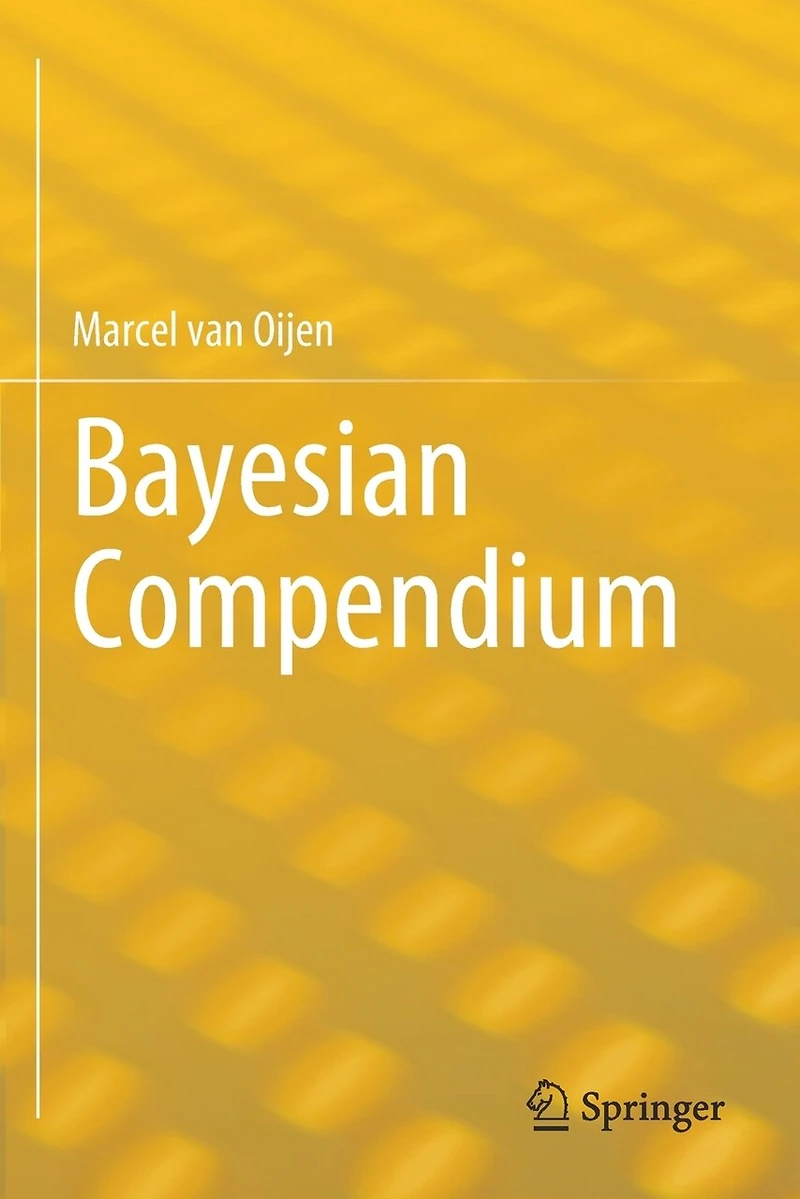
Bayesian Compendium
Current price: $131.50

Bayesian Compendium
Current price: $131.50
Loading Inventory...
Size: Paperback
*Product information may vary - to confirm product availability, pricing, shipping and return information please contact Indigo
This book describes how Bayesian methods work. Its primary aim is to demystify them, and to show readers: Bayesian thinking isn't difficult and can be used in virtually every kind of research. In addition to revealing the underlying simplicity of statistical methods, the book explains how to parameterise and compare models while accounting for uncertainties in data, model parameters and model structures. How exactly should data be used in modelling? The literature offers a bewildering variety of techniques and approaches (Bayesian calibration, data assimilation, Kalman filtering, model-data fusion, etc). This book provides a short and easy guide to all of these and more. It was written from a unifying Bayesian perspective, which reveals how the multitude of techniques and approaches are in fact all related to one another. Basic notions from probability theory are introduced. Executable code examples are included to enhance the book's practical use for scientific modellers, and all code is available online as well.
This book describes how Bayesian methods work. Its primary aim is to demystify them, and to show readers: Bayesian thinking isn't difficult and can be used in virtually every kind of research. In addition to revealing the underlying simplicity of statistical methods, the book explains how to parameterise and compare models while accounting for uncertainties in data, model parameters and model structures. How exactly should data be used in modelling? The literature offers a bewildering variety of techniques and approaches (Bayesian calibration, data assimilation, Kalman filtering, model-data fusion, etc). This book provides a short and easy guide to all of these and more. It was written from a unifying Bayesian perspective, which reveals how the multitude of techniques and approaches are in fact all related to one another. Basic notions from probability theory are introduced. Executable code examples are included to enhance the book's practical use for scientific modellers, and all code is available online as well.
You May Also Like







More About Indigo at Erin Mills Town Centre
The largest book retailer in Canada also offers toys, music, home décor, gifts and lifestyle products. What's Inside...Books, Magazines, CD’s and DVD’s, Toys and Gifts, Home Accents, Electronics, Baby’s and Children’s Section, Bath and Body, Kitchen and Bedroom, Stationary Located outside in the exterior plaza.
5015 Glen Erin Dr, Mississauga, ON L5M 0R7, Canada
Find Indigo at Erin Mills Town Centre in Mississauga ON
Visit Indigo at Erin Mills Town Centre in Mississauga ON