

GIVE THE PERFECT GIFT
Erin Mills Town Centre Gift Cards are the perfect choice for your gift giving needs.Purchase gift cards at kiosks near the food court or centre court, at Guest Services, or click below to purchase online.PURCHASE HEREHome
Behavior Foreign Languages: Experimental Evidence on Creativity, Cooperation, and Culture-Related Effects
Indigo
Loading Inventory...
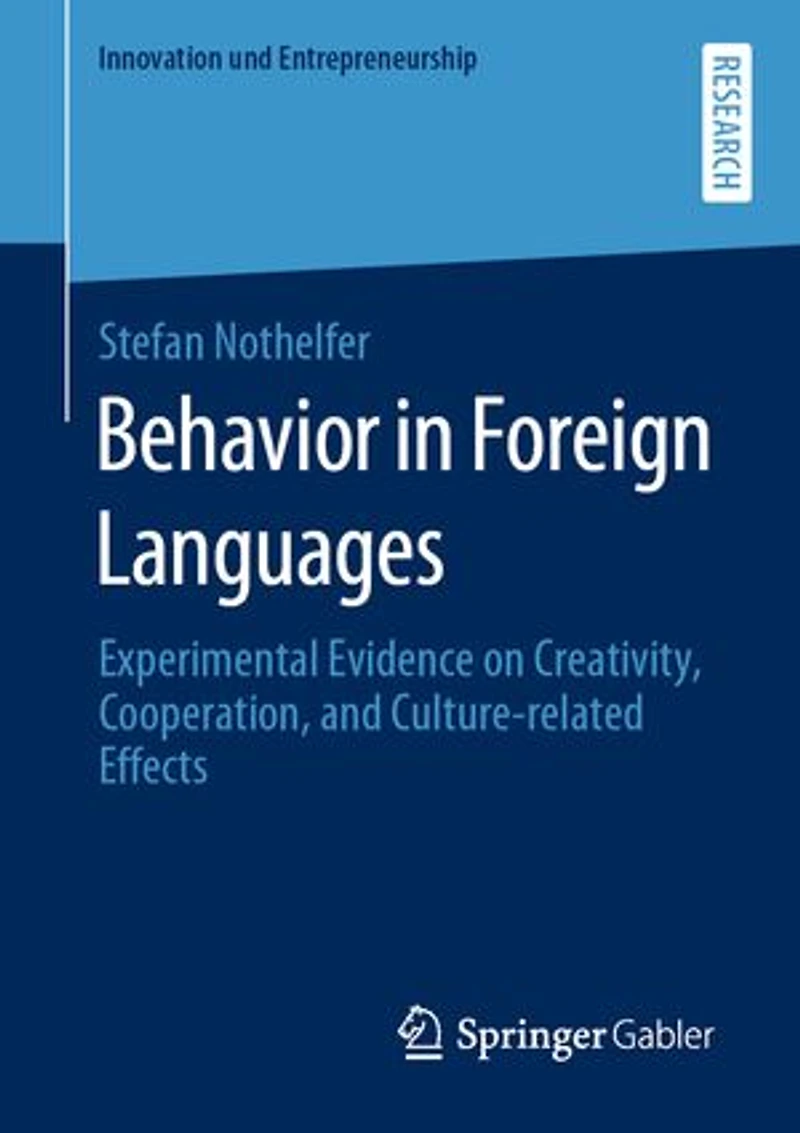
Behavior Foreign Languages: Experimental Evidence on Creativity, Cooperation, and Culture-Related Effects
Current price: $64.49
Original price: $80.62

Behavior Foreign Languages: Experimental Evidence on Creativity, Cooperation, and Culture-Related Effects
Current price: $64.49
Original price: $80.62
Loading Inventory...
Size: Kobo eBook
*Product information may vary - to confirm product availability, pricing, shipping and return information please contact Indigo
Working and interacting in foreign languages is widespread. While the relationship between language and behavior has been discussed for many years, empirical evidence for behavioral effects of foreign language use is surprisingly scarce. Stefan Nothelfer has conducted a series of laboratory studies to investigate and disentangle effects of language and culture on creativity and cooperation, important behavioral foundations of innovation. He draws insights from a large cross-country dataset with pairings between three languages, using a custom-built mobile laboratory. The author's findings challenge theories of linguistic relativity, foreign language effects, and cultural accommodation, and enrich the empirical basis for fundamental research on language and behavior.
Working and interacting in foreign languages is widespread. While the relationship between language and behavior has been discussed for many years, empirical evidence for behavioral effects of foreign language use is surprisingly scarce. Stefan Nothelfer has conducted a series of laboratory studies to investigate and disentangle effects of language and culture on creativity and cooperation, important behavioral foundations of innovation. He draws insights from a large cross-country dataset with pairings between three languages, using a custom-built mobile laboratory. The author's findings challenge theories of linguistic relativity, foreign language effects, and cultural accommodation, and enrich the empirical basis for fundamental research on language and behavior.
You May Also Like

















More About Indigo at Erin Mills Town Centre
The largest book retailer in Canada also offers toys, music, home décor, gifts and lifestyle products. What's Inside...Books, Magazines, CD’s and DVD’s, Toys and Gifts, Home Accents, Electronics, Baby’s and Children’s Section, Bath and Body, Kitchen and Bedroom, Stationary Located outside in the exterior plaza.
5015 Glen Erin Dr, Mississauga, ON L5M 0R7, Canada
Find Indigo at Erin Mills Town Centre in Mississauga ON
Visit Indigo at Erin Mills Town Centre in Mississauga ON