

GIVE THE PERFECT GIFT
Erin Mills Town Centre Gift Cards are the perfect choice for your gift giving needs.Purchase gift cards at kiosks near the food court or centre court, at Guest Services, or click below to purchase online.PURCHASE HEREHome
Beleaguered Winchester: A Virginia Community at War, 1861--1865
Indigo
Loading Inventory...
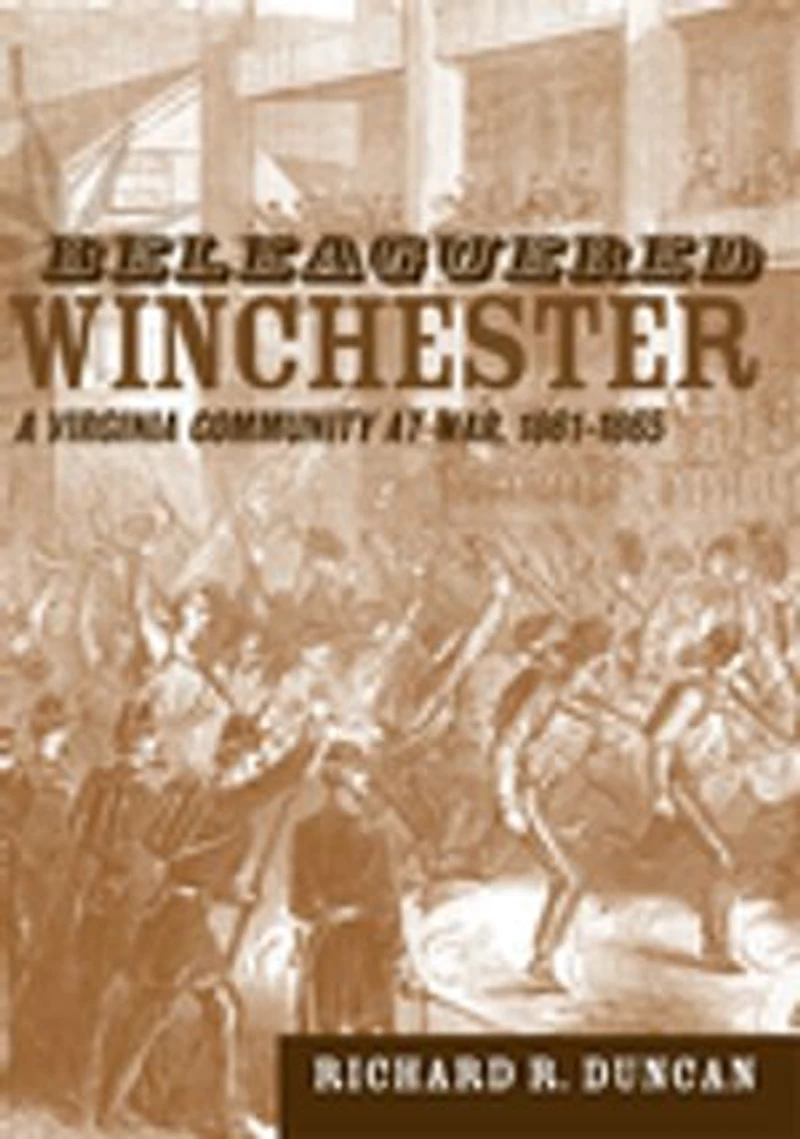
Beleaguered Winchester: A Virginia Community at War, 1861--1865
Current price: $21.69
Original price: $27.08

Beleaguered Winchester: A Virginia Community at War, 1861--1865
Current price: $21.69
Original price: $27.08
Loading Inventory...
Size: Kobo eBook
*Product information may vary - to confirm product availability, pricing, shipping and return information please contact Indigo
During the Civil War, the strategically located town of Winchester, Virginia, suffered from the constant turmoil of military campaigning perhaps more than any other town. Occupied dozens of times by alternating Union and Confederate forces, Winchester suffered through three major battles, including some seventy smaller skirmishes. In his voluminous community study of the town over the course of four tumultuous years, Richard R. Duncan shows that in many ways Winchester's history provides a paradigm of the changing nature of the war. Indeed, Duncan reveals how the town offers a microcosm of the war: slavery collapsed, women assumed control in the absence of men, and civilians vied for authority alongside an assortment of revolving military commanders.
Control over Winchester was vital for both the North and the South. Confederates used it as a base to strike the Baltimore and Ohio Railroad and conduct raids into western Maryland and Pennsylvania, and when Federal forces occupied the town, they threatened Staunton -- Lee's breadbasket -- and the Virginia Central Railroad. At various times during the war, generals "Stonewall" Jackson, Nathaniel Banks, Robert Milroy, Richard Ewell, Jubal Early, and Philip Sheridan each controlled the town. Guerrilla activity further compounded the region's strife as insecurity became the norm for its civilian population.
In this first scholarly treatment of occupied Winchester, Duncan has compiled a narrative of voices from the entire community, including those of groups often omitted from such studies, such as slaves, women, and Confederate dissenters. He shows how Federal occupation meant an early end to slavery in Winchester and how the paucity of men left women to serve as the major cohesive force in the community, making them a bulwark of Confederate support. He also explores the tensions between civilians and military personnel that inevitably arose as each group sought to protect its interests.
The war, Duncan explains, left Winchester a landscape of wreckage and economic loss. A fascinating case study of civilian survival amid the turmoil of war, Beleaguered Winchester will appeal to Civil War scholars and enthusiasts alike.
During the Civil War, the strategically located town of Winchester, Virginia, suffered from the constant turmoil of military campaigning perhaps more than any other town. Occupied dozens of times by alternating Union and Confederate forces, Winchester suffered through three major battles, including some seventy smaller skirmishes. In his voluminous community study of the town over the course of four tumultuous years, Richard R. Duncan shows that in many ways Winchester's history provides a paradigm of the changing nature of the war. Indeed, Duncan reveals how the town offers a microcosm of the war: slavery collapsed, women assumed control in the absence of men, and civilians vied for authority alongside an assortment of revolving military commanders.
Control over Winchester was vital for both the North and the South. Confederates used it as a base to strike the Baltimore and Ohio Railroad and conduct raids into western Maryland and Pennsylvania, and when Federal forces occupied the town, they threatened Staunton -- Lee's breadbasket -- and the Virginia Central Railroad. At various times during the war, generals "Stonewall" Jackson, Nathaniel Banks, Robert Milroy, Richard Ewell, Jubal Early, and Philip Sheridan each controlled the town. Guerrilla activity further compounded the region's strife as insecurity became the norm for its civilian population.
In this first scholarly treatment of occupied Winchester, Duncan has compiled a narrative of voices from the entire community, including those of groups often omitted from such studies, such as slaves, women, and Confederate dissenters. He shows how Federal occupation meant an early end to slavery in Winchester and how the paucity of men left women to serve as the major cohesive force in the community, making them a bulwark of Confederate support. He also explores the tensions between civilians and military personnel that inevitably arose as each group sought to protect its interests.
The war, Duncan explains, left Winchester a landscape of wreckage and economic loss. A fascinating case study of civilian survival amid the turmoil of war, Beleaguered Winchester will appeal to Civil War scholars and enthusiasts alike.
You May Also Like








More About Indigo at Erin Mills Town Centre
The largest book retailer in Canada also offers toys, music, home décor, gifts and lifestyle products. What's Inside...Books, Magazines, CD’s and DVD’s, Toys and Gifts, Home Accents, Electronics, Baby’s and Children’s Section, Bath and Body, Kitchen and Bedroom, Stationary Located outside in the exterior plaza.
5015 Glen Erin Dr, Mississauga, ON L5M 0R7, Canada
Find Indigo at Erin Mills Town Centre in Mississauga ON
Visit Indigo at Erin Mills Town Centre in Mississauga ON