

GIVE THE PERFECT GIFT
Erin Mills Town Centre Gift Cards are the perfect choice for your gift giving needs.Purchase gift cards at kiosks near the food court or centre court, at Guest Services, or click below to purchase online.PURCHASE HEREHome
Bigger Than Life: the Close-Up and Scale Cinema
Indigo
Loading Inventory...
Bigger Than Life: the Close-Up and Scale Cinema
Current price: $140.95

Bigger Than Life: the Close-Up and Scale Cinema
Current price: $140.95
Loading Inventory...
Size: Hardcover
*Product information may vary - to confirm product availability, pricing, shipping and return information please contact Indigo
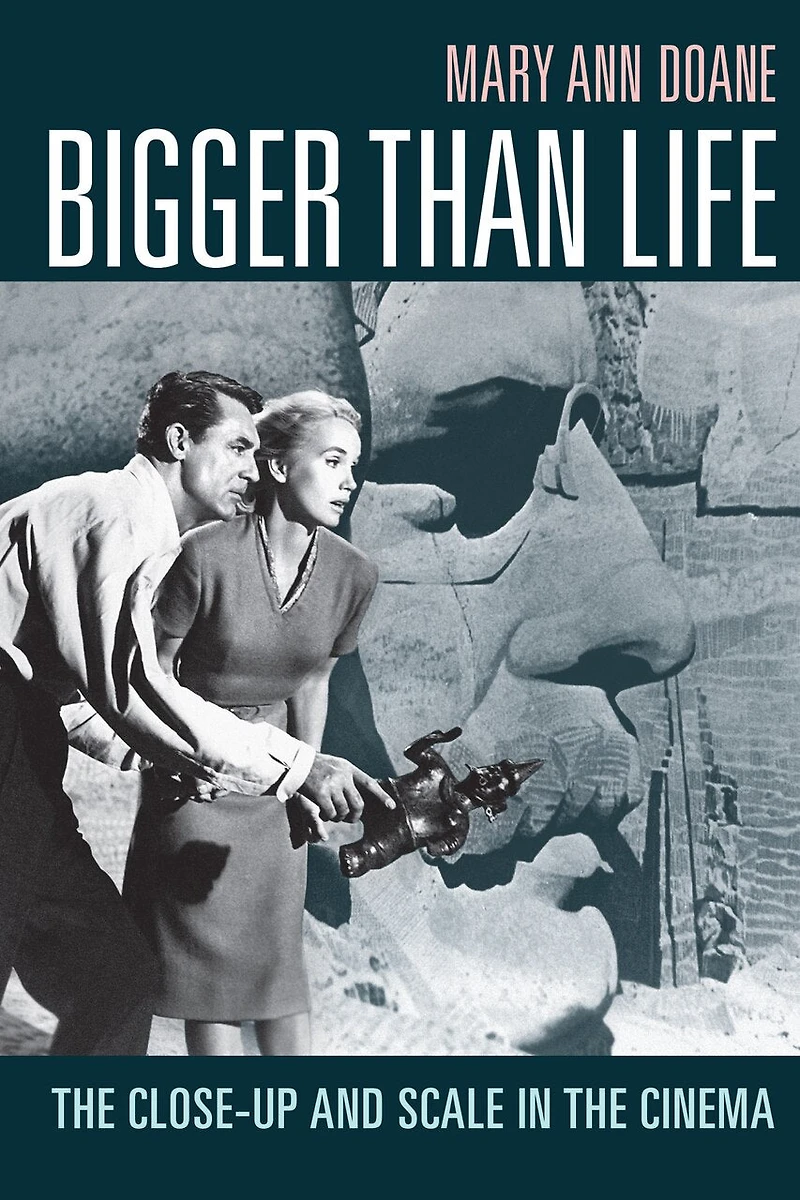
In Bigger Than Life Mary Ann Doane examines how the scalar operations of cinema, especially those of the close-up, disturb and reconfigure the spectator's sense of place, space, and orientation. Doane traces the history of scalar transformations from early cinema to the contemporary use of digital technology. In the early years of cinema, audiences regarded the monumental close-up, particularly of the face, as grotesque and often horrifying, even as it sought to expose a character's interiority through its magnification of detail and expression. Today, large-scale technologies such as IMAX and surround sound strive to dissolve the cinematic frame and invade the spectator's space, "immersing" them in image and sound. The notion of immersion, Doane contends, is symptomatic of a crisis of location in technologically mediated space and a reconceptualization of position, scale, and distance. In this way, cinematic scale and its modes of spatialization and despatialization have shaped the modern subject, interpolating them into the incessant expansion of commodification.
In Bigger Than Life Mary Ann Doane examines how the scalar operations of cinema, especially those of the close-up, disturb and reconfigure the spectator's sense of place, space, and orientation. Doane traces the history of scalar transformations from early cinema to the contemporary use of digital technology. In the early years of cinema, audiences regarded the monumental close-up, particularly of the face, as grotesque and often horrifying, even as it sought to expose a character's interiority through its magnification of detail and expression. Today, large-scale technologies such as IMAX and surround sound strive to dissolve the cinematic frame and invade the spectator's space, "immersing" them in image and sound. The notion of immersion, Doane contends, is symptomatic of a crisis of location in technologically mediated space and a reconceptualization of position, scale, and distance. In this way, cinematic scale and its modes of spatialization and despatialization have shaped the modern subject, interpolating them into the incessant expansion of commodification.
You May Also Like













More About Indigo at Erin Mills Town Centre
The largest book retailer in Canada also offers toys, music, home décor, gifts and lifestyle products. What's Inside...Books, Magazines, CD’s and DVD’s, Toys and Gifts, Home Accents, Electronics, Baby’s and Children’s Section, Bath and Body, Kitchen and Bedroom, Stationary Located outside in the exterior plaza.
5015 Glen Erin Dr, Mississauga, ON L5M 0R7, Canada
Find Indigo at Erin Mills Town Centre in Mississauga ON
Visit Indigo at Erin Mills Town Centre in Mississauga ON