

GIVE THE PERFECT GIFT
Erin Mills Town Centre Gift Cards are the perfect choice for your gift giving needs.Purchase gift cards at kiosks near the food court or centre court, at Guest Services, or click below to purchase online.PURCHASE HEREHome
Biodegradation of Pesticides
Indigo
Loading Inventory...
Biodegradation of Pesticides
Current price: $64.49
Original price: $80.62

Biodegradation of Pesticides
Current price: $64.49
Original price: $80.62
Loading Inventory...
Size: Kobo eBook
*Product information may vary - to confirm product availability, pricing, shipping and return information please contact Indigo
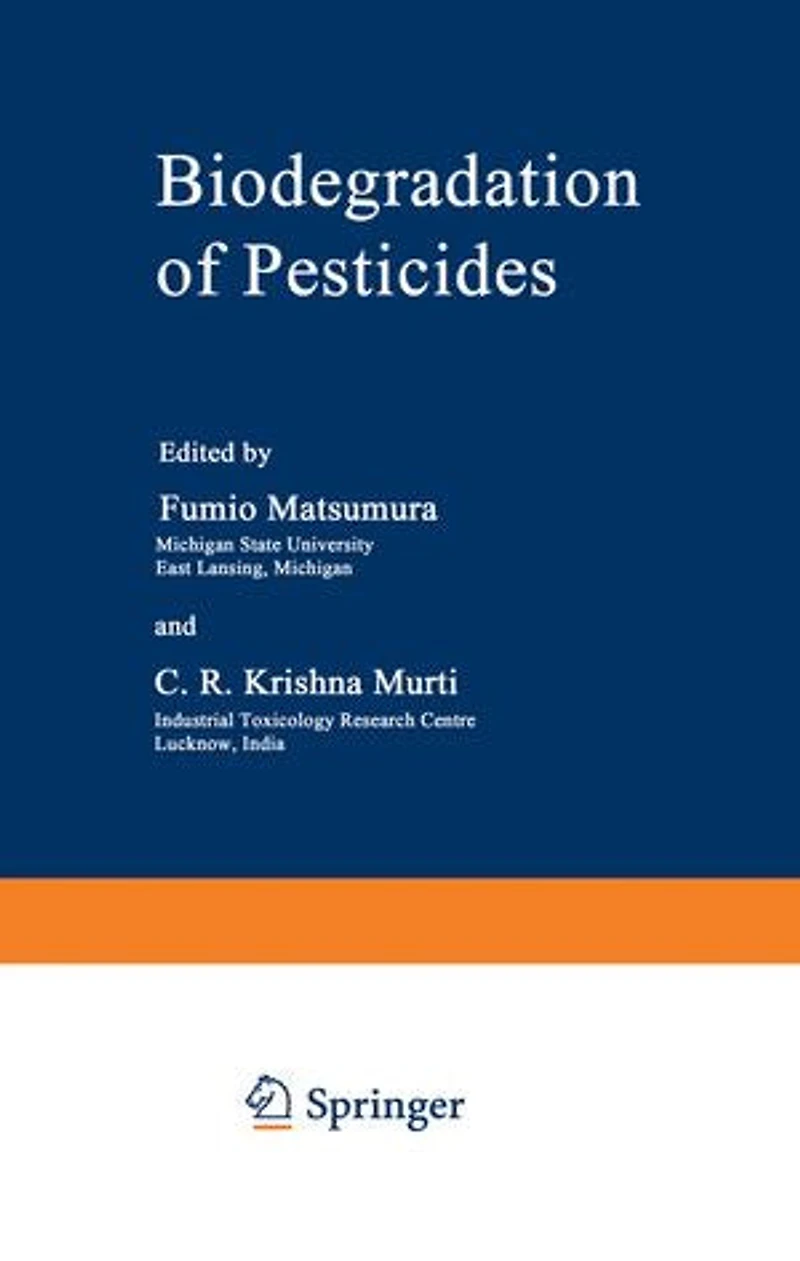
When first developed, chlorinated pesticides such as DDT, dieldrin, and mirex were received with open arms, quickly becoming popular as effective, economic agents against pests. But evidence began to mount that residues of these chemicals remained in the environment, not breaking down, often appearing in plants and animals. By the late seventies many pesticides had achieved a terrible notoriety and were subsequently banned in a number of countries. Of tremendous concern, then, is the persistence of pesticides in the environment. The major thrust of research and development in the area of pesticides has properly been the creation of substances that are both effective and degradable. Yet in order to successfully promote the use of biodegradable pesticides, one must fully understand the mechanism of degradation, and it is to this vital subject that we address ourselves in the present volume. According to the Biodegradation Task Force, Safety of Chemicals Com mittee, Brussels (1978), biodegradation may be defined as the molecular degradation of an organic substance resulting from the complex action of living organisms. A substance is said to be biodegraded to an environmentally acceptable extent when environmentally undesirable properties are lost. Loss of some characteristic function or property of substance by biodegradation may be referred to as biological transformation.
When first developed, chlorinated pesticides such as DDT, dieldrin, and mirex were received with open arms, quickly becoming popular as effective, economic agents against pests. But evidence began to mount that residues of these chemicals remained in the environment, not breaking down, often appearing in plants and animals. By the late seventies many pesticides had achieved a terrible notoriety and were subsequently banned in a number of countries. Of tremendous concern, then, is the persistence of pesticides in the environment. The major thrust of research and development in the area of pesticides has properly been the creation of substances that are both effective and degradable. Yet in order to successfully promote the use of biodegradable pesticides, one must fully understand the mechanism of degradation, and it is to this vital subject that we address ourselves in the present volume. According to the Biodegradation Task Force, Safety of Chemicals Com mittee, Brussels (1978), biodegradation may be defined as the molecular degradation of an organic substance resulting from the complex action of living organisms. A substance is said to be biodegraded to an environmentally acceptable extent when environmentally undesirable properties are lost. Loss of some characteristic function or property of substance by biodegradation may be referred to as biological transformation.
You May Also Like









More About Indigo at Erin Mills Town Centre
The largest book retailer in Canada also offers toys, music, home décor, gifts and lifestyle products. What's Inside...Books, Magazines, CD’s and DVD’s, Toys and Gifts, Home Accents, Electronics, Baby’s and Children’s Section, Bath and Body, Kitchen and Bedroom, Stationary Located outside in the exterior plaza.
5015 Glen Erin Dr, Mississauga, ON L5M 0R7, Canada
Find Indigo at Erin Mills Town Centre in Mississauga ON
Visit Indigo at Erin Mills Town Centre in Mississauga ON