

GIVE THE PERFECT GIFT
Erin Mills Town Centre Gift Cards are the perfect choice for your gift giving needs.Purchase gift cards at kiosks near the food court or centre court, at Guest Services, or click below to purchase online.PURCHASE HEREHome
Biogeography of the Quaternary Molluscs Southwestern Atlantic Ocean
Indigo
Loading Inventory...
Biogeography of the Quaternary Molluscs Southwestern Atlantic Ocean
Current price: $64.49
Original price: $80.62

Biogeography of the Quaternary Molluscs Southwestern Atlantic Ocean
Current price: $64.49
Original price: $80.62
Loading Inventory...
Size: Kobo eBook
*Product information may vary - to confirm product availability, pricing, shipping and return information please contact Indigo
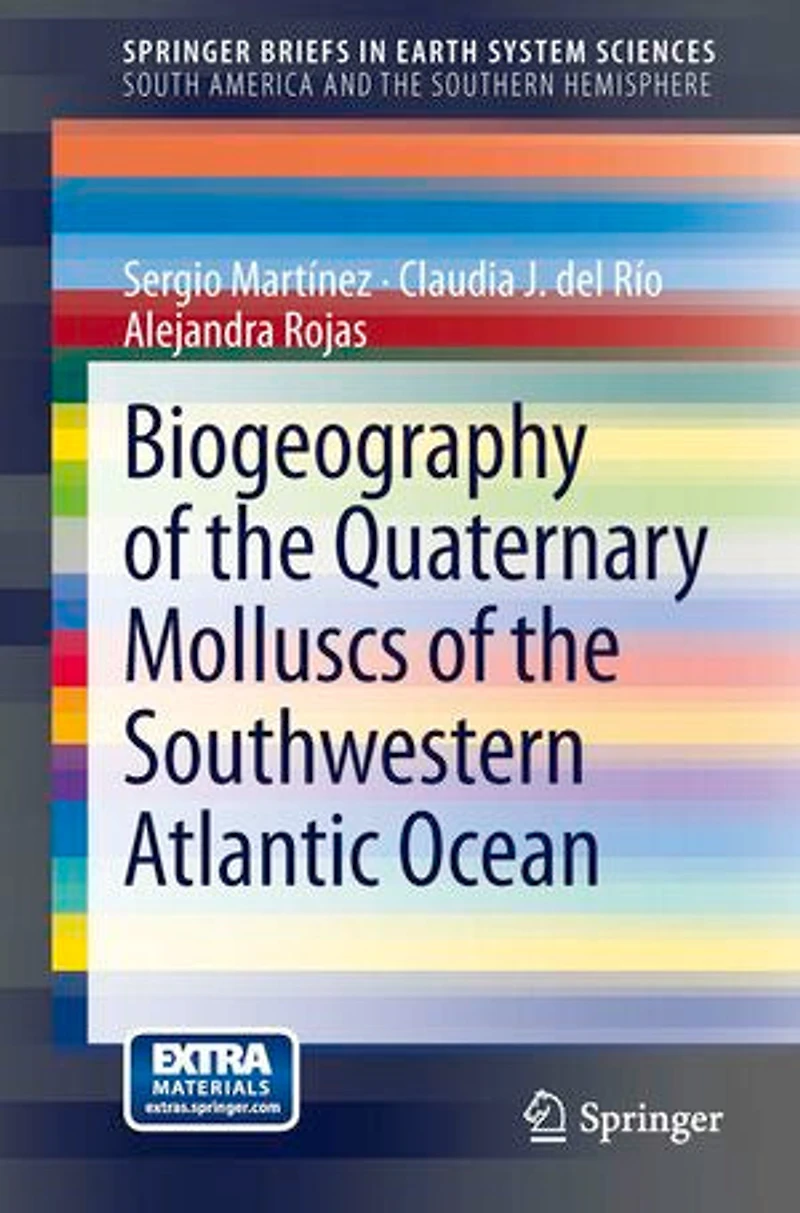
The Quaternary comprises a brief time in the Earth's history, and apart from a few exceptions, molluscan assemblages recovered from exposures along the coast of Southwestern South America (Southern Brazil, Uruguay, Argentina) are essentially the same than those that inhabit the region today, leading to the assumption that no important change in the distribution of the faunas since Pleistocene times has occurred. However, the good taxonomic and temporal resolution reached in the last years, allowed us to detect some biogeographic changes, although traditional biogeographic units remain the same (i.e. Magellanic and Argentinean Provinces). These modifications involve mainly variations in the taxonomic composition of the assemblages and in the southern boundaries of some species distributions (extralimital species), today retracted northwards. These changes are related to southward shifts of the warm waters of the Brazilian Current, correlated with global warm peaks. This phenomenon was more intense in the Late Pleistocene (MIS 5e) and in the Holocene between ca. 6500-3500 14C yr.
The Quaternary comprises a brief time in the Earth's history, and apart from a few exceptions, molluscan assemblages recovered from exposures along the coast of Southwestern South America (Southern Brazil, Uruguay, Argentina) are essentially the same than those that inhabit the region today, leading to the assumption that no important change in the distribution of the faunas since Pleistocene times has occurred. However, the good taxonomic and temporal resolution reached in the last years, allowed us to detect some biogeographic changes, although traditional biogeographic units remain the same (i.e. Magellanic and Argentinean Provinces). These modifications involve mainly variations in the taxonomic composition of the assemblages and in the southern boundaries of some species distributions (extralimital species), today retracted northwards. These changes are related to southward shifts of the warm waters of the Brazilian Current, correlated with global warm peaks. This phenomenon was more intense in the Late Pleistocene (MIS 5e) and in the Holocene between ca. 6500-3500 14C yr.
You May Also Like










More About Indigo at Erin Mills Town Centre
The largest book retailer in Canada also offers toys, music, home décor, gifts and lifestyle products. What's Inside...Books, Magazines, CD’s and DVD’s, Toys and Gifts, Home Accents, Electronics, Baby’s and Children’s Section, Bath and Body, Kitchen and Bedroom, Stationary Located outside in the exterior plaza.
5015 Glen Erin Dr, Mississauga, ON L5M 0R7, Canada
Find Indigo at Erin Mills Town Centre in Mississauga ON
Visit Indigo at Erin Mills Town Centre in Mississauga ON