

GIVE THE PERFECT GIFT
Erin Mills Town Centre Gift Cards are the perfect choice for your gift giving needs.Purchase gift cards at kiosks near the food court or centre court, at Guest Services, or click below to purchase online.PURCHASE HEREHome
Biological Flow Large Vessels: Dialog between Numerical Modeling and Vitro/In Vivo Experiments
Indigo
Loading Inventory...
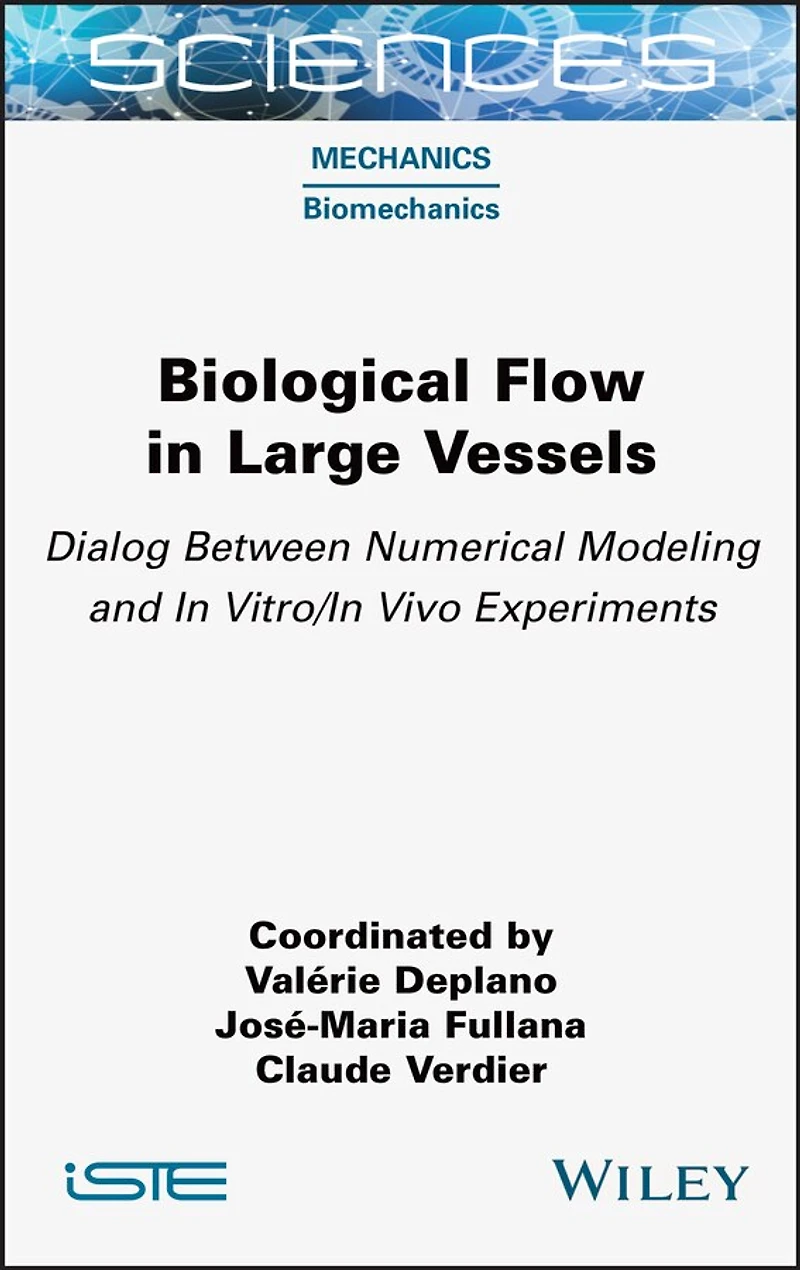
Biological Flow Large Vessels: Dialog between Numerical Modeling and Vitro/In Vivo Experiments
Current price: $235.00

Biological Flow Large Vessels: Dialog between Numerical Modeling and Vitro/In Vivo Experiments
Current price: $235.00
Loading Inventory...
Size: Hardcover
*Product information may vary - to confirm product availability, pricing, shipping and return information please contact Indigo
This book examines recent methods used for blood flow modeling and associated in vivo experiments, conducted using experimental data from medical imaging. Different strategies are proposed, from small-scale models to complex 3D modeling using modern computational codes. The geometries are wide-ranging and deal with the narrowing and widening of sections (stenoses, aneurysms), bifurcations, geometries associated with prosthetic elements, and even cases of vessels with smaller dimensions than those of the blood cells circulating in them. Biological Flow in Large Vessels provides answers to the question of how medical and biomechanical knowledge can be combined to address clinical problems. It offers guidance for further development of numerical models, as well as experimental protocols applied to clinical research, with tools that can be used in real-time and at the patient's bedside, for decision-making support, predicting the progression of pathologies, and planning personalized interventions.
This book examines recent methods used for blood flow modeling and associated in vivo experiments, conducted using experimental data from medical imaging. Different strategies are proposed, from small-scale models to complex 3D modeling using modern computational codes. The geometries are wide-ranging and deal with the narrowing and widening of sections (stenoses, aneurysms), bifurcations, geometries associated with prosthetic elements, and even cases of vessels with smaller dimensions than those of the blood cells circulating in them. Biological Flow in Large Vessels provides answers to the question of how medical and biomechanical knowledge can be combined to address clinical problems. It offers guidance for further development of numerical models, as well as experimental protocols applied to clinical research, with tools that can be used in real-time and at the patient's bedside, for decision-making support, predicting the progression of pathologies, and planning personalized interventions.
You May Also Like










More About Indigo at Erin Mills Town Centre
The largest book retailer in Canada also offers toys, music, home décor, gifts and lifestyle products. What's Inside...Books, Magazines, CD’s and DVD’s, Toys and Gifts, Home Accents, Electronics, Baby’s and Children’s Section, Bath and Body, Kitchen and Bedroom, Stationary Located outside in the exterior plaza.
5015 Glen Erin Dr, Mississauga, ON L5M 0R7, Canada
Find Indigo at Erin Mills Town Centre in Mississauga ON
Visit Indigo at Erin Mills Town Centre in Mississauga ON