

GIVE THE PERFECT GIFT
Erin Mills Town Centre Gift Cards are the perfect choice for your gift giving needs.Purchase gift cards at kiosks near the food court or centre court, at Guest Services, or click below to purchase online.PURCHASE HEREHome
Biological Nitrogen Fixation for Sustainable Agriculture: Extended versions of papers presented in the Symposium, Role of Biological Nitrogen Fixation in Sustainable Agriculture at the 13th Congress of Soil Science, Kyoto, Japan, 1990
Indigo
Loading Inventory...
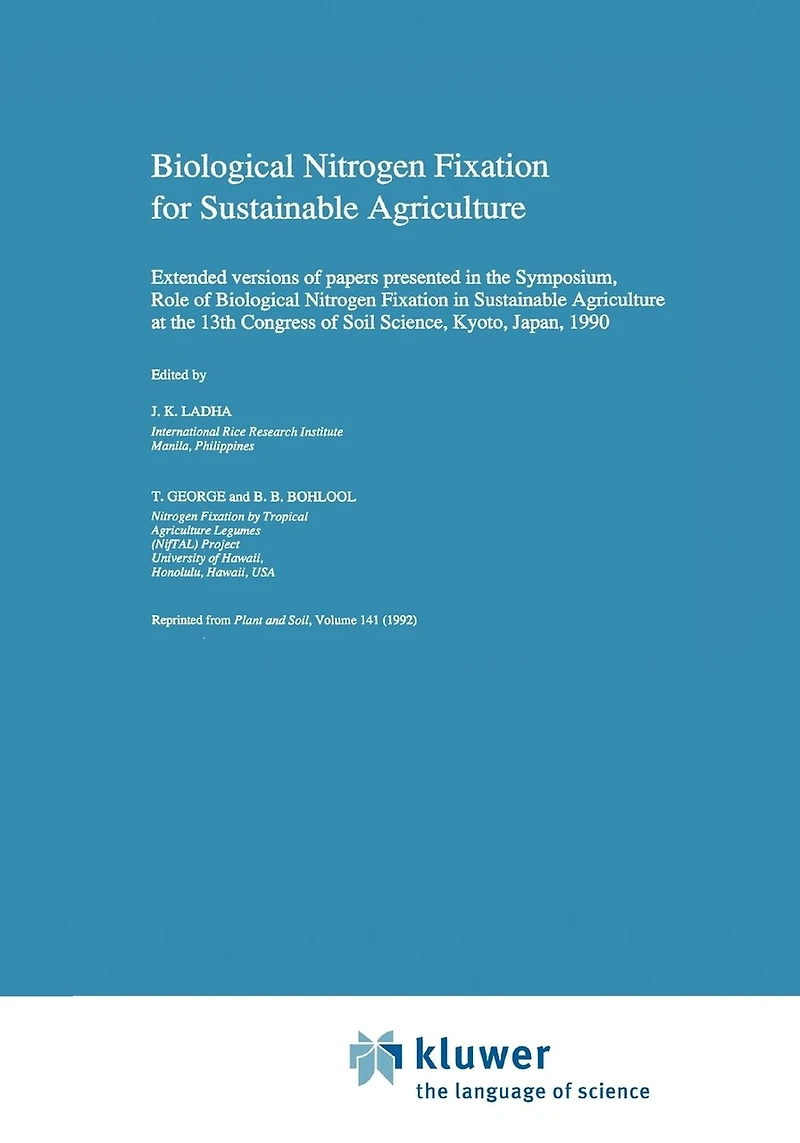
Biological Nitrogen Fixation for Sustainable Agriculture: Extended versions of papers presented in the Symposium, Role of Biological Nitrogen Fixation in Sustainable Agriculture at the 13th Congress of Soil Science, Kyoto, Japan, 1990
Current price: $248.50

Biological Nitrogen Fixation for Sustainable Agriculture: Extended versions of papers presented in the Symposium, Role of Biological Nitrogen Fixation in Sustainable Agriculture at the 13th Congress of Soil Science, Kyoto, Japan, 1990
Current price: $248.50
Loading Inventory...
Size: Paperback
*Product information may vary - to confirm product availability, pricing, shipping and return information please contact Indigo
Chemical fertilizers have had a significant impact on food production in the recent past, and are today an indispensable part of modern agriculture. On the other hand, the oil crisis of the 1970s and the current Middle East problems are constant reminders of the vulnerability of our fossil fuel dependent agriculture. There are vast areas of the developing world where N fertilizers are neither available nor affordable and, in most of these countries, balance of payment problems have resulted in the removal of N fertilizer subsidies. The external costs of environmental degradation and human health far exceed economic concerns. Input efficiency of N fertilizer is one of the lowest and, in turn, contributes substantially to environmental pollution. Nitrate in ground and surface waters and the threat to the stability of the ozone layer from gaseous oxides of nitrogen are major health and environmental concerns. The removal of large quantities of crop produce from the land also depletes soil of its native N reserves. Another concern is the decline in crop yields under continuous use of N fertilizers.
These economic, environmental and production considerations dictate that biological alternatives which can augment, and in some cases replace, N fertilizers must be exploited. Long-term sustainability of agricultural systems must rely on the use and effective management of internal resources. The process of biological nitrogen fixation offers and economically attractive and ecologically sound means of reducing external nitrogen input and improving the quality and quantity of internal resources. In this book, we outline sustainability issues that dictate an increased use of biological nitrogen fixation and the constraints on its optimal use in agriculture.
Chemical fertilizers have had a significant impact on food production in the recent past, and are today an indispensable part of modern agriculture. On the other hand, the oil crisis of the 1970s and the current Middle East problems are constant reminders of the vulnerability of our fossil fuel dependent agriculture. There are vast areas of the developing world where N fertilizers are neither available nor affordable and, in most of these countries, balance of payment problems have resulted in the removal of N fertilizer subsidies. The external costs of environmental degradation and human health far exceed economic concerns. Input efficiency of N fertilizer is one of the lowest and, in turn, contributes substantially to environmental pollution. Nitrate in ground and surface waters and the threat to the stability of the ozone layer from gaseous oxides of nitrogen are major health and environmental concerns. The removal of large quantities of crop produce from the land also depletes soil of its native N reserves. Another concern is the decline in crop yields under continuous use of N fertilizers.
These economic, environmental and production considerations dictate that biological alternatives which can augment, and in some cases replace, N fertilizers must be exploited. Long-term sustainability of agricultural systems must rely on the use and effective management of internal resources. The process of biological nitrogen fixation offers and economically attractive and ecologically sound means of reducing external nitrogen input and improving the quality and quantity of internal resources. In this book, we outline sustainability issues that dictate an increased use of biological nitrogen fixation and the constraints on its optimal use in agriculture.
You May Also Like














More About Indigo at Erin Mills Town Centre
The largest book retailer in Canada also offers toys, music, home décor, gifts and lifestyle products. What's Inside...Books, Magazines, CD’s and DVD’s, Toys and Gifts, Home Accents, Electronics, Baby’s and Children’s Section, Bath and Body, Kitchen and Bedroom, Stationary Located outside in the exterior plaza.
5015 Glen Erin Dr, Mississauga, ON L5M 0R7, Canada
Find Indigo at Erin Mills Town Centre in Mississauga ON
Visit Indigo at Erin Mills Town Centre in Mississauga ON