

GIVE THE PERFECT GIFT
Erin Mills Town Centre Gift Cards are the perfect choice for your gift giving needs.Purchase gift cards at kiosks near the food court or centre court, at Guest Services, or click below to purchase online.PURCHASE HEREHome
Blacks in a White Place: Ingersoll, Canada West and Ontario, 1850-1921
Indigo
Loading Inventory...
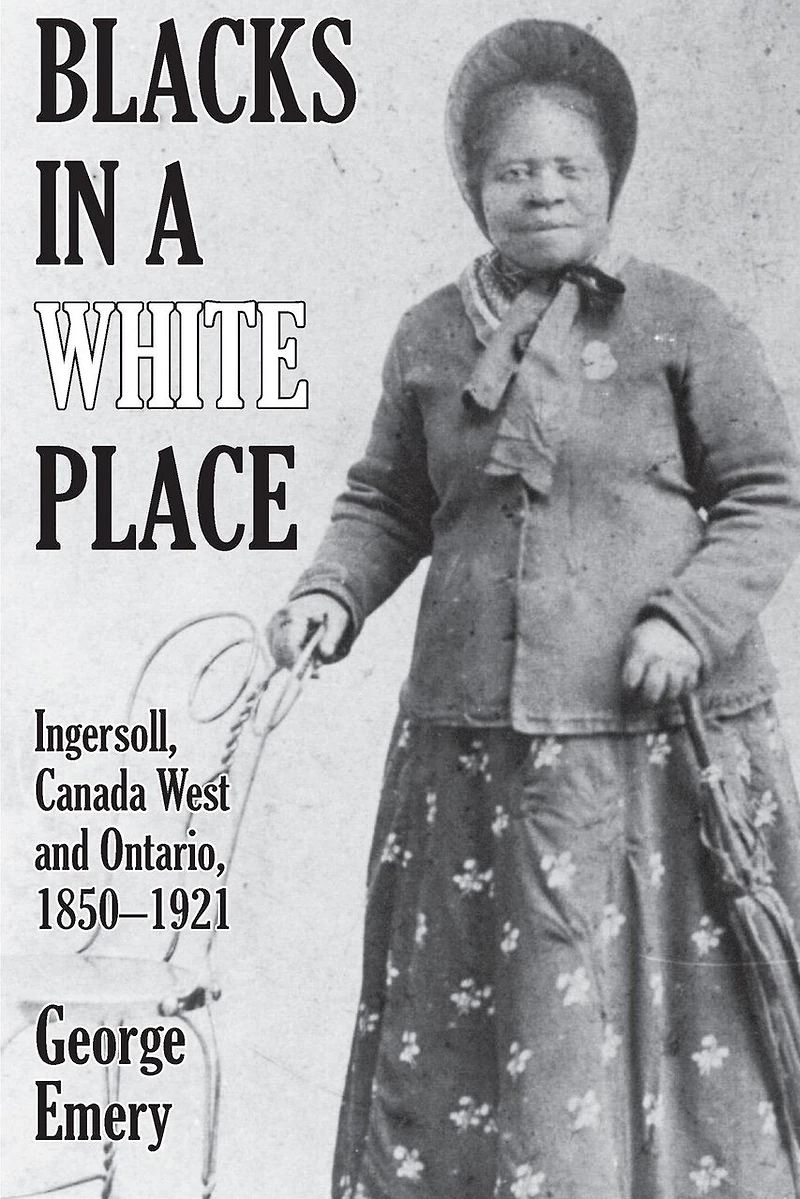
Blacks in a White Place: Ingersoll, Canada West and Ontario, 1850-1921
Current price: $40.00

Blacks in a White Place: Ingersoll, Canada West and Ontario, 1850-1921
Current price: $40.00
Loading Inventory...
Size: Paperback
*Product information may vary - to confirm product availability, pricing, shipping and return information please contact Indigo
In Blacks in a White Place , historian George Emery examines the lives of Blacks in Ingersoll, Ontario, during the years 1850 to 1921.During these years, Ingersoll---located in Oxford County, in the heart of Southwestern Ontario---was mostly a White-race place with a small Black-race minority. The number of Blacks peaked on the eve of the American Civil War, making up about 3 percent of the Ingersoll-area population. The Black population remained significant during the 1860s and 1870s, but then plummeted to 28 in Ingersoll and none in the townships by 1921. Emery sets out to solve several mysteries. Why did Ingersoll have a large and growing Coloured population on the eve of the American Civil War? Why did its Black population largely vanish during the decades following? How did Blacks and Whites get along in Ingersoll before, during, and after the American Civil War---cordially or with friction? Blacks in a White Place is about Blacks but also about how Ingersoll's White local historians interpreted them. The conventional wisdom based on their work regards Ingersoll's Black history as a by-product of American slavery before the Civil War and its abolition in 1863. Blacks came to Ingersoll, so the story goes, to escape oppression in Southern Slave States; they then returned to the "sunny South" once slavery was over (because of the severity of the Canadian winter climate, suggests one local historian). Ingersoll was a terminus of a White-assisted Underground Railway that spirited runaways from Southern Slave States to Northern Free States or to the sanctuary of Canada. Ingersoll Whites actively welcomed these refugees, giving them "a safe haven." In return, in 1854 grateful Blacks contributed free labour to help erect a White-abolitionist Wesleyan Methodist Church. As Emery shows, upon further scrutiny this conventional narrative becomes problematic. The results of his investigations provide a clearer and more accurate picture of the lives of Blacks in the White place of Ingersoll, Ontario, in the second half of the nineteenth century.
In Blacks in a White Place , historian George Emery examines the lives of Blacks in Ingersoll, Ontario, during the years 1850 to 1921.During these years, Ingersoll---located in Oxford County, in the heart of Southwestern Ontario---was mostly a White-race place with a small Black-race minority. The number of Blacks peaked on the eve of the American Civil War, making up about 3 percent of the Ingersoll-area population. The Black population remained significant during the 1860s and 1870s, but then plummeted to 28 in Ingersoll and none in the townships by 1921. Emery sets out to solve several mysteries. Why did Ingersoll have a large and growing Coloured population on the eve of the American Civil War? Why did its Black population largely vanish during the decades following? How did Blacks and Whites get along in Ingersoll before, during, and after the American Civil War---cordially or with friction? Blacks in a White Place is about Blacks but also about how Ingersoll's White local historians interpreted them. The conventional wisdom based on their work regards Ingersoll's Black history as a by-product of American slavery before the Civil War and its abolition in 1863. Blacks came to Ingersoll, so the story goes, to escape oppression in Southern Slave States; they then returned to the "sunny South" once slavery was over (because of the severity of the Canadian winter climate, suggests one local historian). Ingersoll was a terminus of a White-assisted Underground Railway that spirited runaways from Southern Slave States to Northern Free States or to the sanctuary of Canada. Ingersoll Whites actively welcomed these refugees, giving them "a safe haven." In return, in 1854 grateful Blacks contributed free labour to help erect a White-abolitionist Wesleyan Methodist Church. As Emery shows, upon further scrutiny this conventional narrative becomes problematic. The results of his investigations provide a clearer and more accurate picture of the lives of Blacks in the White place of Ingersoll, Ontario, in the second half of the nineteenth century.
You May Also Like









More About Indigo at Erin Mills Town Centre
The largest book retailer in Canada also offers toys, music, home décor, gifts and lifestyle products. What's Inside...Books, Magazines, CD’s and DVD’s, Toys and Gifts, Home Accents, Electronics, Baby’s and Children’s Section, Bath and Body, Kitchen and Bedroom, Stationary Located outside in the exterior plaza.
5015 Glen Erin Dr, Mississauga, ON L5M 0R7, Canada
Find Indigo at Erin Mills Town Centre in Mississauga ON
Visit Indigo at Erin Mills Town Centre in Mississauga ON