

GIVE THE PERFECT GIFT
Erin Mills Town Centre Gift Cards are the perfect choice for your gift giving needs.Purchase gift cards at kiosks near the food court or centre court, at Guest Services, or click below to purchase online.PURCHASE HEREHome
Blood: An Epic History of Medicine and Commerce
Indigo
Loading Inventory...
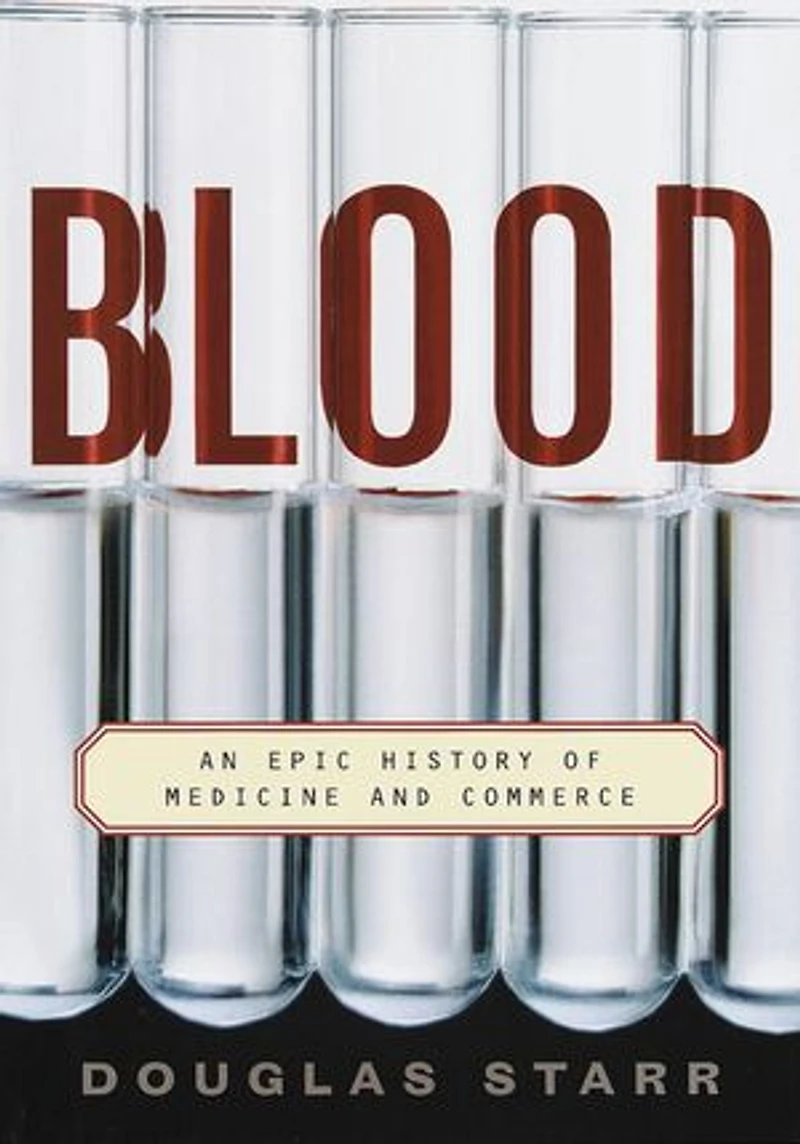
Blood: An Epic History of Medicine and Commerce
Current price: $9.99

Blood: An Epic History of Medicine and Commerce
Current price: $9.99
Loading Inventory...
Size: Kobo eBook
*Product information may vary - to confirm product availability, pricing, shipping and return information please contact Indigo
Essence and emblem of life--feared, revered, mythologized, and used in magic and medicine from earliest times--human blood is now the center of a huge, secretive, and often dangerous worldwide commerce. It is a commerce whose impact upon humanity rivals that of any other business--millions of lives have been saved by blood and its various derivatives, and tens of thousands of lives have been lost. Douglas Starr tells how this came to be, in a sweeping history that ranges through the centuries.
With the dawn of science, blood came to be seen as a component of human anatomy, capable of being isolated, studied, used. Starr describes the first documented transfusion: In the seventeenth century, one of Louis XIV's court physicians transfers the blood of a calf into a madman to "cure" him. At the turn of the twentieth century a young researcher in Vienna identifies the basic blood groups, taking the first step toward successful transfusion. Then a New York doctor finds a way to stop blood from clotting, thereby making all transfusion possible.
In the 1930s, a Russian physician, in grisly improvisation, successfully uses cadaver blood to help living patients--and realizes that blood can be stored. The first blood bank is soon operating in Chicago.
During World War II, researchers, driven by battlefield needs, break down blood into usable components that are more easily stored and transported. This "fractionation" process--accomplished by a Harvard team--produces a host of pharmaceuticals, setting the stage for the global marketplace to come. Plasma, precisely because it can be made into long-lasting drugs, is shipped and traded for profit; today it is a $5 billion business.
The author recounts the tragic spread of AIDS through the distribution of contaminated blood products, and describes why and how related scandals have erupted around the world. Finally, he looks at the latest attempts to make artificial blood.
Douglas Starr has written a groundbreaking book that tackles a subject of universal and urgent importance and explores the perils and promises that lie ahead.
Essence and emblem of life--feared, revered, mythologized, and used in magic and medicine from earliest times--human blood is now the center of a huge, secretive, and often dangerous worldwide commerce. It is a commerce whose impact upon humanity rivals that of any other business--millions of lives have been saved by blood and its various derivatives, and tens of thousands of lives have been lost. Douglas Starr tells how this came to be, in a sweeping history that ranges through the centuries.
With the dawn of science, blood came to be seen as a component of human anatomy, capable of being isolated, studied, used. Starr describes the first documented transfusion: In the seventeenth century, one of Louis XIV's court physicians transfers the blood of a calf into a madman to "cure" him. At the turn of the twentieth century a young researcher in Vienna identifies the basic blood groups, taking the first step toward successful transfusion. Then a New York doctor finds a way to stop blood from clotting, thereby making all transfusion possible.
In the 1930s, a Russian physician, in grisly improvisation, successfully uses cadaver blood to help living patients--and realizes that blood can be stored. The first blood bank is soon operating in Chicago.
During World War II, researchers, driven by battlefield needs, break down blood into usable components that are more easily stored and transported. This "fractionation" process--accomplished by a Harvard team--produces a host of pharmaceuticals, setting the stage for the global marketplace to come. Plasma, precisely because it can be made into long-lasting drugs, is shipped and traded for profit; today it is a $5 billion business.
The author recounts the tragic spread of AIDS through the distribution of contaminated blood products, and describes why and how related scandals have erupted around the world. Finally, he looks at the latest attempts to make artificial blood.
Douglas Starr has written a groundbreaking book that tackles a subject of universal and urgent importance and explores the perils and promises that lie ahead.
You May Also Like










More About Indigo at Erin Mills Town Centre
The largest book retailer in Canada also offers toys, music, home décor, gifts and lifestyle products. What's Inside...Books, Magazines, CD’s and DVD’s, Toys and Gifts, Home Accents, Electronics, Baby’s and Children’s Section, Bath and Body, Kitchen and Bedroom, Stationary Located outside in the exterior plaza.
5015 Glen Erin Dr, Mississauga, ON L5M 0R7, Canada
Find Indigo at Erin Mills Town Centre in Mississauga ON
Visit Indigo at Erin Mills Town Centre in Mississauga ON