

GIVE THE PERFECT GIFT
Erin Mills Town Centre Gift Cards are the perfect choice for your gift giving needs.Purchase gift cards at kiosks near the food court or centre court, at Guest Services, or click below to purchase online.PURCHASE HEREHome
Blurred Strategy: Collaborating Civil-military Interagency Doctrine For Post Conflict Operations
Indigo
Loading Inventory...
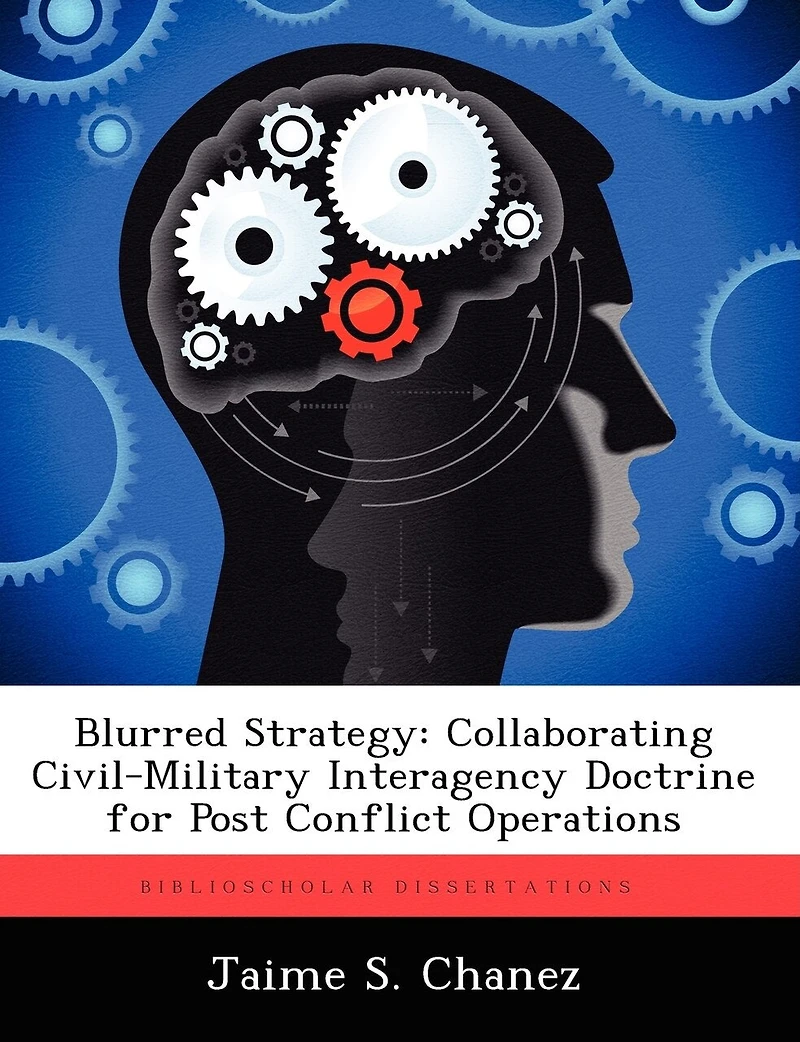
Blurred Strategy: Collaborating Civil-military Interagency Doctrine For Post Conflict Operations
Current price: $59.00

Blurred Strategy: Collaborating Civil-military Interagency Doctrine For Post Conflict Operations
Current price: $59.00
Loading Inventory...
Size: Paperback
*Product information may vary - to confirm product availability, pricing, shipping and return information please contact Indigo
The premise for this study evolved during Operation IRAQI FREEDOM (OIF). It stems from a perception that the combat plan for the Coalition force invasion worked brilliantly but noticeably absent was a detailed plan for transitioning to peace. This study conducts a thorough review of the current joint military doctrine and the interagency policy and guidance relevant to post-conflict operations, complex contingency and Military Operations Other Than War (MOOTW). It includes a case study of the formal USG civil-military interagency planning effort for OIF's post-conflict operations. It creatively employs a gap analysis research strategy in concert with a case study methodology, the research addresses its primary research question: Is joint military doctrine sufficiently robust to be adopted by the USG civil-military planning community as the framework for developing a single integrated doctrine for planning complex contingency and post-conflict operations? Several factors are cited as contributing reasons for the lack of a robust post-conflict plan: strategical errors by the Bush Administration, poor coordination between USG civil-military interagency planners, and the lack of a solid planning framework for complex contingency and post-conflict operations. The research concluded that a fundamental impediment to planning is fact that its departments and agencies do not focus and coordinate their activities effectively. There are a number of reasons degrading the integrated effort: unfamiliarity, ineffective coordination structures, incompatible approaches, under developed lines of responsibility, incompatible architecture, organizational dogmas, and resource constraints. This study recommends that civil-military planners establish a solid and well-resourced planning framework that includes well-defined lines of coordination, a collaborative architecture, a means for continuous professional education and training, and a single common integrated doctrine. The proposed f
The premise for this study evolved during Operation IRAQI FREEDOM (OIF). It stems from a perception that the combat plan for the Coalition force invasion worked brilliantly but noticeably absent was a detailed plan for transitioning to peace. This study conducts a thorough review of the current joint military doctrine and the interagency policy and guidance relevant to post-conflict operations, complex contingency and Military Operations Other Than War (MOOTW). It includes a case study of the formal USG civil-military interagency planning effort for OIF's post-conflict operations. It creatively employs a gap analysis research strategy in concert with a case study methodology, the research addresses its primary research question: Is joint military doctrine sufficiently robust to be adopted by the USG civil-military planning community as the framework for developing a single integrated doctrine for planning complex contingency and post-conflict operations? Several factors are cited as contributing reasons for the lack of a robust post-conflict plan: strategical errors by the Bush Administration, poor coordination between USG civil-military interagency planners, and the lack of a solid planning framework for complex contingency and post-conflict operations. The research concluded that a fundamental impediment to planning is fact that its departments and agencies do not focus and coordinate their activities effectively. There are a number of reasons degrading the integrated effort: unfamiliarity, ineffective coordination structures, incompatible approaches, under developed lines of responsibility, incompatible architecture, organizational dogmas, and resource constraints. This study recommends that civil-military planners establish a solid and well-resourced planning framework that includes well-defined lines of coordination, a collaborative architecture, a means for continuous professional education and training, and a single common integrated doctrine. The proposed f
You May Also Like









More About Indigo at Erin Mills Town Centre
The largest book retailer in Canada also offers toys, music, home décor, gifts and lifestyle products. What's Inside...Books, Magazines, CD’s and DVD’s, Toys and Gifts, Home Accents, Electronics, Baby’s and Children’s Section, Bath and Body, Kitchen and Bedroom, Stationary Located outside in the exterior plaza.
5015 Glen Erin Dr, Mississauga, ON L5M 0R7, Canada
Find Indigo at Erin Mills Town Centre in Mississauga ON
Visit Indigo at Erin Mills Town Centre in Mississauga ON