

GIVE THE PERFECT GIFT
Erin Mills Town Centre Gift Cards are the perfect choice for your gift giving needs.Purchase gift cards at kiosks near the food court or centre court, at Guest Services, or click below to purchase online.PURCHASE HEREHome
Building States and Markets after Communism: The Perils of Polarized Democracy
Indigo
Loading Inventory...
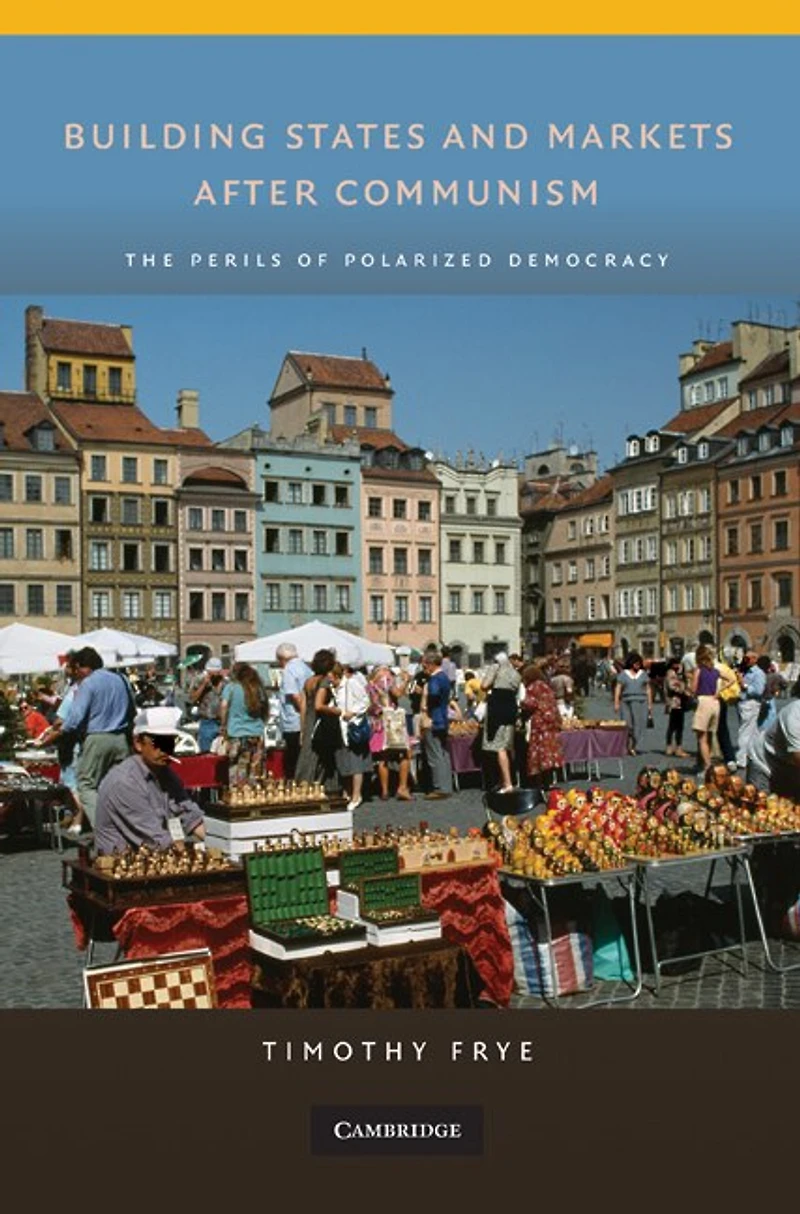
Building States and Markets after Communism: The Perils of Polarized Democracy
Current price: $44.95

Building States and Markets after Communism: The Perils of Polarized Democracy
Current price: $44.95
Loading Inventory...
Size: Paperback
*Product information may vary - to confirm product availability, pricing, shipping and return information please contact Indigo
Does democracy promote the creation of market economies and robust state institutions? Do state-building and market-building go hand in hand? Or do they work at cross-purposes? This book examines the relationship between state-building and market-building in 25 post-communist countries from 1990 to 2004. Based on cross-national statistical analyses, surveys of business managers, and case studies from Russia, Bulgaria, Poland, and Uzbekistan, Timothy Frye demonstrates that democracy is associated with more economic reform, stronger state institutions, and higher social transfers when political polarization is low. But he also finds that increases in political polarization dampen the positive impact of democracy by making policy less predictable. He traces the roots of political polarization to high levels of income inequality and the institutional legacy of communist rule. By identifying when and how democracy fosters markets and states, this work contributes to long-standing debates in comparative politics, public policy, and post-communist studies.
Does democracy promote the creation of market economies and robust state institutions? Do state-building and market-building go hand in hand? Or do they work at cross-purposes? This book examines the relationship between state-building and market-building in 25 post-communist countries from 1990 to 2004. Based on cross-national statistical analyses, surveys of business managers, and case studies from Russia, Bulgaria, Poland, and Uzbekistan, Timothy Frye demonstrates that democracy is associated with more economic reform, stronger state institutions, and higher social transfers when political polarization is low. But he also finds that increases in political polarization dampen the positive impact of democracy by making policy less predictable. He traces the roots of political polarization to high levels of income inequality and the institutional legacy of communist rule. By identifying when and how democracy fosters markets and states, this work contributes to long-standing debates in comparative politics, public policy, and post-communist studies.
You May Also Like












More About Indigo at Erin Mills Town Centre
The largest book retailer in Canada also offers toys, music, home décor, gifts and lifestyle products. What's Inside...Books, Magazines, CD’s and DVD’s, Toys and Gifts, Home Accents, Electronics, Baby’s and Children’s Section, Bath and Body, Kitchen and Bedroom, Stationary Located outside in the exterior plaza.
5015 Glen Erin Dr, Mississauga, ON L5M 0R7, Canada
Find Indigo at Erin Mills Town Centre in Mississauga ON
Visit Indigo at Erin Mills Town Centre in Mississauga ON