

GIVE THE PERFECT GIFT
Erin Mills Town Centre Gift Cards are the perfect choice for your gift giving needs.Purchase gift cards at kiosks near the food court or centre court, at Guest Services, or click below to purchase online.PURCHASE HEREHome
Calcareous Algae and Stromatolites
Indigo
Loading Inventory...
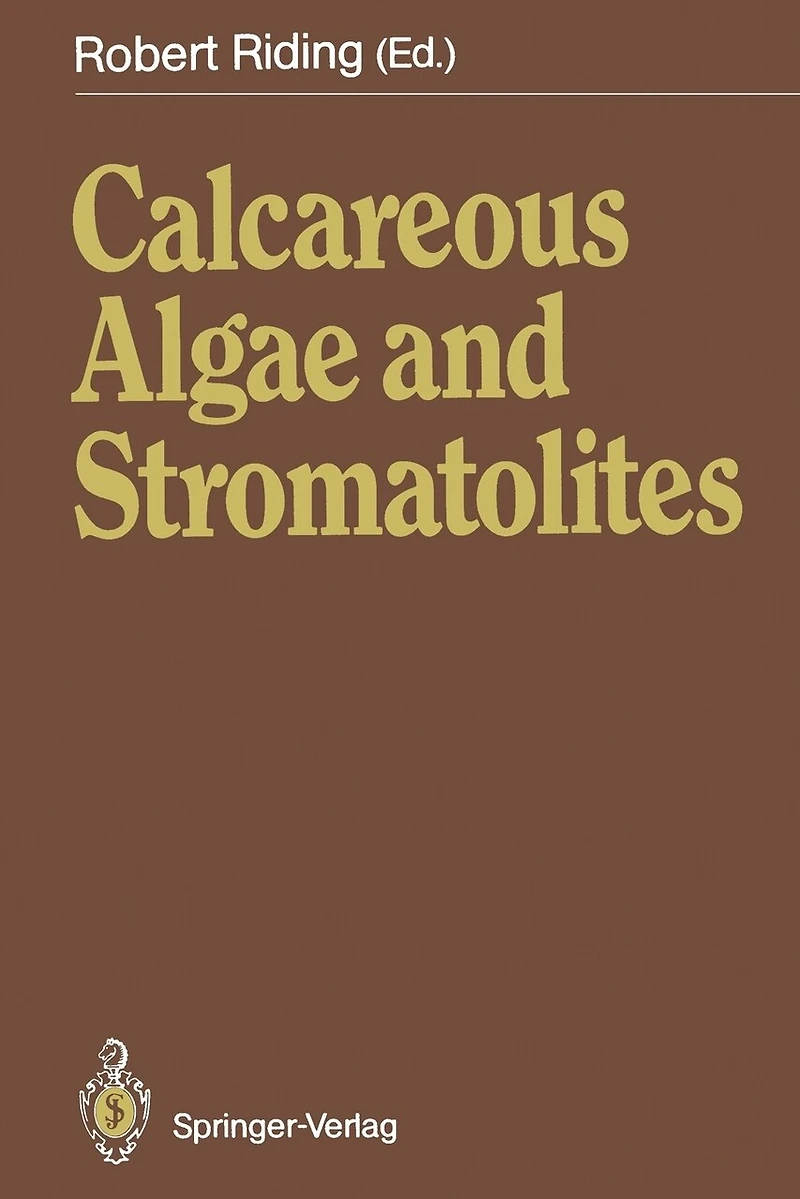
Calcareous Algae and Stromatolites
Current price: $160.95

Calcareous Algae and Stromatolites
Current price: $160.95
Loading Inventory...
Size: Paperback
*Product information may vary - to confirm product availability, pricing, shipping and return information please contact Indigo
"Calcareous algae and stromatolites" is shorthand for a wider array of organisms and fabrics that also includes calcified cyanobacteria, plus thrombolites and other microbial carbonates. Composition is the link: these are all important components of CaC0 sediments, from 3 Archaean to present and from the ocean floor to streams and lakes. It is hardly possible to examine limestones of any age without en countering them. Simultaneously they are fossils, sediments, and en vironmental indicators. It is the range of significance, coupled with the breadth of their distribution in time and space, which compels their study. Modern calcareous marine algae mainly include reds (corallines, squamariaceans, and the nemalialean Galaxaura) and greens (dasy cladaleans, udoteaceans, halimedaceans). Blue-greens, of course, are cyanobacteria and not algae, and significantly, although they are largely responsible for Recent tidal flat stromatolites, they are not calcified in the same way that pre-Cenozoic marine blue-greens are. It is in the freshwater environment of calcareous streams and lakes that we find modern calcified cyanobacteria, and they are commonly associated with the only major group of non-marine calcareous algae, the charophytes. However, in the past, and especially in the Palaeozoic and Mesozoic, things look radically different. Mingling with the ancestors of the modern flora are distinct, and often problematic, organisms.
"Calcareous algae and stromatolites" is shorthand for a wider array of organisms and fabrics that also includes calcified cyanobacteria, plus thrombolites and other microbial carbonates. Composition is the link: these are all important components of CaC0 sediments, from 3 Archaean to present and from the ocean floor to streams and lakes. It is hardly possible to examine limestones of any age without en countering them. Simultaneously they are fossils, sediments, and en vironmental indicators. It is the range of significance, coupled with the breadth of their distribution in time and space, which compels their study. Modern calcareous marine algae mainly include reds (corallines, squamariaceans, and the nemalialean Galaxaura) and greens (dasy cladaleans, udoteaceans, halimedaceans). Blue-greens, of course, are cyanobacteria and not algae, and significantly, although they are largely responsible for Recent tidal flat stromatolites, they are not calcified in the same way that pre-Cenozoic marine blue-greens are. It is in the freshwater environment of calcareous streams and lakes that we find modern calcified cyanobacteria, and they are commonly associated with the only major group of non-marine calcareous algae, the charophytes. However, in the past, and especially in the Palaeozoic and Mesozoic, things look radically different. Mingling with the ancestors of the modern flora are distinct, and often problematic, organisms.
You May Also Like










More About Indigo at Erin Mills Town Centre
The largest book retailer in Canada also offers toys, music, home décor, gifts and lifestyle products. What's Inside...Books, Magazines, CD’s and DVD’s, Toys and Gifts, Home Accents, Electronics, Baby’s and Children’s Section, Bath and Body, Kitchen and Bedroom, Stationary Located outside in the exterior plaza.
5015 Glen Erin Dr, Mississauga, ON L5M 0R7, Canada
Find Indigo at Erin Mills Town Centre in Mississauga ON
Visit Indigo at Erin Mills Town Centre in Mississauga ON