

GIVE THE PERFECT GIFT
Erin Mills Town Centre Gift Cards are the perfect choice for your gift giving needs.Purchase gift cards at kiosks near the food court or centre court, at Guest Services, or click below to purchase online.PURCHASE HEREHome
Campus Fictions: Exemption and the American Novel
Indigo
Loading Inventory...
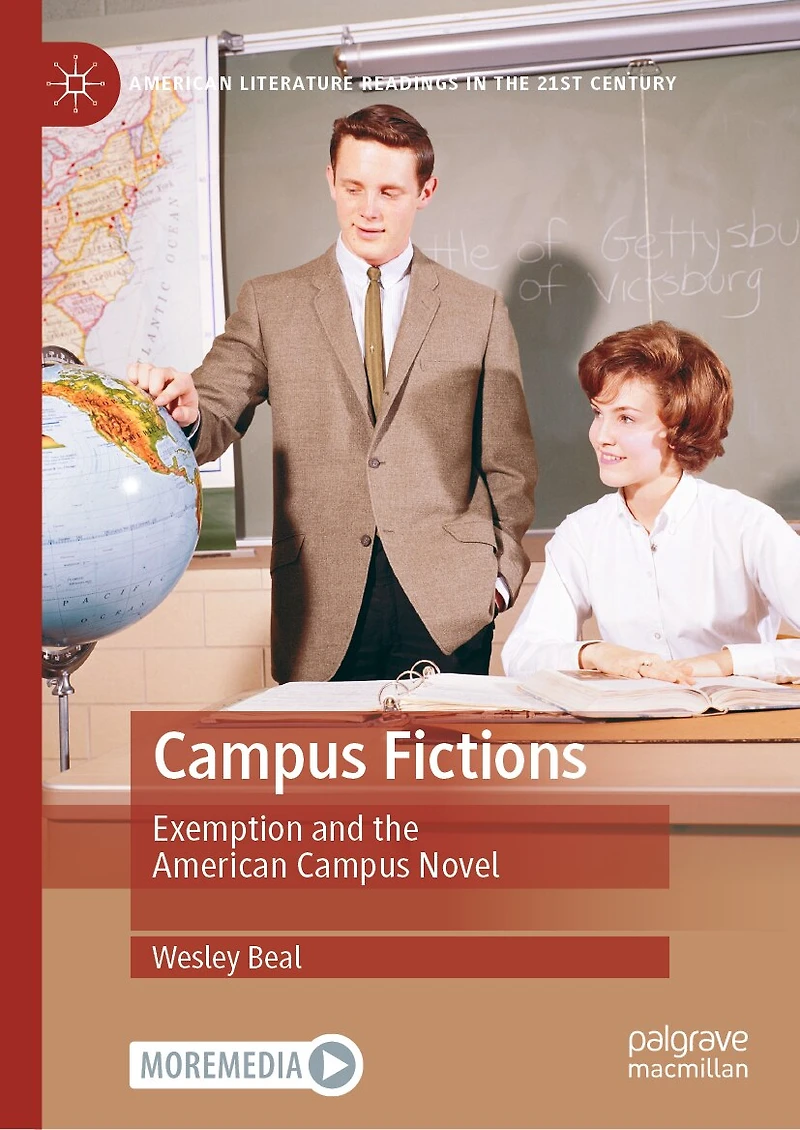

Campus Fictions: Exemption and the American Novel
Current price: $175.50

Campus Fictions: Exemption and the American Novel
Current price: $175.50
Loading Inventory...
Size: Hardcover
*Product information may vary - to confirm product availability, pricing, shipping and return information please contact Indigo
Campus Fictions argues that the academic novel balances utopian and regressive tendencies, reinforcing the crises we face in higher learning while simultaneously signposting hope for a worn institution. Whether a bestseller such as Erich Segal 's romance Love Story (1970) or wonkier fare such as Don DeLillo's White Noise (1985), the academic novel mystifies the academy not only to a wide public but also-worse-to readers who might describe themselves as sympathetic to higher learning. The book takes an eclectic approach to the academic novel with chapters discussing, for example, the genre's rampant anti-intellectualism and its work refusals, studying novels such as Ishmael Reed's Japanese by Spring (1993) and Julie Schumacher's Dear Committee Members (2014). The book is also accompanied by the "Directory of the American Campus Novel " file, which tracks the genre by year, by setting, and by other datapoints that readers might make use of. Responding directly to Jeffrey Williams, the renowned scholar of critical university studies who implores faculty to "teach the university," the book 's conclusion describes strategies for putting these novels into circulation in the classroom. Through this breadth, Campus Fictions establishes the importance of maintaining hope in the field of critical university studies, which tends toward apocalypticism and perhaps therefore toward disengagement.
Campus Fictions argues that the academic novel balances utopian and regressive tendencies, reinforcing the crises we face in higher learning while simultaneously signposting hope for a worn institution. Whether a bestseller such as Erich Segal 's romance Love Story (1970) or wonkier fare such as Don DeLillo's White Noise (1985), the academic novel mystifies the academy not only to a wide public but also-worse-to readers who might describe themselves as sympathetic to higher learning. The book takes an eclectic approach to the academic novel with chapters discussing, for example, the genre's rampant anti-intellectualism and its work refusals, studying novels such as Ishmael Reed's Japanese by Spring (1993) and Julie Schumacher's Dear Committee Members (2014). The book is also accompanied by the "Directory of the American Campus Novel " file, which tracks the genre by year, by setting, and by other datapoints that readers might make use of. Responding directly to Jeffrey Williams, the renowned scholar of critical university studies who implores faculty to "teach the university," the book 's conclusion describes strategies for putting these novels into circulation in the classroom. Through this breadth, Campus Fictions establishes the importance of maintaining hope in the field of critical university studies, which tends toward apocalypticism and perhaps therefore toward disengagement.
You May Also Like










More About Indigo at Erin Mills Town Centre
The largest book retailer in Canada also offers toys, music, home décor, gifts and lifestyle products. What's Inside...Books, Magazines, CD’s and DVD’s, Toys and Gifts, Home Accents, Electronics, Baby’s and Children’s Section, Bath and Body, Kitchen and Bedroom, Stationary Located outside in the exterior plaza.
5015 Glen Erin Dr, Mississauga, ON L5M 0R7, Canada
Find Indigo at Erin Mills Town Centre in Mississauga ON
Visit Indigo at Erin Mills Town Centre in Mississauga ON