

GIVE THE PERFECT GIFT
Erin Mills Town Centre Gift Cards are the perfect choice for your gift giving needs.Purchase gift cards at kiosks near the food court or centre court, at Guest Services, or click below to purchase online.PURCHASE HEREHome
Capital Punishment on Trial: Furman v. Georgia and the Death Penalty Modern America
Indigo
Loading Inventory...
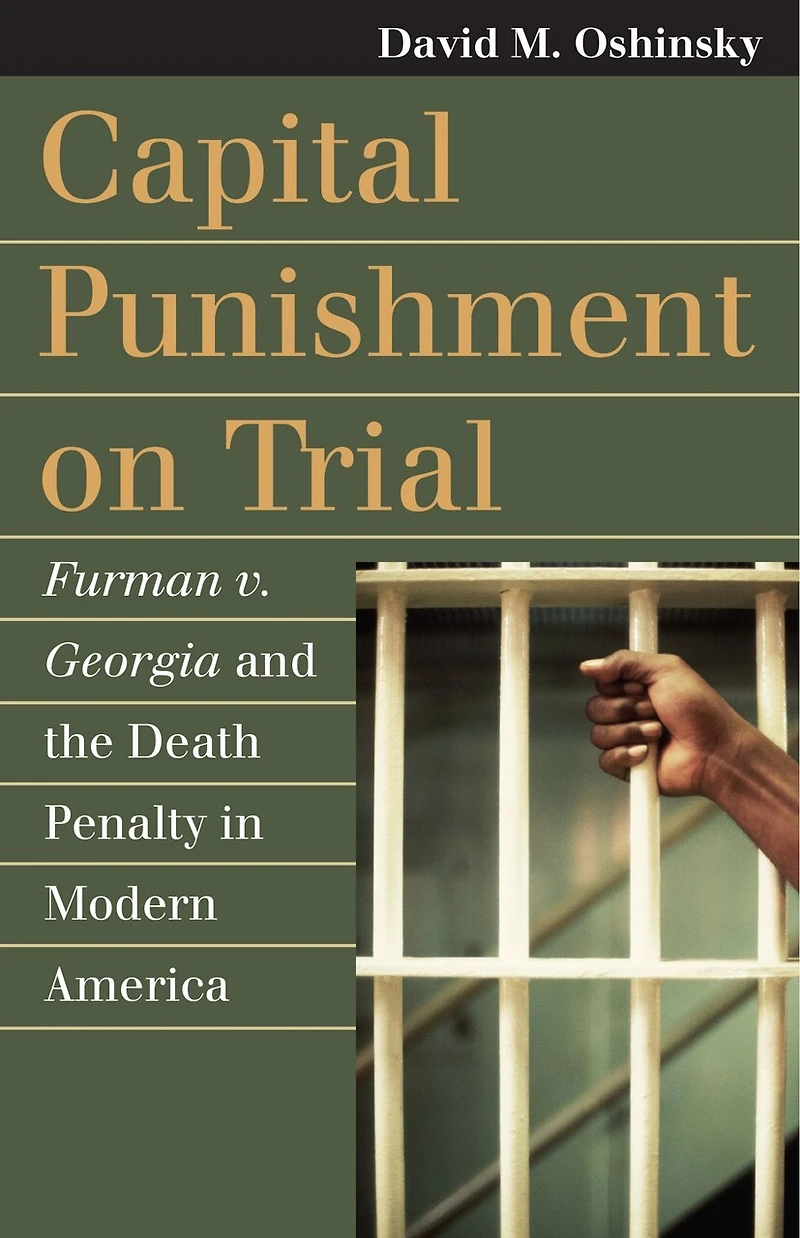
Capital Punishment on Trial: Furman v. Georgia and the Death Penalty Modern America
Current price: $134.95

Capital Punishment on Trial: Furman v. Georgia and the Death Penalty Modern America
Current price: $134.95
Loading Inventory...
Size: Hardcover
*Product information may vary - to confirm product availability, pricing, shipping and return information please contact Indigo
In his first book since the Pulitzer Prize-winning Polio: An American Story, renowned historian David Oshinsky takes a new and closer look at the Supreme Court's controversial and much-debated stances on capital punishment-in the landmark case of Furman v. Georgia .
Career criminal William Furman shot and killed a homeowner during a 1967 burglary in Savannah, Georgia. Because it was a "black-on-white" crime in the racially troubled South, it also was an open-and-shut case. The trial took less than a day, and the nearly all-white jury rendered a death sentence. Aided by the NAACP's Legal Defense Fund, Furman's African-American attorney, Bobby Mayfield, doggedly appealed the verdict all the way to the U.S. Supreme Court, which in 1972 overturned Furman's sentence by a narrow 5-4 vote, ruling that Georgia's capital punishment statute, and by implication all other state death-penalty laws, was so arbitrary and capricious as to violate the Eighth Amendment's prohibition against "cruel and unusual punishment."
Furman effectively, if temporarily, halted capital punishment in the United States. Every death row inmate across the nation was resentenced to life in prison. The decision, however, did not rule the death penalty per se to be unconstitutional; rather, it struck down the laws that currently governed its application, leaving the states free to devise new ones that the Court might find acceptable. And this is exactly what happened. In the coming years, the Supreme Court would uphold an avalanche of state legislation endorsing the death penalty. Capital punishment would return stronger than ever, with many more defendants sentenced to death and eventually executed.
Oshinsky demonstrates the troubling roles played by race and class and region in capital punishment. And he concludes by considering the most recent Supreme Court death-penalty cases involving minors and the mentally ill, as well as the impact of international opinion. Compact and engaging, Oshinsky's masterful study reflects a gift for empathy, an eye for the telling anecdote and portrait, and a talent for clarifying the complex and often confusing legal issues surrounding capital punishment.
In his first book since the Pulitzer Prize-winning Polio: An American Story, renowned historian David Oshinsky takes a new and closer look at the Supreme Court's controversial and much-debated stances on capital punishment-in the landmark case of Furman v. Georgia .
Career criminal William Furman shot and killed a homeowner during a 1967 burglary in Savannah, Georgia. Because it was a "black-on-white" crime in the racially troubled South, it also was an open-and-shut case. The trial took less than a day, and the nearly all-white jury rendered a death sentence. Aided by the NAACP's Legal Defense Fund, Furman's African-American attorney, Bobby Mayfield, doggedly appealed the verdict all the way to the U.S. Supreme Court, which in 1972 overturned Furman's sentence by a narrow 5-4 vote, ruling that Georgia's capital punishment statute, and by implication all other state death-penalty laws, was so arbitrary and capricious as to violate the Eighth Amendment's prohibition against "cruel and unusual punishment."
Furman effectively, if temporarily, halted capital punishment in the United States. Every death row inmate across the nation was resentenced to life in prison. The decision, however, did not rule the death penalty per se to be unconstitutional; rather, it struck down the laws that currently governed its application, leaving the states free to devise new ones that the Court might find acceptable. And this is exactly what happened. In the coming years, the Supreme Court would uphold an avalanche of state legislation endorsing the death penalty. Capital punishment would return stronger than ever, with many more defendants sentenced to death and eventually executed.
Oshinsky demonstrates the troubling roles played by race and class and region in capital punishment. And he concludes by considering the most recent Supreme Court death-penalty cases involving minors and the mentally ill, as well as the impact of international opinion. Compact and engaging, Oshinsky's masterful study reflects a gift for empathy, an eye for the telling anecdote and portrait, and a talent for clarifying the complex and often confusing legal issues surrounding capital punishment.
You May Also Like










More About Indigo at Erin Mills Town Centre
The largest book retailer in Canada also offers toys, music, home décor, gifts and lifestyle products. What's Inside...Books, Magazines, CD’s and DVD’s, Toys and Gifts, Home Accents, Electronics, Baby’s and Children’s Section, Bath and Body, Kitchen and Bedroom, Stationary Located outside in the exterior plaza.
5015 Glen Erin Dr, Mississauga, ON L5M 0R7, Canada
Find Indigo at Erin Mills Town Centre in Mississauga ON
Visit Indigo at Erin Mills Town Centre in Mississauga ON