

GIVE THE PERFECT GIFT
Erin Mills Town Centre Gift Cards are the perfect choice for your gift giving needs.Purchase gift cards at kiosks near the food court or centre court, at Guest Services, or click below to purchase online.PURCHASE HEREHome
Catastrophic Success: Why Foreign-imposed Regime Change Goes Wrong
Indigo
Loading Inventory...
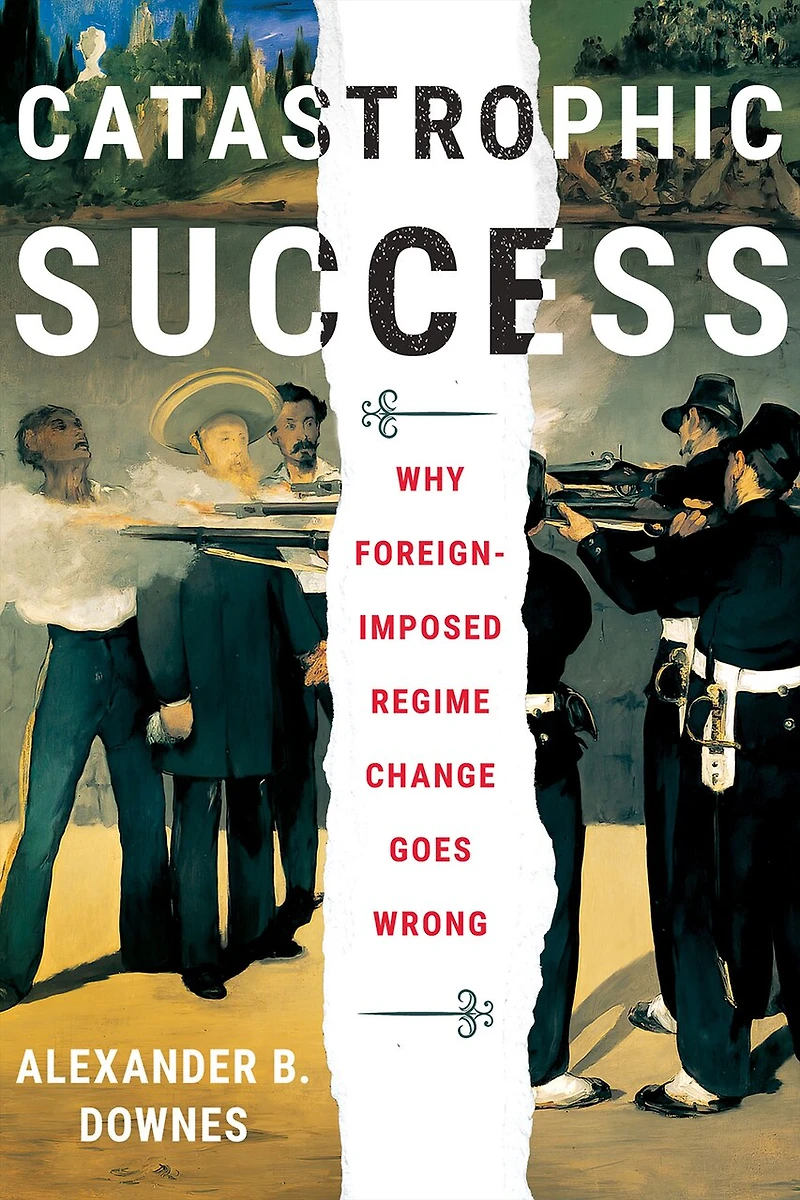

Catastrophic Success: Why Foreign-imposed Regime Change Goes Wrong
Current price: $75.95

Catastrophic Success: Why Foreign-imposed Regime Change Goes Wrong
Current price: $75.95
Loading Inventory...
Size: Hardcover
*Product information may vary - to confirm product availability, pricing, shipping and return information please contact Indigo
In Catastrophic Success , Alexander B. Downes compiles all instances of regime change around the world over the past two centuries. Drawing on this impressive data set, Downes shows that regime change increases the likelihood of civil war and violent leader removal in target states and fails to reduce the probability of conflict between intervening states and their targets. As Downes demonstrates, when a state confronts an obstinate or dangerous adversary, the lure of toppling its government and establishing a friendly administration is strong. The historical record, however, shows that foreign-imposed regime change is, in the long term, neither cheap, easy, nor consistently successful. The strategic impulse to forcibly oust antagonistic or non-compliant regimes overlooks two key facts. First, the act of overthrowing a foreign government sometimes causes its military to disintegrate, sending thousands of armed men into the countryside where they often wage an insurgency against the intervener. Second, externally-imposed leaders face a domestic audience in addition to an external one, and the two typically want different things. These divergent preferences place imposed leaders in a quandary: taking actions that please one invariably alienates the other. Regime change thus drives a wedge between external patrons and their domestic protgs or between protgs and their people. Catastrophic Success provides sober counsel for leaders and diplomats. Regime change may appear an expeditious solution, but states are usually better off relying on other tools of influence, such as diplomacy. Regime change, Downes urges, should be reserved for exceptional cases. Interveners must recognize that, absent a rare set of promising preconditions, regime change often instigates a new period of uncertainty and conflict that impedes their interests from being realized.
In Catastrophic Success , Alexander B. Downes compiles all instances of regime change around the world over the past two centuries. Drawing on this impressive data set, Downes shows that regime change increases the likelihood of civil war and violent leader removal in target states and fails to reduce the probability of conflict between intervening states and their targets. As Downes demonstrates, when a state confronts an obstinate or dangerous adversary, the lure of toppling its government and establishing a friendly administration is strong. The historical record, however, shows that foreign-imposed regime change is, in the long term, neither cheap, easy, nor consistently successful. The strategic impulse to forcibly oust antagonistic or non-compliant regimes overlooks two key facts. First, the act of overthrowing a foreign government sometimes causes its military to disintegrate, sending thousands of armed men into the countryside where they often wage an insurgency against the intervener. Second, externally-imposed leaders face a domestic audience in addition to an external one, and the two typically want different things. These divergent preferences place imposed leaders in a quandary: taking actions that please one invariably alienates the other. Regime change thus drives a wedge between external patrons and their domestic protgs or between protgs and their people. Catastrophic Success provides sober counsel for leaders and diplomats. Regime change may appear an expeditious solution, but states are usually better off relying on other tools of influence, such as diplomacy. Regime change, Downes urges, should be reserved for exceptional cases. Interveners must recognize that, absent a rare set of promising preconditions, regime change often instigates a new period of uncertainty and conflict that impedes their interests from being realized.
You May Also Like













More About Indigo at Erin Mills Town Centre
The largest book retailer in Canada also offers toys, music, home décor, gifts and lifestyle products. What's Inside...Books, Magazines, CD’s and DVD’s, Toys and Gifts, Home Accents, Electronics, Baby’s and Children’s Section, Bath and Body, Kitchen and Bedroom, Stationary Located outside in the exterior plaza.
5015 Glen Erin Dr, Mississauga, ON L5M 0R7, Canada
Find Indigo at Erin Mills Town Centre in Mississauga ON
Visit Indigo at Erin Mills Town Centre in Mississauga ON