

GIVE THE PERFECT GIFT
Erin Mills Town Centre Gift Cards are the perfect choice for your gift giving needs.Purchase gift cards at kiosks near the food court or centre court, at Guest Services, or click below to purchase online.PURCHASE HEREHome
Change, Conventionality, Resistance as Localised Practice: Understanding Middle-class Politeness Behaviour Mexico
Indigo
Loading Inventory...
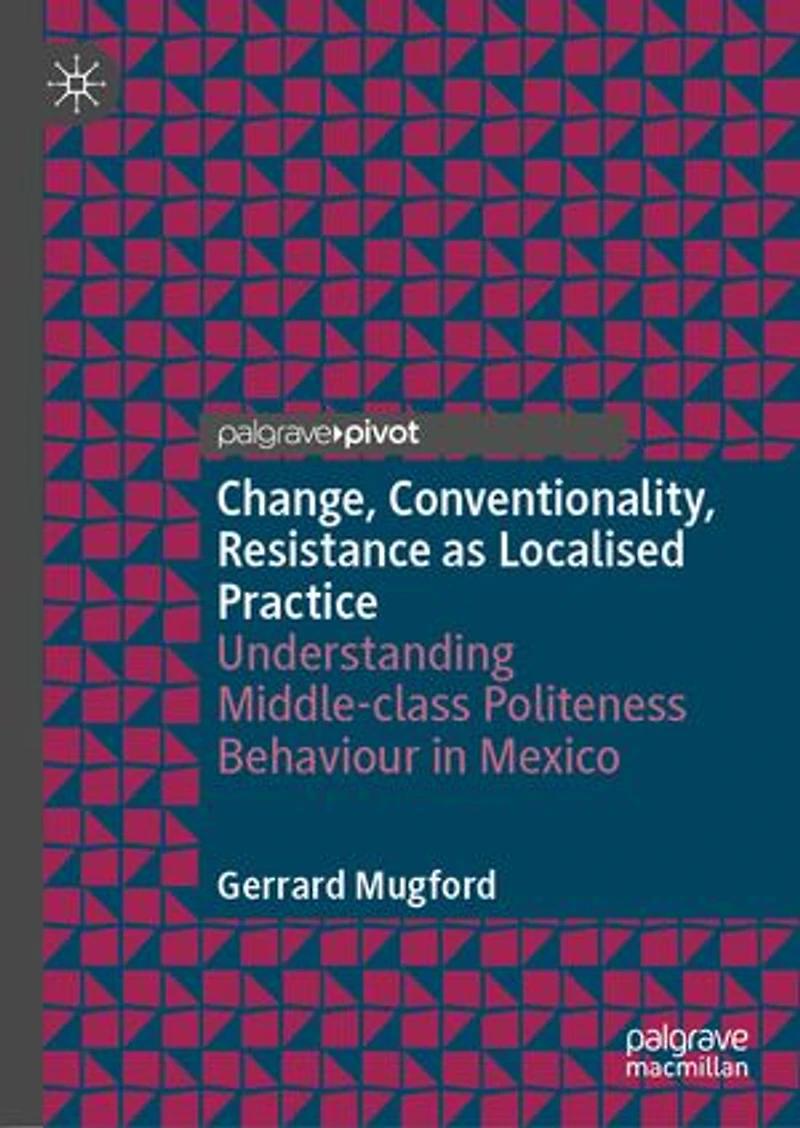
Change, Conventionality, Resistance as Localised Practice: Understanding Middle-class Politeness Behaviour Mexico
Current price: $65.95

Change, Conventionality, Resistance as Localised Practice: Understanding Middle-class Politeness Behaviour Mexico
Current price: $65.95
Loading Inventory...
Size: Hardcover
*Product information may vary - to confirm product availability, pricing, shipping and return information please contact Indigo
This book offers a localised cultural approach to understanding (im)politeness behaviour in Mexico, thereby making a meaningful contribution to the study of pragmatics. It combines theory and practice to examine contextualised relational conduct, with the aim of moving away from essentialist approaches that stem from national perceptions. Taking Guadalajara, Mexico as its example, the book underscores the extent to which localised practices align with, or diverge from, broader patterns of (im)politeness, also serving as a case study for extrapolation to other locations. It critically examines the concepts of conventional and nonconventional politeness, how politeness changes according to societal and generational norms, and forms of resistance or opposition to politeness. It will be of interest to researchers and scholars in the fields of Mexican Spanish-language education and linguistics, specifically applied linguistics, including pragmatics, sociolinguistics, and second language acquisition.
This book offers a localised cultural approach to understanding (im)politeness behaviour in Mexico, thereby making a meaningful contribution to the study of pragmatics. It combines theory and practice to examine contextualised relational conduct, with the aim of moving away from essentialist approaches that stem from national perceptions. Taking Guadalajara, Mexico as its example, the book underscores the extent to which localised practices align with, or diverge from, broader patterns of (im)politeness, also serving as a case study for extrapolation to other locations. It critically examines the concepts of conventional and nonconventional politeness, how politeness changes according to societal and generational norms, and forms of resistance or opposition to politeness. It will be of interest to researchers and scholars in the fields of Mexican Spanish-language education and linguistics, specifically applied linguistics, including pragmatics, sociolinguistics, and second language acquisition.
You May Also Like












More About Indigo at Erin Mills Town Centre
The largest book retailer in Canada also offers toys, music, home décor, gifts and lifestyle products. What's Inside...Books, Magazines, CD’s and DVD’s, Toys and Gifts, Home Accents, Electronics, Baby’s and Children’s Section, Bath and Body, Kitchen and Bedroom, Stationary Located outside in the exterior plaza.
5015 Glen Erin Dr, Mississauga, ON L5M 0R7, Canada
Find Indigo at Erin Mills Town Centre in Mississauga ON
Visit Indigo at Erin Mills Town Centre in Mississauga ON