

GIVE THE PERFECT GIFT
Erin Mills Town Centre Gift Cards are the perfect choice for your gift giving needs.Purchase gift cards at kiosks near the food court or centre court, at Guest Services, or click below to purchase online.PURCHASE HEREHome
China's Anti-Satellite Test: A Precursor to Challenge U.S. Freedom to Maneuver in Space?
Indigo
Loading Inventory...
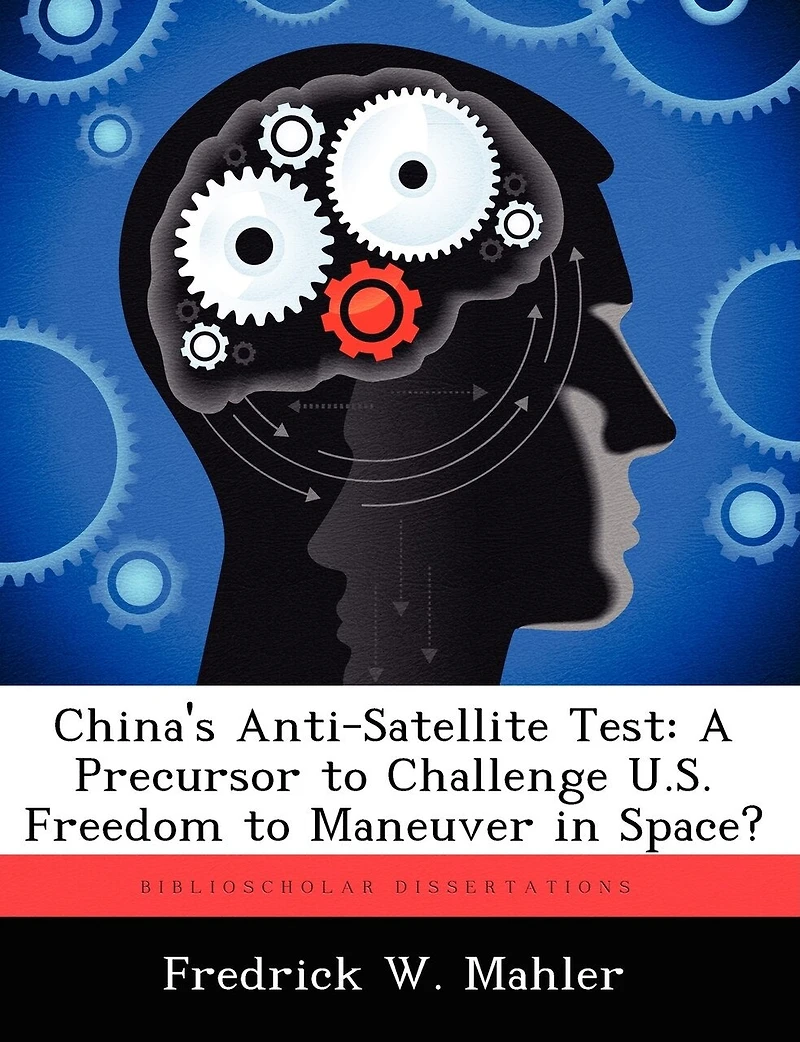
China's Anti-Satellite Test: A Precursor to Challenge U.S. Freedom to Maneuver in Space?
Current price: $59.00

China's Anti-Satellite Test: A Precursor to Challenge U.S. Freedom to Maneuver in Space?
Current price: $59.00
Loading Inventory...
Size: Paperback
*Product information may vary - to confirm product availability, pricing, shipping and return information please contact Indigo
On January 11, 2007, the Peoples Republic of China (PRC) launched a direct-ascent anti-satellite (ASAT) weapon and destroyed one of their satellites. Uncovering Chinese motivations for this action has been problematic because the Chinese government has given virtually no explanation for this act. China seems to be actively attempting to challenge other nations' freedom to maneuver in space. Thus, the central research question is: Is the motivation behind current Chinese efforts in its ASAT program to challenge U.S. freedom of maneuver in space? China is not without precedent. During the 1960's to the late 1980's both the U.S. and U.S.S.R. conducted extensive ASAT tests in the development and deployment of ASAT weapons as part of their military space programs. In the Case of the U.S.S.R., ASAT weapons were extensively tested and deployed, but their relatively low success rate and marginal military value led the Soviet government to abandon the program in favor of arms control negotiations. In the Case of the U.S., ASAT was another component to ensure national security of all space assets. The U.S.S.R. study illustrates the inherent political instability of pursuing space weapons, while the U.S. study illustrates the political desire to remain weapons free in space, but retain the right to defend space assets with force if necessary. China, with its notion of active defense and deterrence doctrine, would seem to align closely with the U.S. in ASAT employment, and not challenge U.S. freedom of maneuver in space per se, but ensure its own freedom of maneuver in space as it continues to grow a dependence on space assets in the future.
On January 11, 2007, the Peoples Republic of China (PRC) launched a direct-ascent anti-satellite (ASAT) weapon and destroyed one of their satellites. Uncovering Chinese motivations for this action has been problematic because the Chinese government has given virtually no explanation for this act. China seems to be actively attempting to challenge other nations' freedom to maneuver in space. Thus, the central research question is: Is the motivation behind current Chinese efforts in its ASAT program to challenge U.S. freedom of maneuver in space? China is not without precedent. During the 1960's to the late 1980's both the U.S. and U.S.S.R. conducted extensive ASAT tests in the development and deployment of ASAT weapons as part of their military space programs. In the Case of the U.S.S.R., ASAT weapons were extensively tested and deployed, but their relatively low success rate and marginal military value led the Soviet government to abandon the program in favor of arms control negotiations. In the Case of the U.S., ASAT was another component to ensure national security of all space assets. The U.S.S.R. study illustrates the inherent political instability of pursuing space weapons, while the U.S. study illustrates the political desire to remain weapons free in space, but retain the right to defend space assets with force if necessary. China, with its notion of active defense and deterrence doctrine, would seem to align closely with the U.S. in ASAT employment, and not challenge U.S. freedom of maneuver in space per se, but ensure its own freedom of maneuver in space as it continues to grow a dependence on space assets in the future.
You May Also Like














More About Indigo at Erin Mills Town Centre
The largest book retailer in Canada also offers toys, music, home décor, gifts and lifestyle products. What's Inside...Books, Magazines, CD’s and DVD’s, Toys and Gifts, Home Accents, Electronics, Baby’s and Children’s Section, Bath and Body, Kitchen and Bedroom, Stationary Located outside in the exterior plaza.
5015 Glen Erin Dr, Mississauga, ON L5M 0R7, Canada
Find Indigo at Erin Mills Town Centre in Mississauga ON
Visit Indigo at Erin Mills Town Centre in Mississauga ON