

GIVE THE PERFECT GIFT
Erin Mills Town Centre Gift Cards are the perfect choice for your gift giving needs.Purchase gift cards at kiosks near the food court or centre court, at Guest Services, or click below to purchase online.PURCHASE HEREHome
“Civilizing” Rio: Reform and Resistance in a Brazilian City, 1889–1930
Indigo
Loading Inventory...
“Civilizing” Rio: Reform and Resistance in a Brazilian City, 1889–1930
Current price: $31.99
Original price: $39.99

“Civilizing” Rio: Reform and Resistance in a Brazilian City, 1889–1930
Current price: $31.99
Original price: $39.99
Loading Inventory...
Size: Kobo eBook
*Product information may vary - to confirm product availability, pricing, shipping and return information please contact Indigo
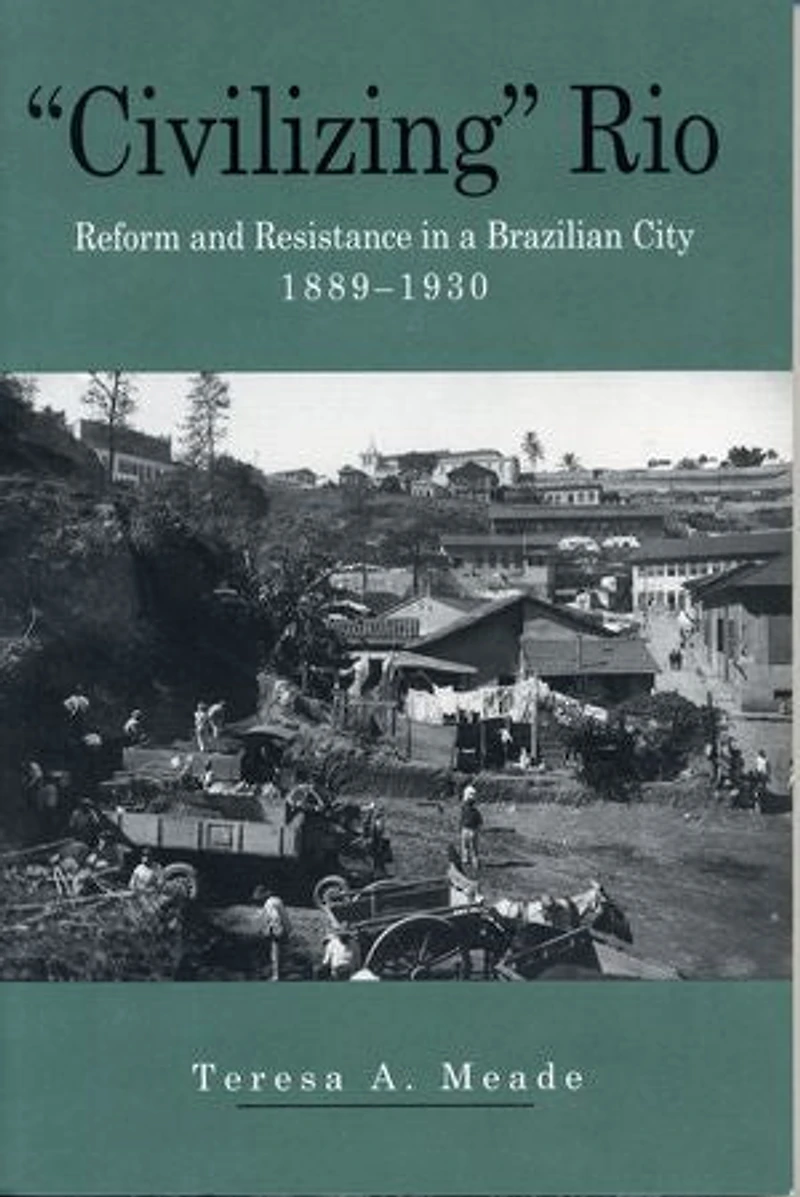
A massive urban renewal and public-health campaign in the first decades of the nineteenth century transformed Brazil's capital into a showcase of European architecture and public works. The renovation of Rio, or "civilization" campaign, as the government called it, widened streets, modernized the port, and improved sanitation, lighting, and public transportation. These changes made life worse, not better, for the majority of the city's residents, however; the laboring poor could no longer afford to live in the downtown, and the public-health plan did not extend to the peripheral areas where they were being forced to move. Their resistance is the focus of Teresa Meade's study.
Meade details how Rio grew according to the requirements of international capital, which financed, planned, and oversaw the renewal—and how local movements resisted these powerful, distant forces. She also traces the popular rebellion that continued for more than twenty years after the renovation ended in 1909, illustrating that community protests are the major characteristic of political life in the modern era.
A massive urban renewal and public-health campaign in the first decades of the nineteenth century transformed Brazil's capital into a showcase of European architecture and public works. The renovation of Rio, or "civilization" campaign, as the government called it, widened streets, modernized the port, and improved sanitation, lighting, and public transportation. These changes made life worse, not better, for the majority of the city's residents, however; the laboring poor could no longer afford to live in the downtown, and the public-health plan did not extend to the peripheral areas where they were being forced to move. Their resistance is the focus of Teresa Meade's study.
Meade details how Rio grew according to the requirements of international capital, which financed, planned, and oversaw the renewal—and how local movements resisted these powerful, distant forces. She also traces the popular rebellion that continued for more than twenty years after the renovation ended in 1909, illustrating that community protests are the major characteristic of political life in the modern era.
You May Also Like







More About Indigo at Erin Mills Town Centre
The largest book retailer in Canada also offers toys, music, home décor, gifts and lifestyle products. What's Inside...Books, Magazines, CD’s and DVD’s, Toys and Gifts, Home Accents, Electronics, Baby’s and Children’s Section, Bath and Body, Kitchen and Bedroom, Stationary Located outside in the exterior plaza.
5015 Glen Erin Dr, Mississauga, ON L5M 0R7, Canada
Find Indigo at Erin Mills Town Centre in Mississauga ON
Visit Indigo at Erin Mills Town Centre in Mississauga ON