

GIVE THE PERFECT GIFT
Erin Mills Town Centre Gift Cards are the perfect choice for your gift giving needs.Purchase gift cards at kiosks near the food court or centre court, at Guest Services, or click below to purchase online.PURCHASE HEREHome
Classical Theory Of Crystal Dislocations: From Iron To Gallium Nitride
Indigo
Loading Inventory...
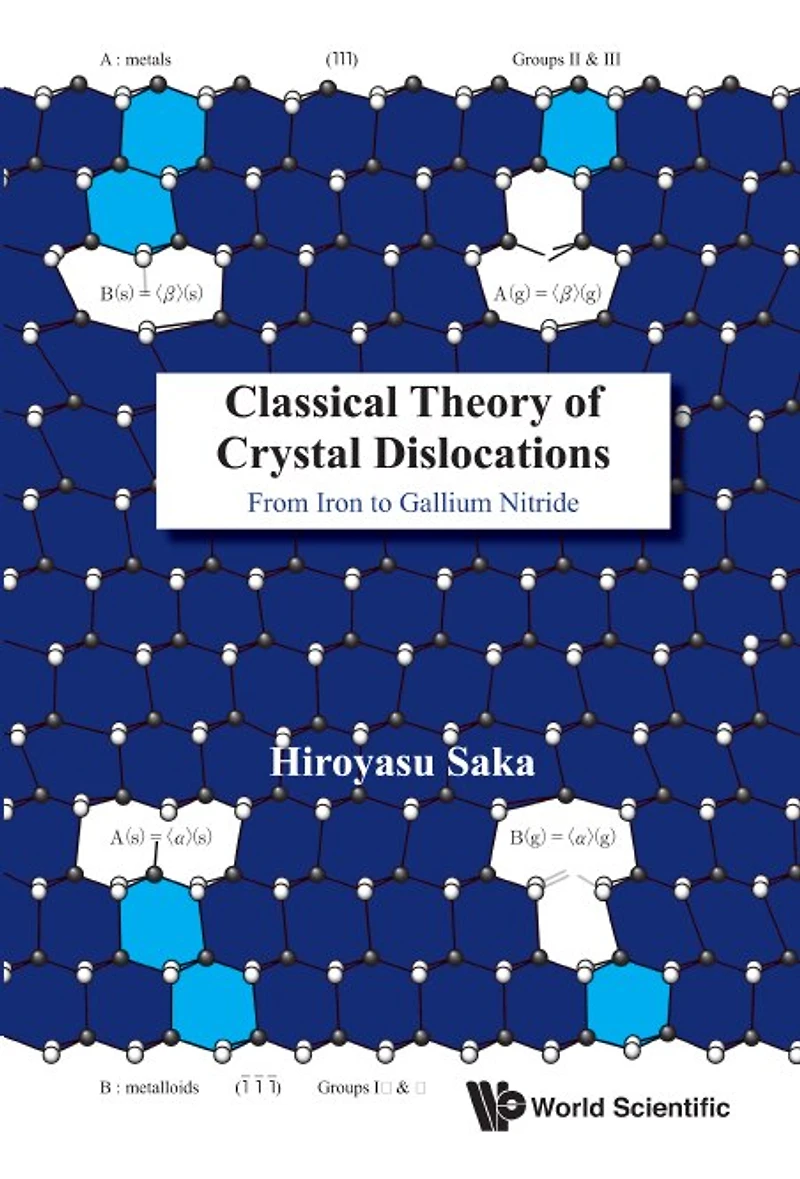
Classical Theory Of Crystal Dislocations: From Iron To Gallium Nitride
Current price: $200.50

Classical Theory Of Crystal Dislocations: From Iron To Gallium Nitride
Current price: $200.50
Loading Inventory...
Size: Hardcover
*Product information may vary - to confirm product availability, pricing, shipping and return information please contact Indigo
The book consists of two parts: Part 1 is a standard text of dislocation theory. Mathematics is avoided as much as possible. Part 2 describes application of dislocation theory, which includes mechanical properties (including the inverse temperature dependence of strength) and dislocations in functional materials such as Si, GaN and SiC and dislocations in a thin crystal such as an epitaxial layer. This is what has been long anticipated among researchers in industry.The book contains about 330 illustrations (mostly originals by the author) and the pictures obtained by the author by means of in-situ experiment in a transmission electron microscope over the past 50 years.This book includes many exercises, which the author found useful when he was teaching in Department of Materials Science and Engineering of Nagoya University to stimulate their interests in dislocation theory.
The book consists of two parts: Part 1 is a standard text of dislocation theory. Mathematics is avoided as much as possible. Part 2 describes application of dislocation theory, which includes mechanical properties (including the inverse temperature dependence of strength) and dislocations in functional materials such as Si, GaN and SiC and dislocations in a thin crystal such as an epitaxial layer. This is what has been long anticipated among researchers in industry.The book contains about 330 illustrations (mostly originals by the author) and the pictures obtained by the author by means of in-situ experiment in a transmission electron microscope over the past 50 years.This book includes many exercises, which the author found useful when he was teaching in Department of Materials Science and Engineering of Nagoya University to stimulate their interests in dislocation theory.
You May Also Like








More About Indigo at Erin Mills Town Centre
The largest book retailer in Canada also offers toys, music, home décor, gifts and lifestyle products. What's Inside...Books, Magazines, CD’s and DVD’s, Toys and Gifts, Home Accents, Electronics, Baby’s and Children’s Section, Bath and Body, Kitchen and Bedroom, Stationary Located outside in the exterior plaza.
5015 Glen Erin Dr, Mississauga, ON L5M 0R7, Canada
Find Indigo at Erin Mills Town Centre in Mississauga ON
Visit Indigo at Erin Mills Town Centre in Mississauga ON