

GIVE THE PERFECT GIFT
Erin Mills Town Centre Gift Cards are the perfect choice for your gift giving needs.Purchase gift cards at kiosks near the food court or centre court, at Guest Services, or click below to purchase online.PURCHASE HEREHome
Close Reading without Readings: Essays on Shakespeare and Others
Indigo
Loading Inventory...
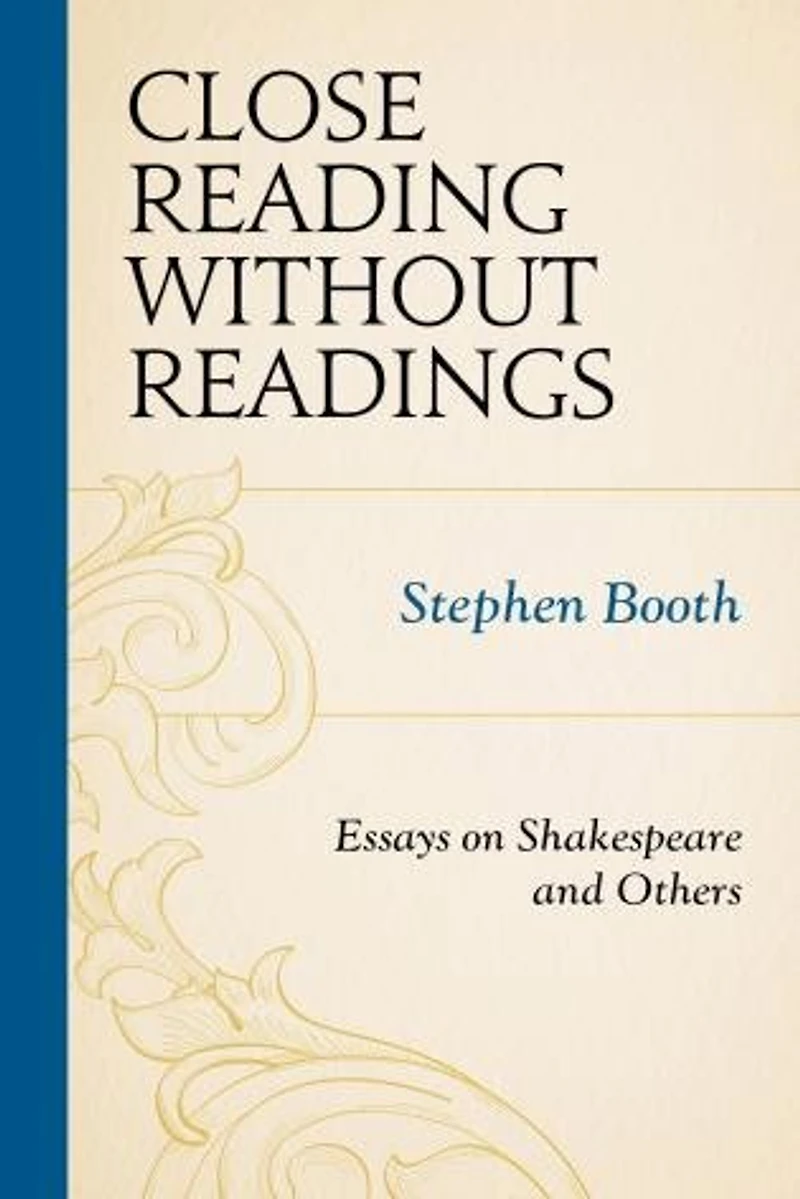
Close Reading without Readings: Essays on Shakespeare and Others
Current price: $160.95

Close Reading without Readings: Essays on Shakespeare and Others
Current price: $160.95
Loading Inventory...
Size: Hardcover
*Product information may vary - to confirm product availability, pricing, shipping and return information please contact Indigo
Dealing mainly with the works of William Shakespeare, the essays in Close Readings without Readings reflect Stephen Booth's lifelong interest in uncovering the ways great literature works upon readers. As the book's title suggests, the author does not aim to create new or novel interpretations or to uncover the political agendas of literary works, but to notice language patterns-repetitions, analogies, correspondences, echoes, overtones-and other ways in which the choice and the arrangement of words affect readers. For Booth, close reading is a practice of attentiveness. He notices how, why, and in what ways Shakespeare's works affect his readers. Whether readers agree with the premises of a literary work or not, they subject themselves, knowingly or not, to its effects. For Booth, what we value in literature is the experience. He has devoted his own work to recognizing the nature, process, and functions of reading literature, and to teaching others to do the same. Recent years have seen Booth's efforts recognized by volumes dedicated both to close reading and to his achievements as editor, scholar, critic, and teacher.
Dealing mainly with the works of William Shakespeare, the essays in Close Readings without Readings reflect Stephen Booth's lifelong interest in uncovering the ways great literature works upon readers. As the book's title suggests, the author does not aim to create new or novel interpretations or to uncover the political agendas of literary works, but to notice language patterns-repetitions, analogies, correspondences, echoes, overtones-and other ways in which the choice and the arrangement of words affect readers. For Booth, close reading is a practice of attentiveness. He notices how, why, and in what ways Shakespeare's works affect his readers. Whether readers agree with the premises of a literary work or not, they subject themselves, knowingly or not, to its effects. For Booth, what we value in literature is the experience. He has devoted his own work to recognizing the nature, process, and functions of reading literature, and to teaching others to do the same. Recent years have seen Booth's efforts recognized by volumes dedicated both to close reading and to his achievements as editor, scholar, critic, and teacher.
You May Also Like










More About Indigo at Erin Mills Town Centre
The largest book retailer in Canada also offers toys, music, home décor, gifts and lifestyle products. What's Inside...Books, Magazines, CD’s and DVD’s, Toys and Gifts, Home Accents, Electronics, Baby’s and Children’s Section, Bath and Body, Kitchen and Bedroom, Stationary Located outside in the exterior plaza.
5015 Glen Erin Dr, Mississauga, ON L5M 0R7, Canada
Find Indigo at Erin Mills Town Centre in Mississauga ON
Visit Indigo at Erin Mills Town Centre in Mississauga ON