

GIVE THE PERFECT GIFT
Erin Mills Town Centre Gift Cards are the perfect choice for your gift giving needs.Purchase gift cards at kiosks near the food court or centre court, at Guest Services, or click below to purchase online.PURCHASE HEREHome
Clouds and Climate: Climate Science's Greatest Challenge
Indigo
Loading Inventory...
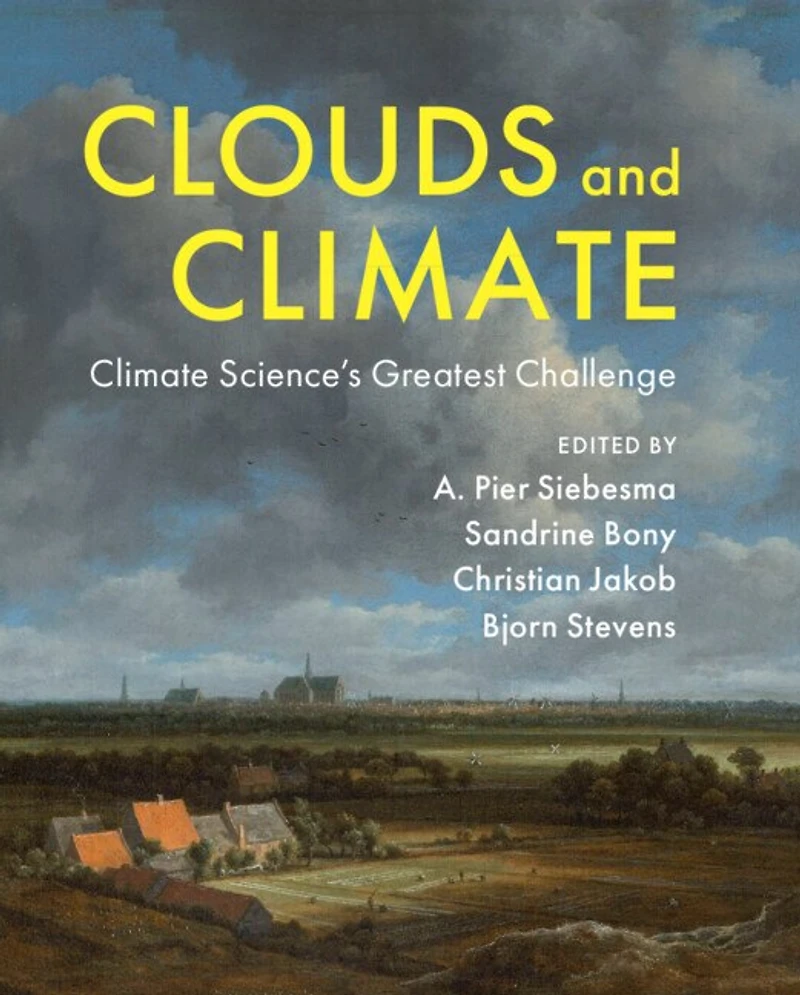
Clouds and Climate: Climate Science's Greatest Challenge
Current price: $114.95

Clouds and Climate: Climate Science's Greatest Challenge
Current price: $114.95
Loading Inventory...
Size: Hardcover
*Product information may vary - to confirm product availability, pricing, shipping and return information please contact Indigo
Cloud research is a rapidly developing branch of climate science that's vital to climate modelling. With new observational and simulation technologies our knowledge of clouds and their role in the warming climate is accelerating. This book provides a comprehensive overview of research on clouds and their role in our present and future climate, covering theoretical, observational, and modelling perspectives. Part I discusses clouds from three different perspectives: as particles, light and fluid. Part II describes our capability to model clouds, ranging from theoretical conceptual models to applied parameterised representations. Part III describes the interaction of clouds with the large-scale circulation in the tropics, mid-latitudes, and polar regions. Part IV describes how clouds are perturbed by aerosols, the land-surface, and global warming. Each chapter contains end-of-chapter exercises and further reading sections, making this an ideal resource for advanced students and researchers in climatology, atmospheric science, meteorology, and climate change.
Cloud research is a rapidly developing branch of climate science that's vital to climate modelling. With new observational and simulation technologies our knowledge of clouds and their role in the warming climate is accelerating. This book provides a comprehensive overview of research on clouds and their role in our present and future climate, covering theoretical, observational, and modelling perspectives. Part I discusses clouds from three different perspectives: as particles, light and fluid. Part II describes our capability to model clouds, ranging from theoretical conceptual models to applied parameterised representations. Part III describes the interaction of clouds with the large-scale circulation in the tropics, mid-latitudes, and polar regions. Part IV describes how clouds are perturbed by aerosols, the land-surface, and global warming. Each chapter contains end-of-chapter exercises and further reading sections, making this an ideal resource for advanced students and researchers in climatology, atmospheric science, meteorology, and climate change.
You May Also Like











More About Indigo at Erin Mills Town Centre
The largest book retailer in Canada also offers toys, music, home décor, gifts and lifestyle products. What's Inside...Books, Magazines, CD’s and DVD’s, Toys and Gifts, Home Accents, Electronics, Baby’s and Children’s Section, Bath and Body, Kitchen and Bedroom, Stationary Located outside in the exterior plaza.
5015 Glen Erin Dr, Mississauga, ON L5M 0R7, Canada
Find Indigo at Erin Mills Town Centre in Mississauga ON
Visit Indigo at Erin Mills Town Centre in Mississauga ON