

GIVE THE PERFECT GIFT
Erin Mills Town Centre Gift Cards are the perfect choice for your gift giving needs.Purchase gift cards at kiosks near the food court or centre court, at Guest Services, or click below to purchase online.PURCHASE HEREHome
Combat Identification Modeling Using Neural Networks Techniques
Indigo
Loading Inventory...
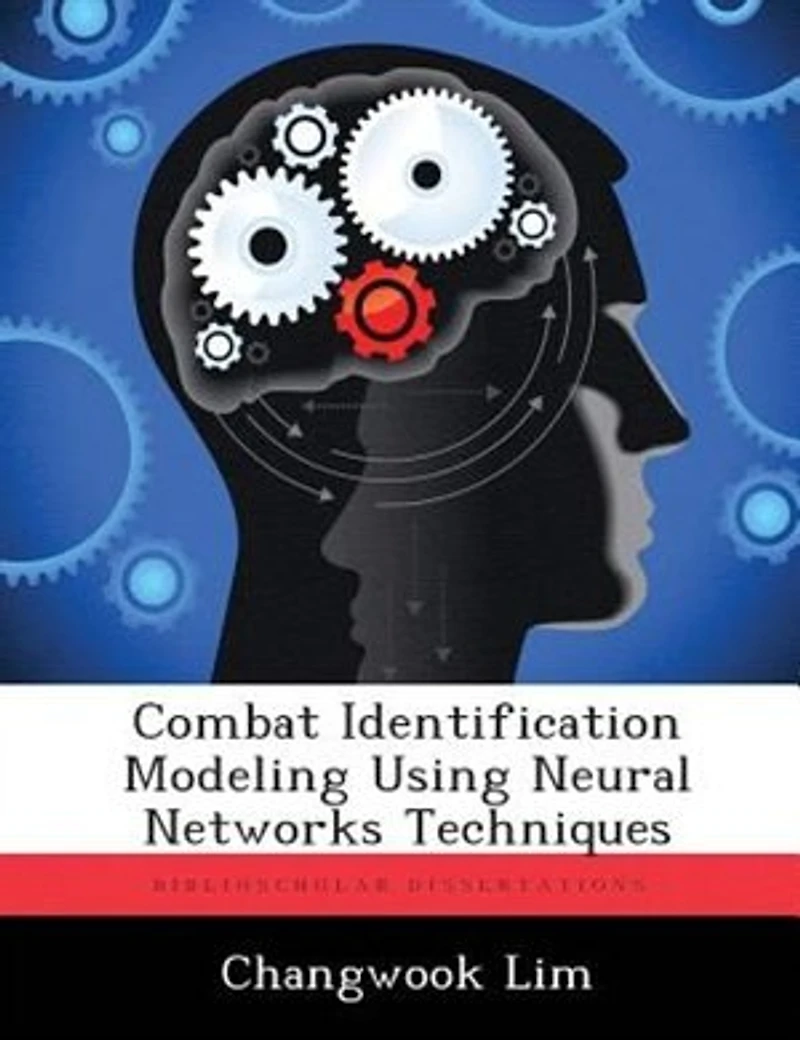
Combat Identification Modeling Using Neural Networks Techniques
Current price: $59.00

Combat Identification Modeling Using Neural Networks Techniques
Current price: $59.00
Loading Inventory...
Size: Paperback
*Product information may vary - to confirm product availability, pricing, shipping and return information please contact Indigo
The purposes of this research were: (1) validating Kim's (2007) simulation method by applying analytic methods and (2) comparing the two different Robust Parameter Design methods with three measures of performance (label accuracy for enemy, friendly, and clutter). Considering the features of CID, input variables were defined as two controllable (threshold combination of detector and classifier) and three uncontrollable (map size, number of enemies and friendly). The first set of experiments considers Kim's method using analytical methods. In order to create response variables, Kim's method uses Monte Carlo simulation. The output results showed no difference between simulation and the analytic method. The second set of experiments compared the measures of performance between a standard RPD used by Kim and a new method using Artificial Neural Networks (ANNs). To find optimal combinations of detection and classification thresholds, Kim's model uses regression with a combined array design, whereas the ANNs method uses ANN with a crossed array design. In the case of label accuracy for enemy, Kim's solution showed the higher expected value, however it also showed a higher variance. Additionally, the model's residuals were higher for Kim's model.
The purposes of this research were: (1) validating Kim's (2007) simulation method by applying analytic methods and (2) comparing the two different Robust Parameter Design methods with three measures of performance (label accuracy for enemy, friendly, and clutter). Considering the features of CID, input variables were defined as two controllable (threshold combination of detector and classifier) and three uncontrollable (map size, number of enemies and friendly). The first set of experiments considers Kim's method using analytical methods. In order to create response variables, Kim's method uses Monte Carlo simulation. The output results showed no difference between simulation and the analytic method. The second set of experiments compared the measures of performance between a standard RPD used by Kim and a new method using Artificial Neural Networks (ANNs). To find optimal combinations of detection and classification thresholds, Kim's model uses regression with a combined array design, whereas the ANNs method uses ANN with a crossed array design. In the case of label accuracy for enemy, Kim's solution showed the higher expected value, however it also showed a higher variance. Additionally, the model's residuals were higher for Kim's model.
You May Also Like

















More About Indigo at Erin Mills Town Centre
The largest book retailer in Canada also offers toys, music, home décor, gifts and lifestyle products. What's Inside...Books, Magazines, CD’s and DVD’s, Toys and Gifts, Home Accents, Electronics, Baby’s and Children’s Section, Bath and Body, Kitchen and Bedroom, Stationary Located outside in the exterior plaza.
5015 Glen Erin Dr, Mississauga, ON L5M 0R7, Canada
Find Indigo at Erin Mills Town Centre in Mississauga ON
Visit Indigo at Erin Mills Town Centre in Mississauga ON