

GIVE THE PERFECT GIFT
Erin Mills Town Centre Gift Cards are the perfect choice for your gift giving needs.Purchase gift cards at kiosks near the food court or centre court, at Guest Services, or click below to purchase online.PURCHASE HEREHome
Commentary on Aristotle, ›Nicomachean Ethics‹: Critical Edition with Introduction and Translation
Indigo
Loading Inventory...
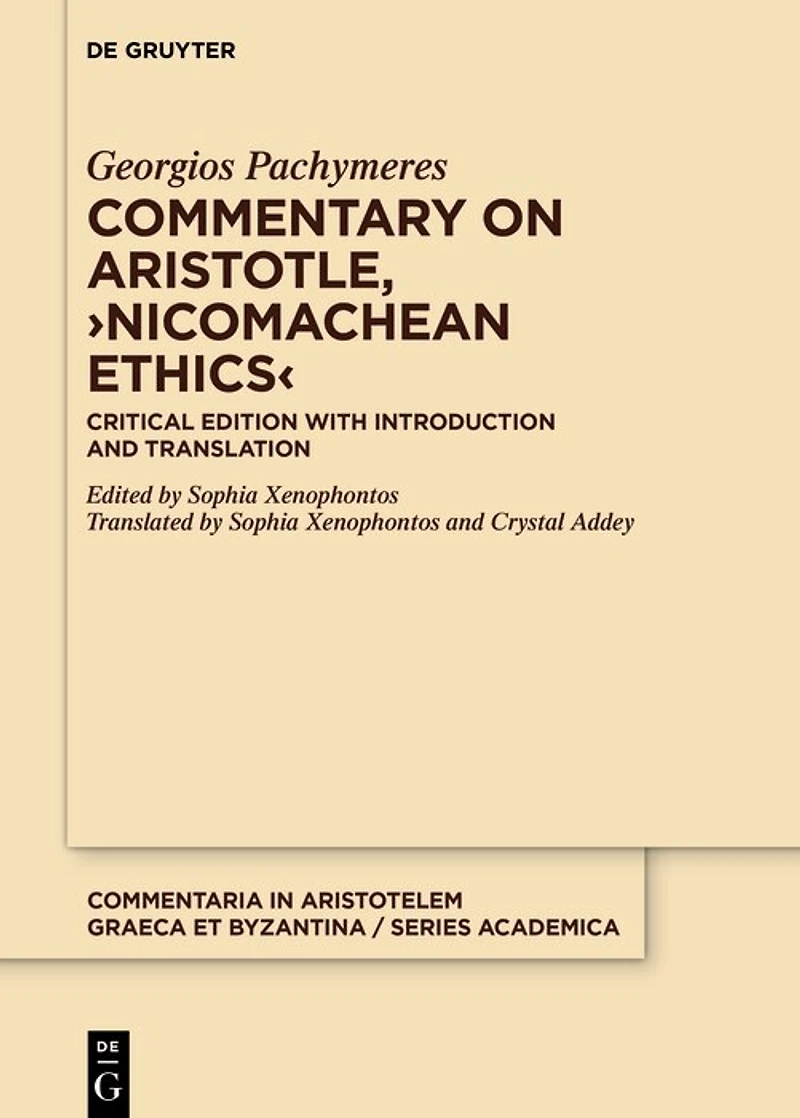
Commentary on Aristotle, ›Nicomachean Ethics‹: Critical Edition with Introduction and Translation
Current price: $247.99

Commentary on Aristotle, ›Nicomachean Ethics‹: Critical Edition with Introduction and Translation
Current price: $247.99
Loading Inventory...
Size: Hardcover
*Product information may vary - to confirm product availability, pricing, shipping and return information please contact Indigo
The Greek commentary tradition devoted to explicating Aristotle’s Nicomachean Ethics ( NE ) was extensive. It began in antiquity with Aspasius and reached a point of immense sophistication in the twelfth century with the commentaries of Eustratius of Nicaea and Michael of Ephesus, which primarily served educational purposes. The use of Aristotle’s ethics in the classroom continued into the late Byzantine period, but until recently scholastic use of the NE was known mostly through George Pachymeres’ epitome of the NE (Book 11 of his Philosophia ). This volume radically changes the landscape by providing the editio princeps of the last surviving exegetical commentary on the NE stricto sensu , also penned by Pachymeres. This represents a new witness to the importance of Aristotelian studies in the cultural revival of late Byzantium. The editio princeps is accompanied by an English translation and a thorough introduction, which offers an informed reading of the commentary’s genre and layout, relationship to its sources, exegetical strategies, and philosophical originality. This book also includes the edition of diagrams and scholia accompanying Pachymeres’ exegesis, whose paratextual function is key to a full understanding of the work.
The Greek commentary tradition devoted to explicating Aristotle’s Nicomachean Ethics ( NE ) was extensive. It began in antiquity with Aspasius and reached a point of immense sophistication in the twelfth century with the commentaries of Eustratius of Nicaea and Michael of Ephesus, which primarily served educational purposes. The use of Aristotle’s ethics in the classroom continued into the late Byzantine period, but until recently scholastic use of the NE was known mostly through George Pachymeres’ epitome of the NE (Book 11 of his Philosophia ). This volume radically changes the landscape by providing the editio princeps of the last surviving exegetical commentary on the NE stricto sensu , also penned by Pachymeres. This represents a new witness to the importance of Aristotelian studies in the cultural revival of late Byzantium. The editio princeps is accompanied by an English translation and a thorough introduction, which offers an informed reading of the commentary’s genre and layout, relationship to its sources, exegetical strategies, and philosophical originality. This book also includes the edition of diagrams and scholia accompanying Pachymeres’ exegesis, whose paratextual function is key to a full understanding of the work.
You May Also Like







More About Indigo at Erin Mills Town Centre
The largest book retailer in Canada also offers toys, music, home décor, gifts and lifestyle products. What's Inside...Books, Magazines, CD’s and DVD’s, Toys and Gifts, Home Accents, Electronics, Baby’s and Children’s Section, Bath and Body, Kitchen and Bedroom, Stationary Located outside in the exterior plaza.
5015 Glen Erin Dr, Mississauga, ON L5M 0R7, Canada
Find Indigo at Erin Mills Town Centre in Mississauga ON
Visit Indigo at Erin Mills Town Centre in Mississauga ON