

GIVE THE PERFECT GIFT
Erin Mills Town Centre Gift Cards are the perfect choice for your gift giving needs.Purchase gift cards at kiosks near the food court or centre court, at Guest Services, or click below to purchase online.PURCHASE HEREHome
Company K
Indigo
Loading Inventory...
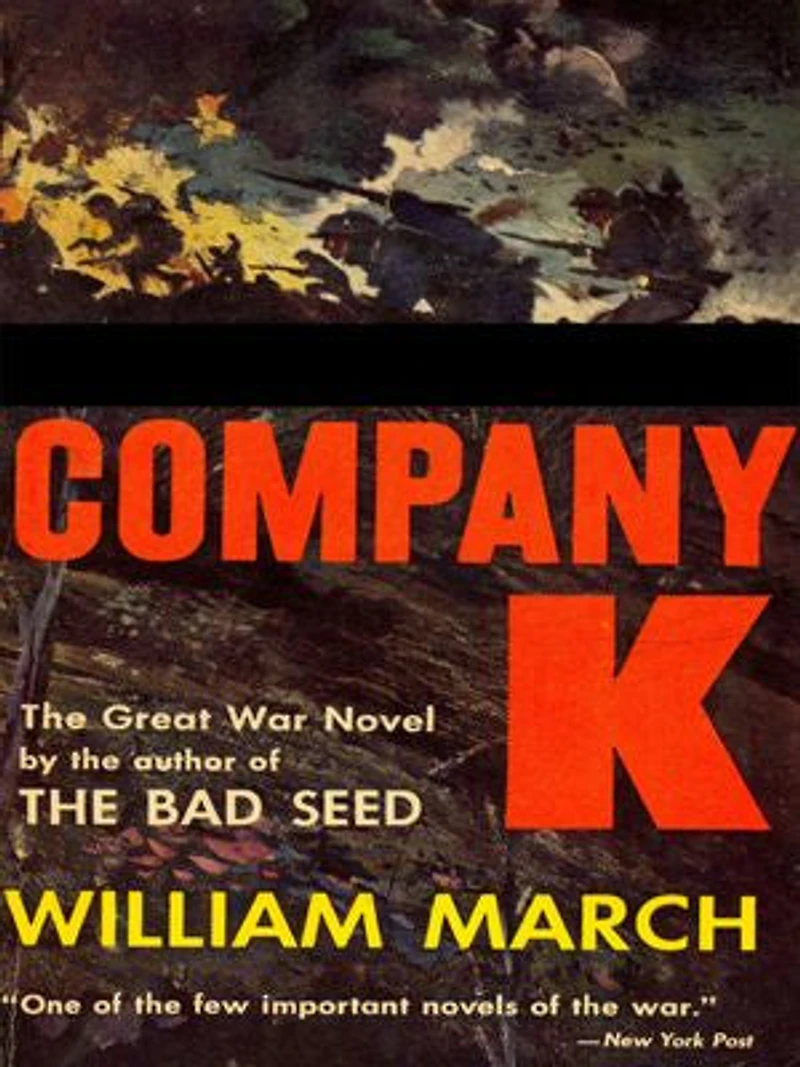
Company K
Current price: $0.99

Company K
Current price: $0.99
Loading Inventory...
Size: Kobo eBook
*Product information may vary - to confirm product availability, pricing, shipping and return information please contact Indigo
''Company K'' (1933) by William March (died 1954) is an anti-war novel composed of 113 brief, first-person vignettes told by different Marines in a single company during World War I. Based on the author's own combat experiences, it explores the brutal reality, moral horror, and psychological trauma of war, portraying it as a collective, unforgettable ordeal from training through the aftermath. The book is a montage or collage of voices, with each chapter titled after a soldier's rank and name, creating a fast-paced effect. March shuns romanticized war stories, focusing instead on themes of lost innocence, fear, cowardice, and the senseless nature of "mass-produced death". It heavily covers the moral injury of war, including incidents of soldiers executing German prisoners, highlighting the moral degradation of the combatants. The vignettes go beyond the battlefields of France to show the lingering trauma of survivors attempting to adjust to normal life. Written by a highly decorated Marine, the book is considered a protest against the brutality of war and is often lauded for its unvarnished, "bare" prose.
''Company K'' (1933) by William March (died 1954) is an anti-war novel composed of 113 brief, first-person vignettes told by different Marines in a single company during World War I. Based on the author's own combat experiences, it explores the brutal reality, moral horror, and psychological trauma of war, portraying it as a collective, unforgettable ordeal from training through the aftermath. The book is a montage or collage of voices, with each chapter titled after a soldier's rank and name, creating a fast-paced effect. March shuns romanticized war stories, focusing instead on themes of lost innocence, fear, cowardice, and the senseless nature of "mass-produced death". It heavily covers the moral injury of war, including incidents of soldiers executing German prisoners, highlighting the moral degradation of the combatants. The vignettes go beyond the battlefields of France to show the lingering trauma of survivors attempting to adjust to normal life. Written by a highly decorated Marine, the book is considered a protest against the brutality of war and is often lauded for its unvarnished, "bare" prose.
You May Also Like













More About Indigo at Erin Mills Town Centre
The largest book retailer in Canada also offers toys, music, home décor, gifts and lifestyle products. What's Inside...Books, Magazines, CD’s and DVD’s, Toys and Gifts, Home Accents, Electronics, Baby’s and Children’s Section, Bath and Body, Kitchen and Bedroom, Stationary Located outside in the exterior plaza.
5015 Glen Erin Dr, Mississauga, ON L5M 0R7, Canada
Find Indigo at Erin Mills Town Centre in Mississauga ON
Visit Indigo at Erin Mills Town Centre in Mississauga ON