

GIVE THE PERFECT GIFT
Erin Mills Town Centre Gift Cards are the perfect choice for your gift giving needs.Purchase gift cards at kiosks near the food court or centre court, at Guest Services, or click below to purchase online.PURCHASE HEREHome
Complex Simplicity: How Psychology Suggests Atheists Are Wrong About Christianity
Indigo
Loading Inventory...
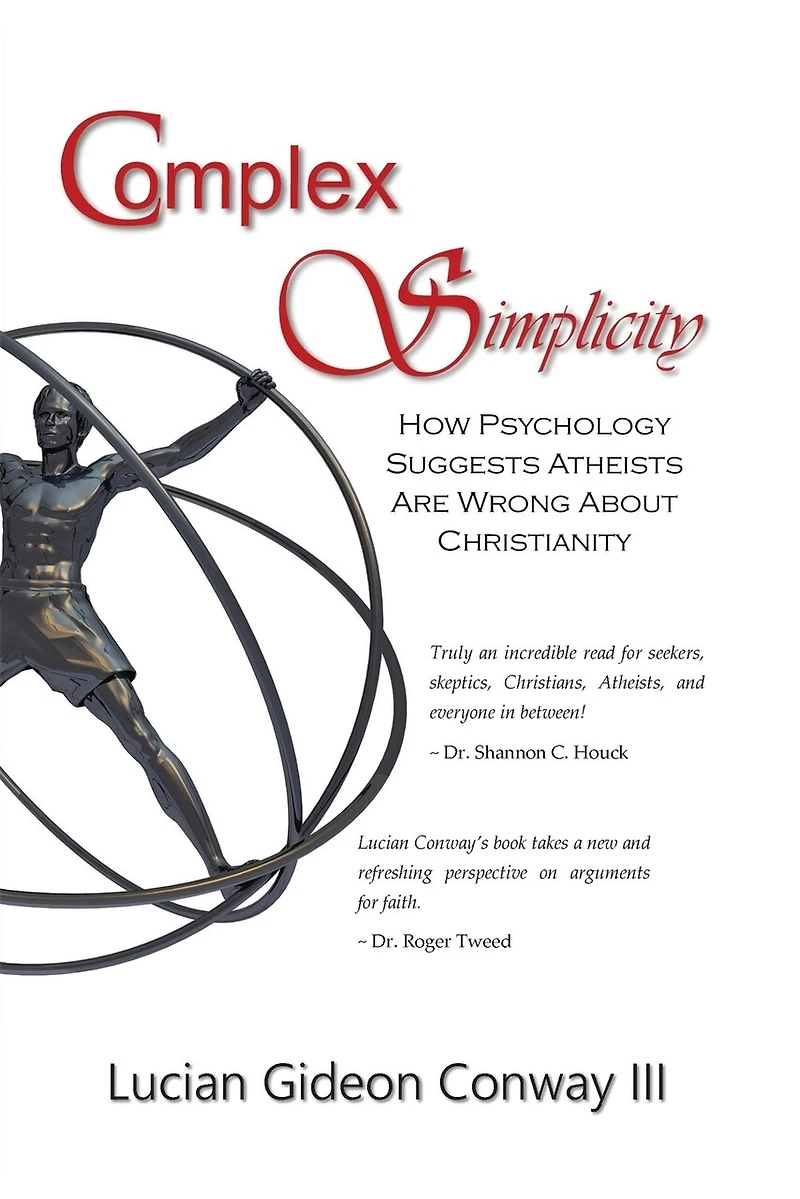
Complex Simplicity: How Psychology Suggests Atheists Are Wrong About Christianity
Current price: $24.95

Complex Simplicity: How Psychology Suggests Atheists Are Wrong About Christianity
Current price: $24.95
Loading Inventory...
Size: Paperback
*Product information may vary - to confirm product availability, pricing, shipping and return information please contact Indigo
In Complex Simplicity , prominent psychology researcher Dr. Lucian Gideon Conway III addresses the modern atheist attack on the psychological effectiveness of the Christian religion. As an expert in the science of cognitive complexity, Dr. Conway uses scientific research and personal narratives to argue that Christianity is an effective guide for reconciling the many complexities built into the human psyche. Directly contradicting what many modern atheists believe, he shows that, in approaching human psychology from a complex perspective, Christianity meets our complex needs with complex solutions. To Christian believers, he offers psychological reasons to believe their faith yields positive benefits. To skeptics, he offers a challenge to the growing cultural belief that Christianity is both simple-minded and ineffective. Complex Simplicity is important reading for anyone curious about the intersection of Christian teaching and human psychology.
In Complex Simplicity , prominent psychology researcher Dr. Lucian Gideon Conway III addresses the modern atheist attack on the psychological effectiveness of the Christian religion. As an expert in the science of cognitive complexity, Dr. Conway uses scientific research and personal narratives to argue that Christianity is an effective guide for reconciling the many complexities built into the human psyche. Directly contradicting what many modern atheists believe, he shows that, in approaching human psychology from a complex perspective, Christianity meets our complex needs with complex solutions. To Christian believers, he offers psychological reasons to believe their faith yields positive benefits. To skeptics, he offers a challenge to the growing cultural belief that Christianity is both simple-minded and ineffective. Complex Simplicity is important reading for anyone curious about the intersection of Christian teaching and human psychology.
You May Also Like












More About Indigo at Erin Mills Town Centre
The largest book retailer in Canada also offers toys, music, home décor, gifts and lifestyle products. What's Inside...Books, Magazines, CD’s and DVD’s, Toys and Gifts, Home Accents, Electronics, Baby’s and Children’s Section, Bath and Body, Kitchen and Bedroom, Stationary Located outside in the exterior plaza.
5015 Glen Erin Dr, Mississauga, ON L5M 0R7, Canada
Find Indigo at Erin Mills Town Centre in Mississauga ON
Visit Indigo at Erin Mills Town Centre in Mississauga ON