

GIVE THE PERFECT GIFT
Erin Mills Town Centre Gift Cards are the perfect choice for your gift giving needs.Purchase gift cards at kiosks near the food court or centre court, at Guest Services, or click below to purchase online.PURCHASE HEREHome
Confronting Mainstream Economics for Overcoming Capitalism
Indigo
Loading Inventory...
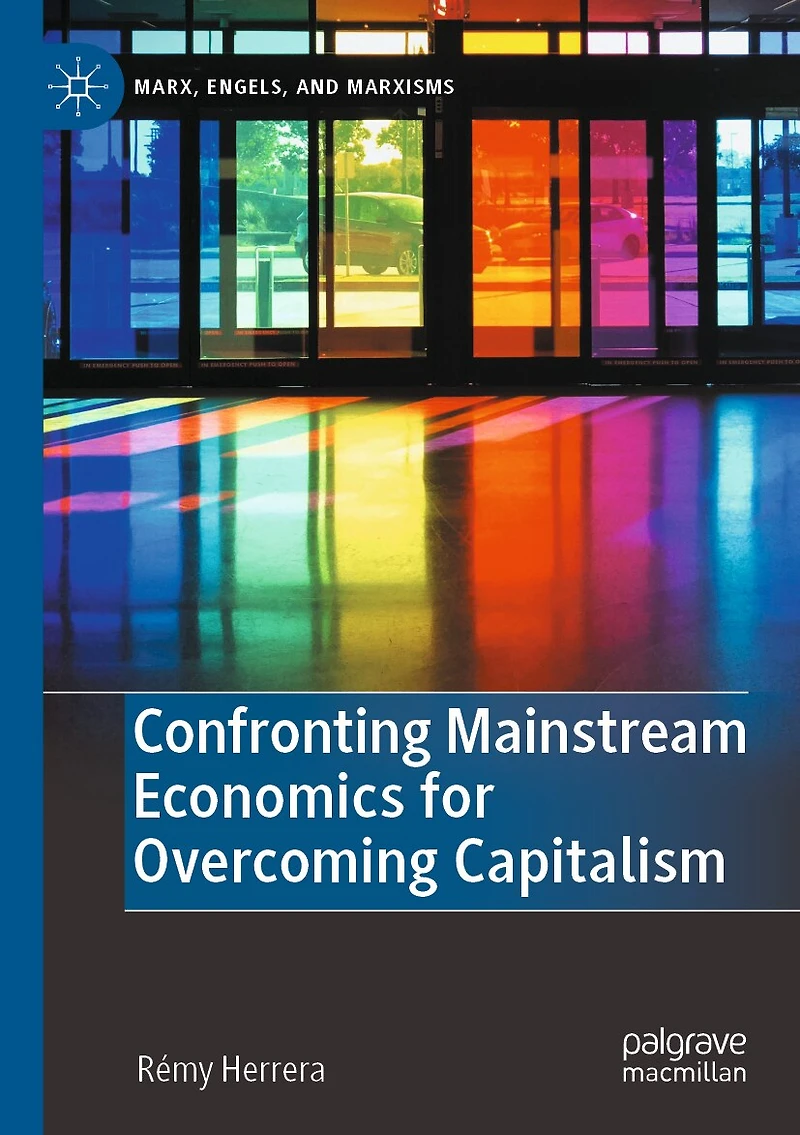
Confronting Mainstream Economics for Overcoming Capitalism
Current price: $204.50

Confronting Mainstream Economics for Overcoming Capitalism
Current price: $204.50
Loading Inventory...
Size: Paperback
*Product information may vary - to confirm product availability, pricing, shipping and return information please contact Indigo
This book provides analytical arguments that demonstrate the necessity to go beyond not only mainstream economics but also, and especially, the capitalist economy itself. It provides a radical critique of mainstream economics, comparing it to an unscientific form of single thought, and applies this criticism to the specific fields of growth, development, the institutions, defense, or the environment. It targets both neoclassical economics and reformist "soft heterodox" currents, from neoinstitutionalists to neo-Keynesians-including Thomas Piketty or Amartya Sen, among others. In doing so, it rejects Keynes' theories of money, the crisis, and the state. It then offers a Marxist interpretation of the current crisis of capitalism, considering it as a systemic crisis without solutions internal to its own logic and dynamics, and emphasizes the links between this capitalist crisis and imperialist wars, and the destruction of the environment and natural resources by capital. The book concludes by arguing that we must find the necessary theoretical and practical alternatives in a Marxist perspective, advocating for socialist transitions away from the capitalist economy to protect humanity and the environment.
This book provides analytical arguments that demonstrate the necessity to go beyond not only mainstream economics but also, and especially, the capitalist economy itself. It provides a radical critique of mainstream economics, comparing it to an unscientific form of single thought, and applies this criticism to the specific fields of growth, development, the institutions, defense, or the environment. It targets both neoclassical economics and reformist "soft heterodox" currents, from neoinstitutionalists to neo-Keynesians-including Thomas Piketty or Amartya Sen, among others. In doing so, it rejects Keynes' theories of money, the crisis, and the state. It then offers a Marxist interpretation of the current crisis of capitalism, considering it as a systemic crisis without solutions internal to its own logic and dynamics, and emphasizes the links between this capitalist crisis and imperialist wars, and the destruction of the environment and natural resources by capital. The book concludes by arguing that we must find the necessary theoretical and practical alternatives in a Marxist perspective, advocating for socialist transitions away from the capitalist economy to protect humanity and the environment.
You May Also Like










More About Indigo at Erin Mills Town Centre
The largest book retailer in Canada also offers toys, music, home décor, gifts and lifestyle products. What's Inside...Books, Magazines, CD’s and DVD’s, Toys and Gifts, Home Accents, Electronics, Baby’s and Children’s Section, Bath and Body, Kitchen and Bedroom, Stationary Located outside in the exterior plaza.
5015 Glen Erin Dr, Mississauga, ON L5M 0R7, Canada
Find Indigo at Erin Mills Town Centre in Mississauga ON
Visit Indigo at Erin Mills Town Centre in Mississauga ON