

GIVE THE PERFECT GIFT
Erin Mills Town Centre Gift Cards are the perfect choice for your gift giving needs.Purchase gift cards at kiosks near the food court or centre court, at Guest Services, or click below to purchase online.PURCHASE HEREHome
Confucianism, Democratization, and Human Rights Taiwan
Indigo
Loading Inventory...
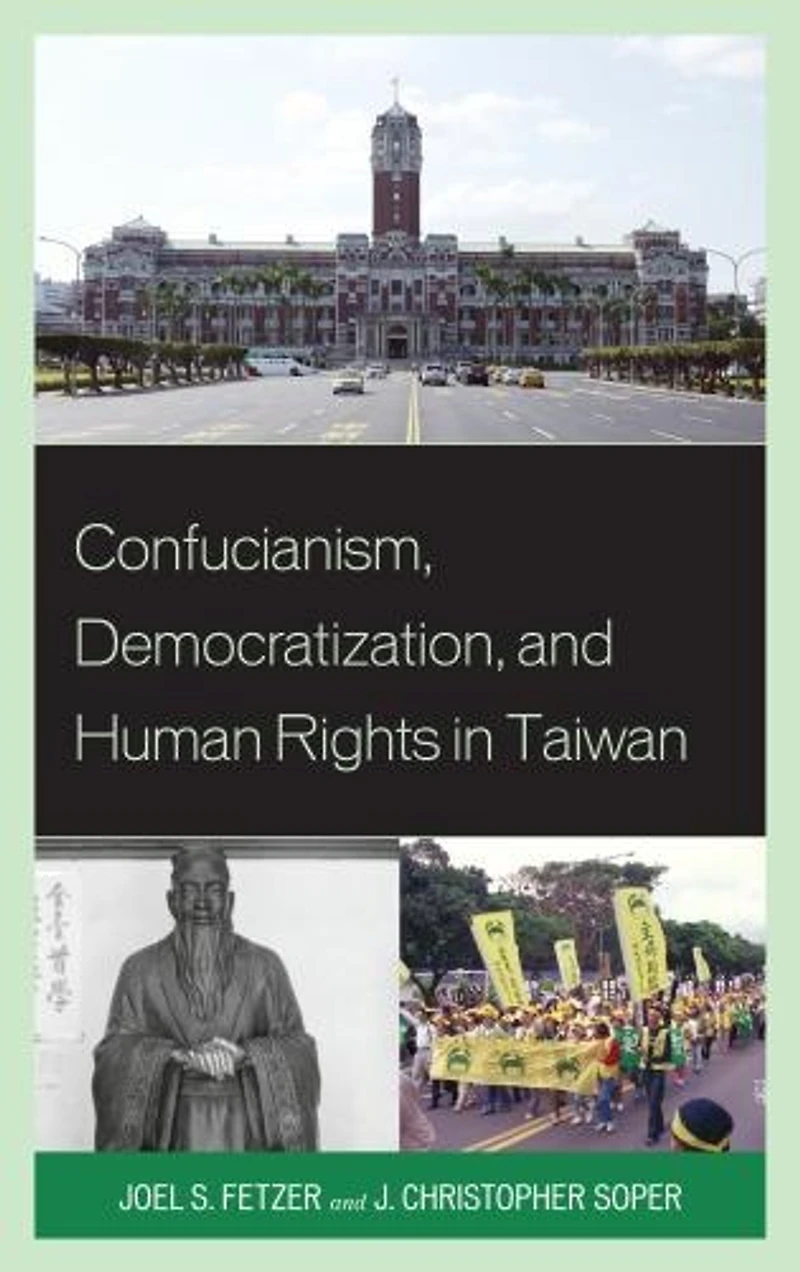
Confucianism, Democratization, and Human Rights Taiwan
Current price: $137.00

Confucianism, Democratization, and Human Rights Taiwan
Current price: $137.00
Loading Inventory...
Size: Hardcover
*Product information may vary - to confirm product availability, pricing, shipping and return information please contact Indigo
Responding to the “Asian values” debate over the compatibility of Confucianism and liberal democracy, Confucianism, Democratization, and Human Rights in Taiwan, by Joel S. Fetzer and J. Christopher Soper, offers a rigorous, systematic investigation of the contributions of Confucian thought to democratization and the protection of women, indigenous peoples, and press freedom in Taiwan. Relying upon a unique combination of empirical analysis of public opinion surveys, legislative debates, public school textbooks, and interviews with leading Taiwanese political actors, this essential study documents the changing role of Confucianism in Taiwan’s recent political history. While the ideology largely bolstered authoritarian rule in the past and played little role in Taiwan’s democratization, the belief system is now in the process of transforming itself in a pro-democratic direction. In contrast to those who argue that Confucianism is inherently authoritarian, the authors contend that Confucianism is capable of multiple interpretations, including ones that legitimate democratic forms of government. At both the mass and the elite levels, Confucianism remains a powerful ideology in Taiwan despite or even because of the island’s democratization. Borrowing from Max Weber’s sociology of religion, the writers provide a distinctive theoretical argument for how an ideology like Confucianism can simultaneously accommodate itself to modernity and remain faithful to its core teachings as it decouples itself from the state. In doing so, Fetzer and Soper argue, Confucianism is behaving much like Catholicism, which moved from a position of ambivalence or even opposition to democracy to one of full support. The results of this study have profound implications for other Asian countries such as China and Singapore, which are also Confucian but have not yet made a full transition to democracy.
Responding to the “Asian values” debate over the compatibility of Confucianism and liberal democracy, Confucianism, Democratization, and Human Rights in Taiwan, by Joel S. Fetzer and J. Christopher Soper, offers a rigorous, systematic investigation of the contributions of Confucian thought to democratization and the protection of women, indigenous peoples, and press freedom in Taiwan. Relying upon a unique combination of empirical analysis of public opinion surveys, legislative debates, public school textbooks, and interviews with leading Taiwanese political actors, this essential study documents the changing role of Confucianism in Taiwan’s recent political history. While the ideology largely bolstered authoritarian rule in the past and played little role in Taiwan’s democratization, the belief system is now in the process of transforming itself in a pro-democratic direction. In contrast to those who argue that Confucianism is inherently authoritarian, the authors contend that Confucianism is capable of multiple interpretations, including ones that legitimate democratic forms of government. At both the mass and the elite levels, Confucianism remains a powerful ideology in Taiwan despite or even because of the island’s democratization. Borrowing from Max Weber’s sociology of religion, the writers provide a distinctive theoretical argument for how an ideology like Confucianism can simultaneously accommodate itself to modernity and remain faithful to its core teachings as it decouples itself from the state. In doing so, Fetzer and Soper argue, Confucianism is behaving much like Catholicism, which moved from a position of ambivalence or even opposition to democracy to one of full support. The results of this study have profound implications for other Asian countries such as China and Singapore, which are also Confucian but have not yet made a full transition to democracy.
You May Also Like










More About Indigo at Erin Mills Town Centre
The largest book retailer in Canada also offers toys, music, home décor, gifts and lifestyle products. What's Inside...Books, Magazines, CD’s and DVD’s, Toys and Gifts, Home Accents, Electronics, Baby’s and Children’s Section, Bath and Body, Kitchen and Bedroom, Stationary Located outside in the exterior plaza.
5015 Glen Erin Dr, Mississauga, ON L5M 0R7, Canada
Find Indigo at Erin Mills Town Centre in Mississauga ON
Visit Indigo at Erin Mills Town Centre in Mississauga ON