

GIVE THE PERFECT GIFT
Erin Mills Town Centre Gift Cards are the perfect choice for your gift giving needs.Purchase gift cards at kiosks near the food court or centre court, at Guest Services, or click below to purchase online.PURCHASE HEREHome
Connections and Content: Reflections on Networks and the History of Cartography
Indigo
Loading Inventory...
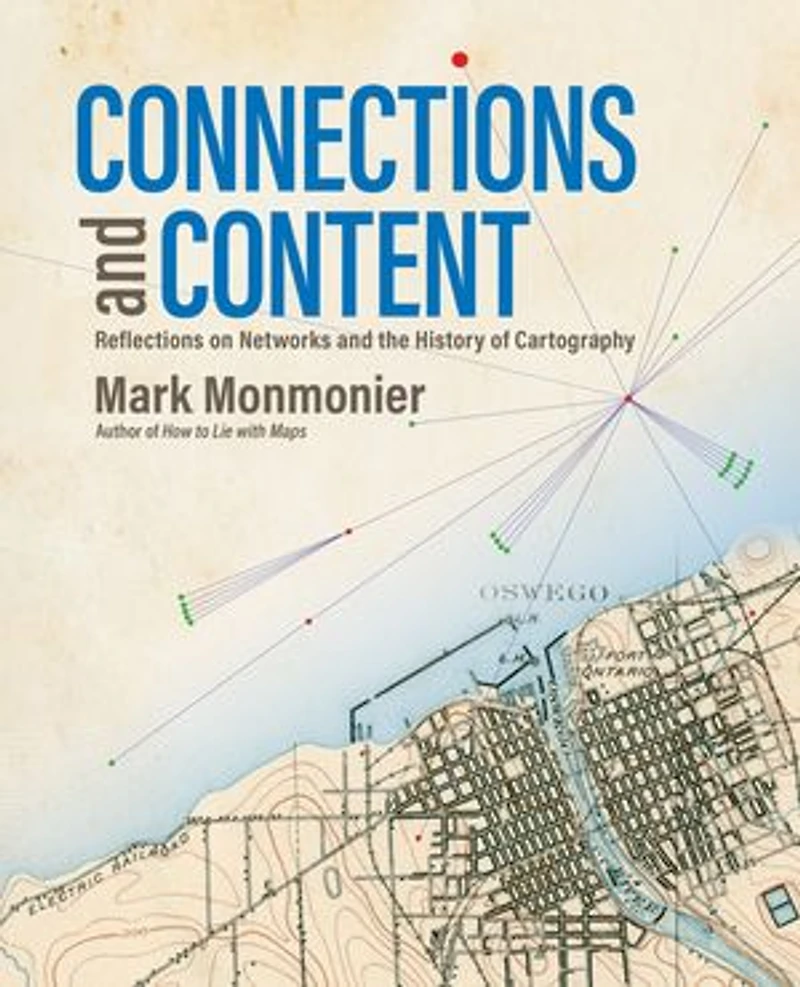
Connections and Content: Reflections on Networks and the History of Cartography
Current price: $50.39
Original price: $62.99

Connections and Content: Reflections on Networks and the History of Cartography
Current price: $50.39
Original price: $62.99
Loading Inventory...
Size: Kobo eBook
*Product information may vary - to confirm product availability, pricing, shipping and return information please contact Indigo
Behind every great map is a network and behind every great network is a map.
In Connections and Content: Reflections on Networks and the History of Cartography , cartographic cogitator Mark Monmonier shares his insights about the relationships between networks and maps. Using historical maps, he explores:
Triangulation networks that established the baselines to set a map’s scale
Astronomical observations, ellipsoids, geodetic arcs, telegraph networks, and GPS constellations that put latitude and longitude on the map
Cartographic symbols that portray a diverse range of network features
Survey networks used to situate and construct canals, railways, roads, and power lines
Postal and electronic networks that created and disseminated weather maps, and
Topological networks that underlie modern census enumeration and satellite navigation systems.
Connecting the past to the present via maps and reflection, Monmonier continues his contribution to cartographic scholarship by exploring the network's power as a unifying concept for understanding and using maps.
Behind every great map is a network and behind every great network is a map.
In Connections and Content: Reflections on Networks and the History of Cartography , cartographic cogitator Mark Monmonier shares his insights about the relationships between networks and maps. Using historical maps, he explores:
Triangulation networks that established the baselines to set a map’s scale
Astronomical observations, ellipsoids, geodetic arcs, telegraph networks, and GPS constellations that put latitude and longitude on the map
Cartographic symbols that portray a diverse range of network features
Survey networks used to situate and construct canals, railways, roads, and power lines
Postal and electronic networks that created and disseminated weather maps, and
Topological networks that underlie modern census enumeration and satellite navigation systems.
Connecting the past to the present via maps and reflection, Monmonier continues his contribution to cartographic scholarship by exploring the network's power as a unifying concept for understanding and using maps.
You May Also Like














More About Indigo at Erin Mills Town Centre
The largest book retailer in Canada also offers toys, music, home décor, gifts and lifestyle products. What's Inside...Books, Magazines, CD’s and DVD’s, Toys and Gifts, Home Accents, Electronics, Baby’s and Children’s Section, Bath and Body, Kitchen and Bedroom, Stationary Located outside in the exterior plaza.
5015 Glen Erin Dr, Mississauga, ON L5M 0R7, Canada
Find Indigo at Erin Mills Town Centre in Mississauga ON
Visit Indigo at Erin Mills Town Centre in Mississauga ON