

GIVE THE PERFECT GIFT
Erin Mills Town Centre Gift Cards are the perfect choice for your gift giving needs.Purchase gift cards at kiosks near the food court or centre court, at Guest Services, or click below to purchase online.PURCHASE HEREHome
Consent and Control the Authoritarian Workplace Lib/E: Russia China Compared
Indigo
Loading Inventory...
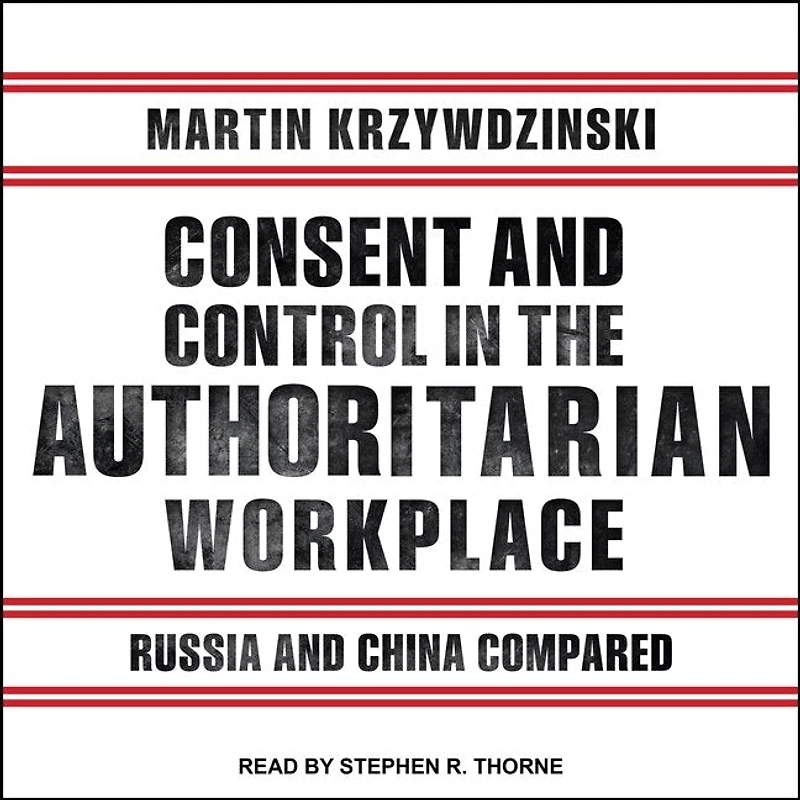
Consent and Control the Authoritarian Workplace Lib/E: Russia China Compared
Current price: $32.50

Consent and Control the Authoritarian Workplace Lib/E: Russia China Compared
Current price: $32.50
Loading Inventory...
Size: Audiobook (2018 A)
*Product information may vary - to confirm product availability, pricing, shipping and return information please contact Indigo
Today, a large proportion of the world's states are under authoritarian governments. These countries limit participation rights, both in the political sphere and in the workplace. At the same time, they have to generate consent in the workplace in order to ensure social stability and prevent the escalation of conflicts. But how do companies generate consent given that employee voice and interest representation may be limited or entirely absent? Based on a review of research literature from sociology, organizational psychology, and behavioral economics, this book develops a theory of consent generation and distinguishes three groups of consent-producing mechanisms: socialization, incentive mechanisms, and participation and interest representation. It presents an empirical analysis of how these mechanisms work in Russian and Chinese automotive factories and shows how socio-cultural factors and labor regulation explain the differences between both countries regarding consent and control in the workplace.
Today, a large proportion of the world's states are under authoritarian governments. These countries limit participation rights, both in the political sphere and in the workplace. At the same time, they have to generate consent in the workplace in order to ensure social stability and prevent the escalation of conflicts. But how do companies generate consent given that employee voice and interest representation may be limited or entirely absent? Based on a review of research literature from sociology, organizational psychology, and behavioral economics, this book develops a theory of consent generation and distinguishes three groups of consent-producing mechanisms: socialization, incentive mechanisms, and participation and interest representation. It presents an empirical analysis of how these mechanisms work in Russian and Chinese automotive factories and shows how socio-cultural factors and labor regulation explain the differences between both countries regarding consent and control in the workplace.
You May Also Like













More About Indigo at Erin Mills Town Centre
The largest book retailer in Canada also offers toys, music, home décor, gifts and lifestyle products. What's Inside...Books, Magazines, CD’s and DVD’s, Toys and Gifts, Home Accents, Electronics, Baby’s and Children’s Section, Bath and Body, Kitchen and Bedroom, Stationary Located outside in the exterior plaza.
5015 Glen Erin Dr, Mississauga, ON L5M 0R7, Canada
Find Indigo at Erin Mills Town Centre in Mississauga ON
Visit Indigo at Erin Mills Town Centre in Mississauga ON