

GIVE THE PERFECT GIFT
Erin Mills Town Centre Gift Cards are the perfect choice for your gift giving needs.Purchase gift cards at kiosks near the food court or centre court, at Guest Services, or click below to purchase online.PURCHASE HEREHome
Constantine of Rhodes, On Constantinople and the Church Holy Apostles: With a new edition Greek text by Ioannis Vassis
Indigo
Loading Inventory...
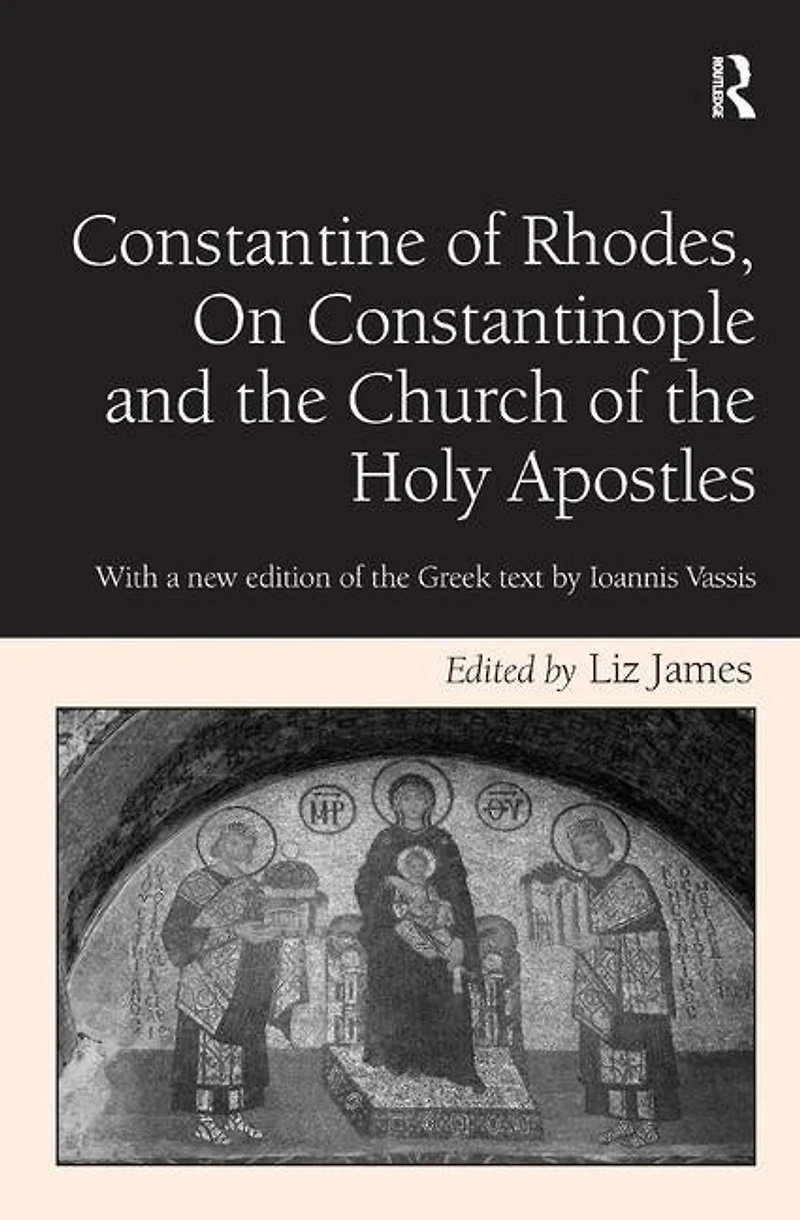
Constantine of Rhodes, On Constantinople and the Church Holy Apostles: With a new edition Greek text by Ioannis Vassis
Current price: $224.00

Constantine of Rhodes, On Constantinople and the Church Holy Apostles: With a new edition Greek text by Ioannis Vassis
Current price: $224.00
Loading Inventory...
Size: Hardcover
*Product information may vary - to confirm product availability, pricing, shipping and return information please contact Indigo
Constantine of Rhodes's tenth-century poem is an account of public monuments in Constantinople and of the Church of the Holy Apostles. In the opening section of the work, Constantine describes columns and sculptures within the city, seven of which he calls 'wonders'. In the second part of the poem, he portrays the Church of the Holy Apostles, offering an account of its architecture and internal decoration, notably the mosaics, seven of which are also depicted as 'wonders'. On one level, the poem offers an account of what was visible, a sense of city topography and, in the case of the Apostoleion, a vital description of a now-lost building. But it cannot be read as a straightforward description. Rather, Constantine's work offers insights into Byzantine perceptions of works of art. The monuments Constantine decided to portray and the ways in which he chose to describe them say as much, if not more, about the social and cultural milieu in which he operated as about the actual physical appearance of the monuments themselves. Further, the poem itself, as it survives in one fifteenth-century manuscript, raises questions: is it, in its current form, a single poem or is it made up of a compilation of Constantine's writings? This book supersedes the two previous editions of the poem, both dating to 1896, and provides the first full translation of the text. It consists of a new Greek edition of Constantine's poem, with an introductory essay, prepared by Ioannis Vassis, and a translation and commentary by a group of scholars headed by Liz James. Liz James also contributes an extensive discussion of the two distinct parts of the poem, the city monuments and the Church of the Holy Apostles.
Constantine of Rhodes's tenth-century poem is an account of public monuments in Constantinople and of the Church of the Holy Apostles. In the opening section of the work, Constantine describes columns and sculptures within the city, seven of which he calls 'wonders'. In the second part of the poem, he portrays the Church of the Holy Apostles, offering an account of its architecture and internal decoration, notably the mosaics, seven of which are also depicted as 'wonders'. On one level, the poem offers an account of what was visible, a sense of city topography and, in the case of the Apostoleion, a vital description of a now-lost building. But it cannot be read as a straightforward description. Rather, Constantine's work offers insights into Byzantine perceptions of works of art. The monuments Constantine decided to portray and the ways in which he chose to describe them say as much, if not more, about the social and cultural milieu in which he operated as about the actual physical appearance of the monuments themselves. Further, the poem itself, as it survives in one fifteenth-century manuscript, raises questions: is it, in its current form, a single poem or is it made up of a compilation of Constantine's writings? This book supersedes the two previous editions of the poem, both dating to 1896, and provides the first full translation of the text. It consists of a new Greek edition of Constantine's poem, with an introductory essay, prepared by Ioannis Vassis, and a translation and commentary by a group of scholars headed by Liz James. Liz James also contributes an extensive discussion of the two distinct parts of the poem, the city monuments and the Church of the Holy Apostles.
You May Also Like







More About Indigo at Erin Mills Town Centre
The largest book retailer in Canada also offers toys, music, home décor, gifts and lifestyle products. What's Inside...Books, Magazines, CD’s and DVD’s, Toys and Gifts, Home Accents, Electronics, Baby’s and Children’s Section, Bath and Body, Kitchen and Bedroom, Stationary Located outside in the exterior plaza.
5015 Glen Erin Dr, Mississauga, ON L5M 0R7, Canada
Find Indigo at Erin Mills Town Centre in Mississauga ON
Visit Indigo at Erin Mills Town Centre in Mississauga ON