

GIVE THE PERFECT GIFT
Erin Mills Town Centre Gift Cards are the perfect choice for your gift giving needs.Purchase gift cards at kiosks near the food court or centre court, at Guest Services, or click below to purchase online.PURCHASE HEREHome
Control
Indigo
Loading Inventory...
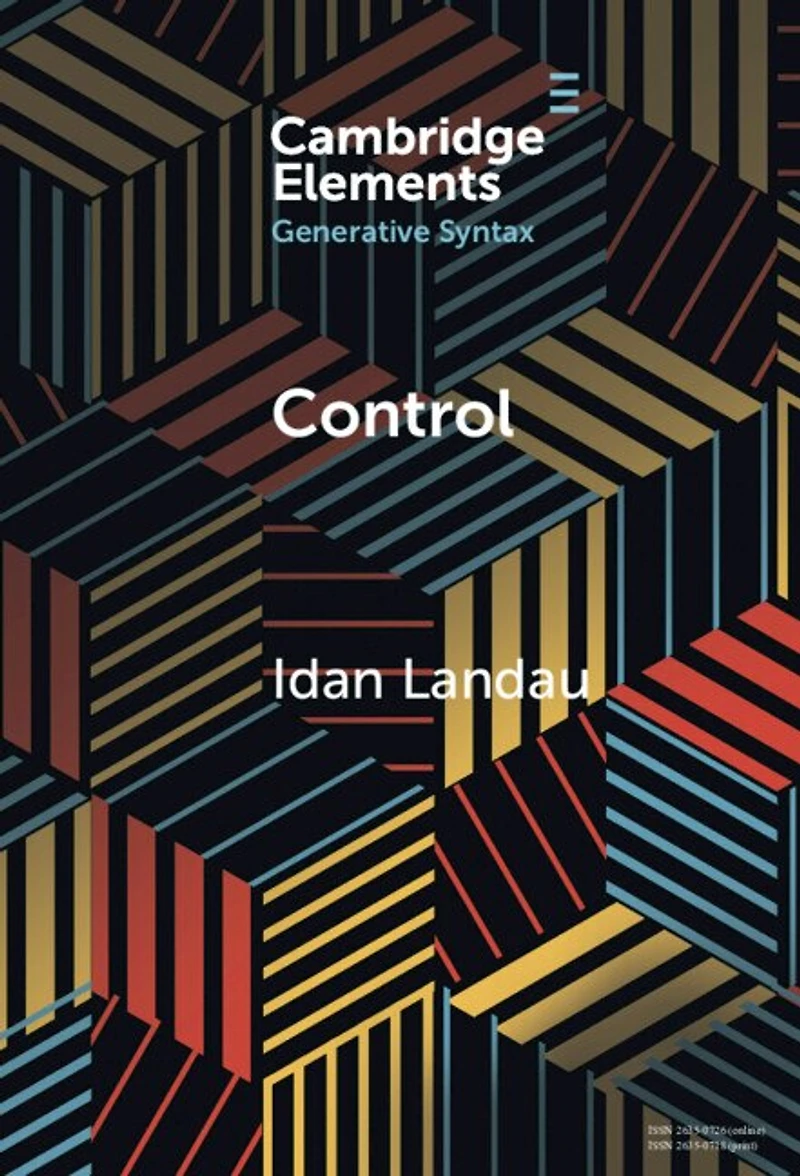
Control
Current price: $94.73

Control
Current price: $94.73
Loading Inventory...
Size: Hardcover
*Product information may vary - to confirm product availability, pricing, shipping and return information please contact Indigo
This Elements presents the major findings and theoretical advances in the area of Control. We describe the different types of control (complement, adjunct, obligatory, nonobligatory) and illustrate their profiles in several languages. It is shown that while certain features of Obligatory Control (OC) are common – nullness of PRO, nonfinite complements – they are not universal, hence should not enter its core definition. Comparing approaches to the choice of controller based on lexical meaning postulates with those based on embedding of speech acts, we conclude that the latter provide deeper insights into the core properties of OC. The fundamental semantic distinction between clauses denoting a property and those denoting a proposition proves to be important: It affects both the possibility of Partial Control in complements and the possibility of Non Obligatory Control in adjuncts. These insights are integrated in the Two-Tiered Theory of Control, laid out in the final sections.
This Elements presents the major findings and theoretical advances in the area of Control. We describe the different types of control (complement, adjunct, obligatory, nonobligatory) and illustrate their profiles in several languages. It is shown that while certain features of Obligatory Control (OC) are common – nullness of PRO, nonfinite complements – they are not universal, hence should not enter its core definition. Comparing approaches to the choice of controller based on lexical meaning postulates with those based on embedding of speech acts, we conclude that the latter provide deeper insights into the core properties of OC. The fundamental semantic distinction between clauses denoting a property and those denoting a proposition proves to be important: It affects both the possibility of Partial Control in complements and the possibility of Non Obligatory Control in adjuncts. These insights are integrated in the Two-Tiered Theory of Control, laid out in the final sections.
You May Also Like








More About Indigo at Erin Mills Town Centre
The largest book retailer in Canada also offers toys, music, home décor, gifts and lifestyle products. What's Inside...Books, Magazines, CD’s and DVD’s, Toys and Gifts, Home Accents, Electronics, Baby’s and Children’s Section, Bath and Body, Kitchen and Bedroom, Stationary Located outside in the exterior plaza.
5015 Glen Erin Dr, Mississauga, ON L5M 0R7, Canada
Find Indigo at Erin Mills Town Centre in Mississauga ON
Visit Indigo at Erin Mills Town Centre in Mississauga ON