

GIVE THE PERFECT GIFT
Erin Mills Town Centre Gift Cards are the perfect choice for your gift giving needs.Purchase gift cards at kiosks near the food court or centre court, at Guest Services, or click below to purchase online.PURCHASE HEREHome
Creating Standards: Interactions with Arabic script in 12 manuscript cultures
Indigo
Loading Inventory...
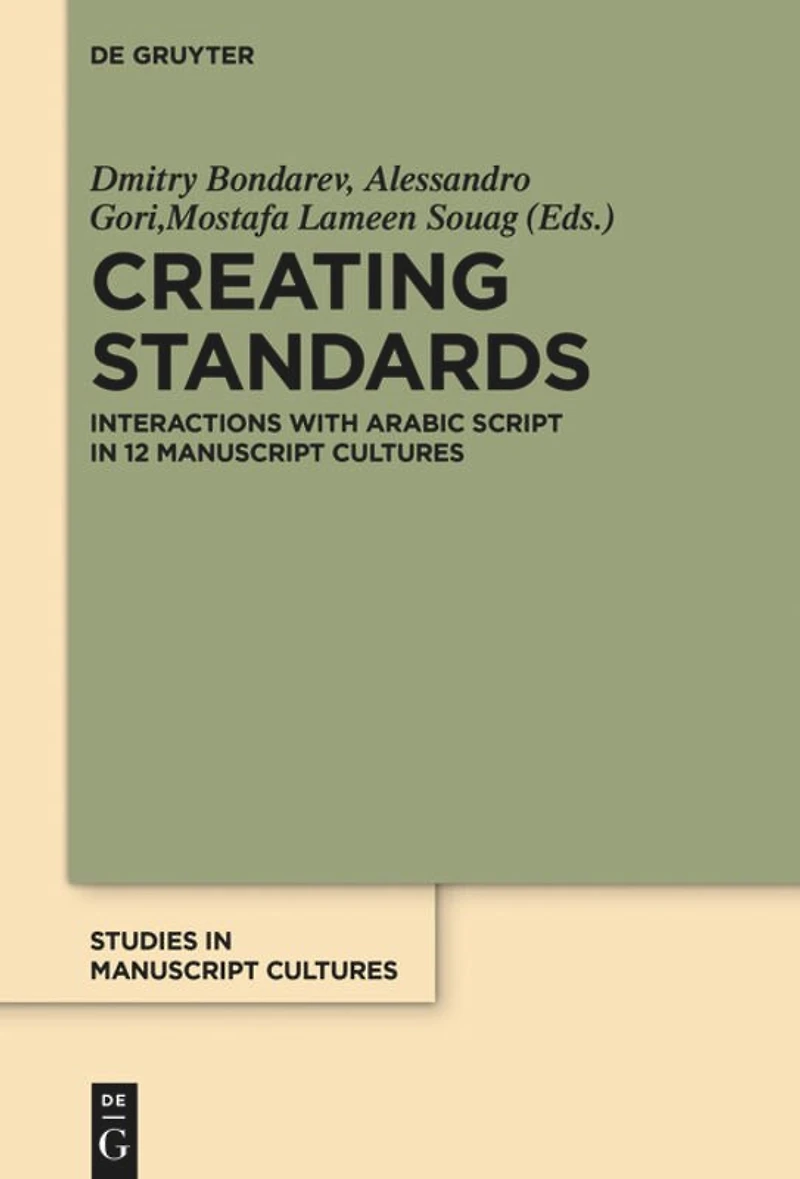
Creating Standards: Interactions with Arabic script in 12 manuscript cultures
Current price: $191.99

Creating Standards: Interactions with Arabic script in 12 manuscript cultures
Current price: $191.99
Loading Inventory...
Size: Hardcover
*Product information may vary - to confirm product availability, pricing, shipping and return information please contact Indigo
Manuscript cultures based on Arabic script feature various tendencies in standardisation of orthography, script types and layout. Unlike previous studies, this book steps outside disciplinary and regional boundaries and provides a typological cross-cultural comparison of standardisation processes in twelve Arabic-influenced writing traditions where different cultures, languages and scripts interact. A wide range of case studies give insights into the factors behind uniformity and variation in Judeo-Arabic in Hebrew script, South Palestinian Christian Arabic, New Persian, Aljamiado of the Spanish Moriscos, Ottoman Turkish, a single multilingual Ottoman manuscript, Sino-Arabic in northwest China, Malay Jawi in the Moluccas, Kanuri and Hausa in Nigeria, Kabyle in Algeria, and Ethiopian Fidäl script as used to transliterate Arabic. One of the findings of this volume is that different domains of manuscript cultures have distinct paths of standardisation, so that orthography tends to develop its own standardisation principles irrespective of norms applied to layout and script types. This book will appeal to readers interested in manuscript studies, sociolinguistics, literacy studies, and history of writing.
Manuscript cultures based on Arabic script feature various tendencies in standardisation of orthography, script types and layout. Unlike previous studies, this book steps outside disciplinary and regional boundaries and provides a typological cross-cultural comparison of standardisation processes in twelve Arabic-influenced writing traditions where different cultures, languages and scripts interact. A wide range of case studies give insights into the factors behind uniformity and variation in Judeo-Arabic in Hebrew script, South Palestinian Christian Arabic, New Persian, Aljamiado of the Spanish Moriscos, Ottoman Turkish, a single multilingual Ottoman manuscript, Sino-Arabic in northwest China, Malay Jawi in the Moluccas, Kanuri and Hausa in Nigeria, Kabyle in Algeria, and Ethiopian Fidäl script as used to transliterate Arabic. One of the findings of this volume is that different domains of manuscript cultures have distinct paths of standardisation, so that orthography tends to develop its own standardisation principles irrespective of norms applied to layout and script types. This book will appeal to readers interested in manuscript studies, sociolinguistics, literacy studies, and history of writing.
You May Also Like







More About Indigo at Erin Mills Town Centre
The largest book retailer in Canada also offers toys, music, home décor, gifts and lifestyle products. What's Inside...Books, Magazines, CD’s and DVD’s, Toys and Gifts, Home Accents, Electronics, Baby’s and Children’s Section, Bath and Body, Kitchen and Bedroom, Stationary Located outside in the exterior plaza.
5015 Glen Erin Dr, Mississauga, ON L5M 0R7, Canada
Find Indigo at Erin Mills Town Centre in Mississauga ON
Visit Indigo at Erin Mills Town Centre in Mississauga ON