

GIVE THE PERFECT GIFT
Erin Mills Town Centre Gift Cards are the perfect choice for your gift giving needs.Purchase gift cards at kiosks near the food court or centre court, at Guest Services, or click below to purchase online.PURCHASE HEREHome
Criminal Justice and Peace-making in Early Modern Italy: Governing Hatred, c.1500-c.1700
Indigo
Loading Inventory...
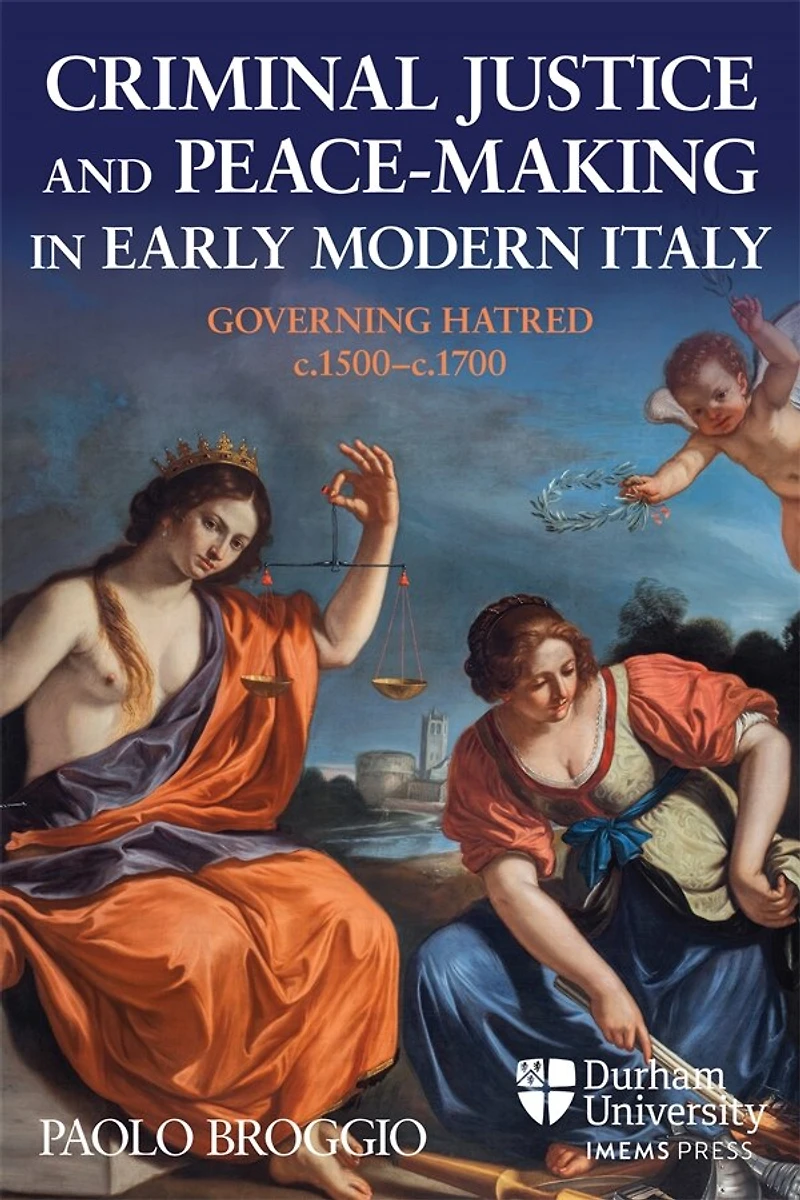
Criminal Justice and Peace-making in Early Modern Italy: Governing Hatred, c.1500-c.1700
Current price: $222.70

Criminal Justice and Peace-making in Early Modern Italy: Governing Hatred, c.1500-c.1700
Current price: $222.70
Loading Inventory...
Size: Hardcover
*Product information may vary - to confirm product availability, pricing, shipping and return information please contact Indigo
An exceptional study of private peace pacts in early modern Italy that challenges earlier notions of the place of these private agreements in the development of the courts and state.
Private settlements were among the most prominent yet least conspicuous aspects of justice in early modern Europe. Traditionally seen as incompatible with our notions of judicial modernity, these settlements reflected a deeply ingrained culture of negotiation and transaction-one that often viewed resolution by litigation with extreme scepticism. However, rather than existing in opposition to sovereign justice, this practice of private settlement coexisted with the implacable authority of rulers who alternated between exemplary punishments and royal pardons to maintain social harmony.
In this English translation of his seminal study, Governare l'odio. Pace e giustizia criminale nell'Italia moderna (secoli XVI-XVII) , Paolo Broggio shows how private settlements were far from being a purely benevolent mechanism of reconciliation, often carrying unsettling similarities to institutional coercion and even acts of revenge. Judicial authorities are revealed as not only tolerating these private agreements but shown to have actively facilitated and manipulated them as a means of exerting their control within a community. Religious justifications further lent these agreements a veneer of moral obligation, masking the underlying pressures at play. Through detailed examples such as proceedings in the Papal States, Broggio explores how courts encouraged settlements not only to manage caseloads but to also reinforce existing social hierarchies and power structures.
This expansive study re-examines the role of peace settlements in early modern justice, revealing them as a fundamental yet coercive tool of governance rather than a simple, private, alternative to judicial authority.
An exceptional study of private peace pacts in early modern Italy that challenges earlier notions of the place of these private agreements in the development of the courts and state.
Private settlements were among the most prominent yet least conspicuous aspects of justice in early modern Europe. Traditionally seen as incompatible with our notions of judicial modernity, these settlements reflected a deeply ingrained culture of negotiation and transaction-one that often viewed resolution by litigation with extreme scepticism. However, rather than existing in opposition to sovereign justice, this practice of private settlement coexisted with the implacable authority of rulers who alternated between exemplary punishments and royal pardons to maintain social harmony.
In this English translation of his seminal study, Governare l'odio. Pace e giustizia criminale nell'Italia moderna (secoli XVI-XVII) , Paolo Broggio shows how private settlements were far from being a purely benevolent mechanism of reconciliation, often carrying unsettling similarities to institutional coercion and even acts of revenge. Judicial authorities are revealed as not only tolerating these private agreements but shown to have actively facilitated and manipulated them as a means of exerting their control within a community. Religious justifications further lent these agreements a veneer of moral obligation, masking the underlying pressures at play. Through detailed examples such as proceedings in the Papal States, Broggio explores how courts encouraged settlements not only to manage caseloads but to also reinforce existing social hierarchies and power structures.
This expansive study re-examines the role of peace settlements in early modern justice, revealing them as a fundamental yet coercive tool of governance rather than a simple, private, alternative to judicial authority.
You May Also Like







More About Indigo at Erin Mills Town Centre
The largest book retailer in Canada also offers toys, music, home décor, gifts and lifestyle products. What's Inside...Books, Magazines, CD’s and DVD’s, Toys and Gifts, Home Accents, Electronics, Baby’s and Children’s Section, Bath and Body, Kitchen and Bedroom, Stationary Located outside in the exterior plaza.
5015 Glen Erin Dr, Mississauga, ON L5M 0R7, Canada
Find Indigo at Erin Mills Town Centre in Mississauga ON
Visit Indigo at Erin Mills Town Centre in Mississauga ON