

GIVE THE PERFECT GIFT
Erin Mills Town Centre Gift Cards are the perfect choice for your gift giving needs.Purchase gift cards at kiosks near the food court or centre court, at Guest Services, or click below to purchase online.PURCHASE HEREHome
Data Driven Strategies: Theory and Applications
Indigo
Loading Inventory...
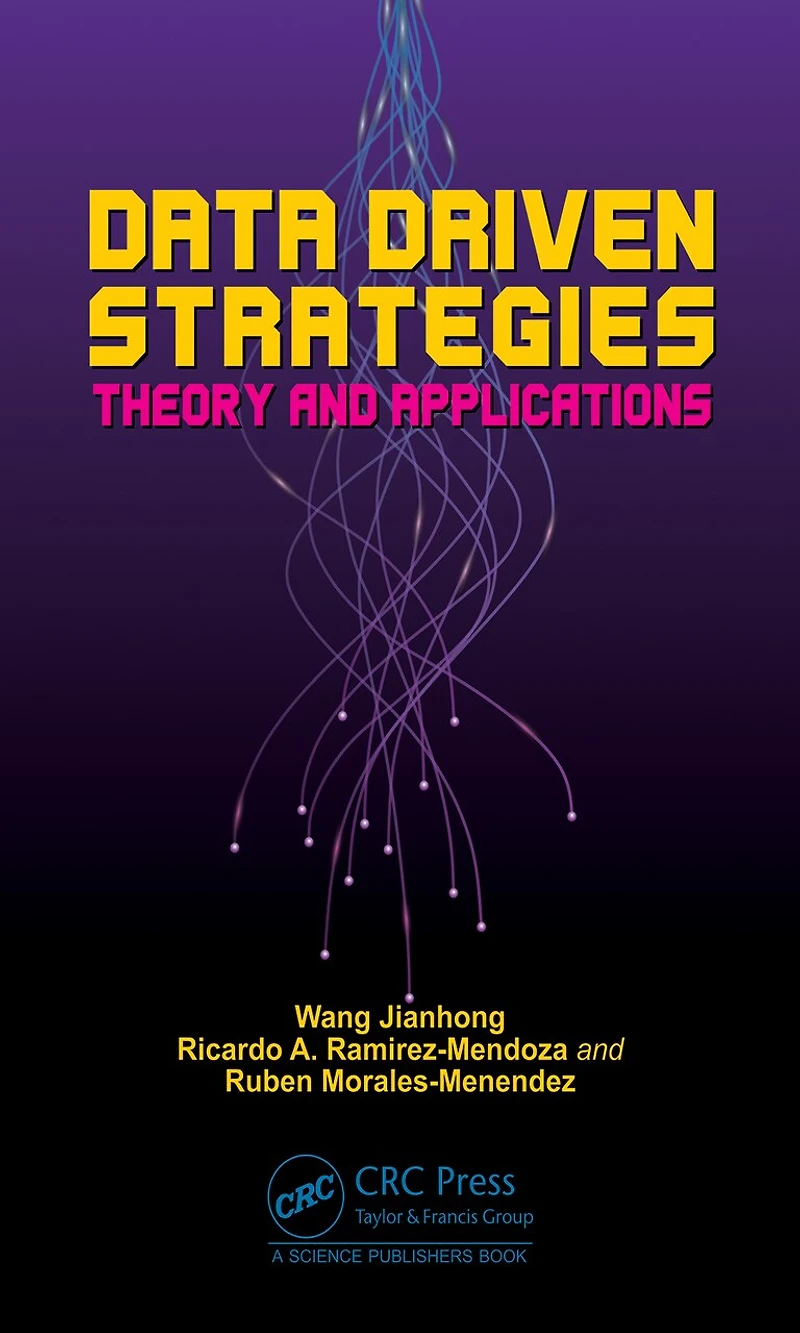
Data Driven Strategies: Theory and Applications
Current price: $333.50

Data Driven Strategies: Theory and Applications
Current price: $333.50
Loading Inventory...
Size: Hardcover
*Product information may vary - to confirm product availability, pricing, shipping and return information please contact Indigo
A key challenge in science and engineering is to provide a quantitative description of the systems under investigation, leveraging the noisy data collected. Such a description may be a complete mathematical model or a mechanism to return controllers corresponding to new, unseen inputs. Recent advances in the theories are described in detail, along with their applications in engineering. The book aims to develop model-free system analysis and control strategies, i.e., data-driven control from theoretical analysis and engineering applications based only on measured data. The study aims to develop system identification, and combination in advanced control theory, i.e., data-driven control strategy as system and controller are generated from measured data directly. The book reviews the development of system identification and its combination in advanced control theory, i.e., data-driven control strategy, as they all depend on measured data. Firstly, data-driven identification is developed for the closed-loop, nonlinear system and model validation, i.e., obtaining model descriptions from measured data. Secondly, the data-driven idea is combined with some control strategies to be considered data-driven control strategies, such as data-driven model predictive control, data-driven iterative tuning control, and data-driven subspace predictive control. Thirdly data-driven identification and data-driven control strategies are applied to interested engineering. In this context, the book provides algorithms to perform state estimation of dynamical systems from noisy data and some convex optimization algorithms through identification and control problems.
A key challenge in science and engineering is to provide a quantitative description of the systems under investigation, leveraging the noisy data collected. Such a description may be a complete mathematical model or a mechanism to return controllers corresponding to new, unseen inputs. Recent advances in the theories are described in detail, along with their applications in engineering. The book aims to develop model-free system analysis and control strategies, i.e., data-driven control from theoretical analysis and engineering applications based only on measured data. The study aims to develop system identification, and combination in advanced control theory, i.e., data-driven control strategy as system and controller are generated from measured data directly. The book reviews the development of system identification and its combination in advanced control theory, i.e., data-driven control strategy, as they all depend on measured data. Firstly, data-driven identification is developed for the closed-loop, nonlinear system and model validation, i.e., obtaining model descriptions from measured data. Secondly, the data-driven idea is combined with some control strategies to be considered data-driven control strategies, such as data-driven model predictive control, data-driven iterative tuning control, and data-driven subspace predictive control. Thirdly data-driven identification and data-driven control strategies are applied to interested engineering. In this context, the book provides algorithms to perform state estimation of dynamical systems from noisy data and some convex optimization algorithms through identification and control problems.
You May Also Like







More About Indigo at Erin Mills Town Centre
The largest book retailer in Canada also offers toys, music, home décor, gifts and lifestyle products. What's Inside...Books, Magazines, CD’s and DVD’s, Toys and Gifts, Home Accents, Electronics, Baby’s and Children’s Section, Bath and Body, Kitchen and Bedroom, Stationary Located outside in the exterior plaza.
5015 Glen Erin Dr, Mississauga, ON L5M 0R7, Canada
Find Indigo at Erin Mills Town Centre in Mississauga ON
Visit Indigo at Erin Mills Town Centre in Mississauga ON