

GIVE THE PERFECT GIFT
Erin Mills Town Centre Gift Cards are the perfect choice for your gift giving needs.Purchase gift cards at kiosks near the food court or centre court, at Guest Services, or click below to purchase online.PURCHASE HEREHome
De Anima: R.D. Hicks' original full translation & introduction (Aziloth Books)
Indigo
Loading Inventory...
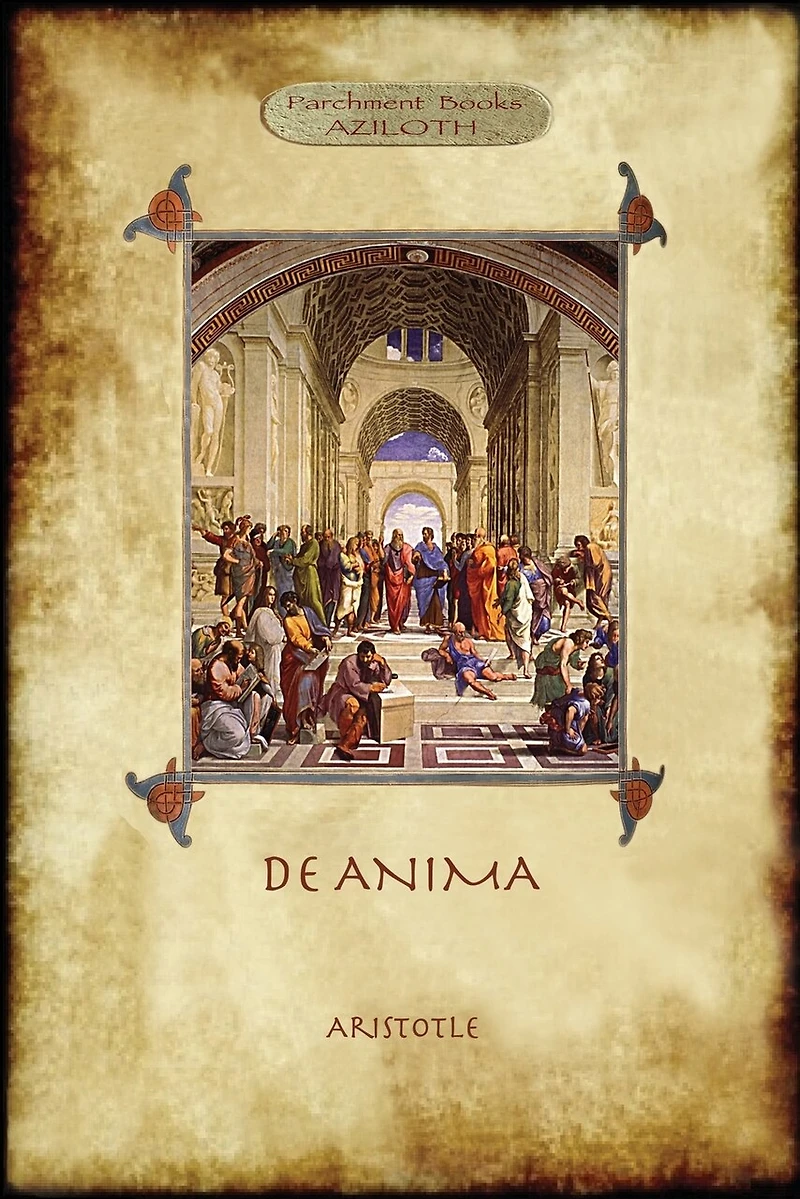
De Anima: R.D. Hicks' original full translation & introduction (Aziloth Books)
Current price: $16.90

De Anima: R.D. Hicks' original full translation & introduction (Aziloth Books)
Current price: $16.90
Loading Inventory...
Size: Paperback
*Product information may vary - to confirm product availability, pricing, shipping and return information please contact Indigo
Aristotle of Stagira was arguably the most famous of all Greek Philosophers. A pupil of Plato's Academy, he set up his own school and, unlike Plato, he emphasized natural philosophy, studying the heavens (he believed the earth to be spherical) and making meticulous dissections of many animals, by which he constructed a surprisingly modern system of classification. A true polymath, Aristotle's oeuvre comprises 150 volumes of work on a host of subjects, from politics to poetry, through ethics, theatre, music, biology and logic to physics and metaphysics. In 'De Anima', Aristotle focuses his extraordinary intellect upon the very centre of our being. What, he asks, is the Soul? How does it come to be? What is its nature and attributes? Is it immortal? Using logic and close reasoning, he constructs a comprehensive account of the soul's facets and functions, describing the manner in which the many physical attributes of corporeal existence are mediated by the intangible, elusive soul. R. D. Hicks was a classicist and Fellow of Trinity College, Cambridge University. His original translation covers all three books of 'De Anima' and is preceded by a 40-page introduction, giving the reader a clear perspective on Greek thought in Aristotle's time. A must for all those interested in Greek Classics and the development of Western Philosophy.
Aristotle of Stagira was arguably the most famous of all Greek Philosophers. A pupil of Plato's Academy, he set up his own school and, unlike Plato, he emphasized natural philosophy, studying the heavens (he believed the earth to be spherical) and making meticulous dissections of many animals, by which he constructed a surprisingly modern system of classification. A true polymath, Aristotle's oeuvre comprises 150 volumes of work on a host of subjects, from politics to poetry, through ethics, theatre, music, biology and logic to physics and metaphysics. In 'De Anima', Aristotle focuses his extraordinary intellect upon the very centre of our being. What, he asks, is the Soul? How does it come to be? What is its nature and attributes? Is it immortal? Using logic and close reasoning, he constructs a comprehensive account of the soul's facets and functions, describing the manner in which the many physical attributes of corporeal existence are mediated by the intangible, elusive soul. R. D. Hicks was a classicist and Fellow of Trinity College, Cambridge University. His original translation covers all three books of 'De Anima' and is preceded by a 40-page introduction, giving the reader a clear perspective on Greek thought in Aristotle's time. A must for all those interested in Greek Classics and the development of Western Philosophy.
You May Also Like







More About Indigo at Erin Mills Town Centre
The largest book retailer in Canada also offers toys, music, home décor, gifts and lifestyle products. What's Inside...Books, Magazines, CD’s and DVD’s, Toys and Gifts, Home Accents, Electronics, Baby’s and Children’s Section, Bath and Body, Kitchen and Bedroom, Stationary Located outside in the exterior plaza.
5015 Glen Erin Dr, Mississauga, ON L5M 0R7, Canada
Find Indigo at Erin Mills Town Centre in Mississauga ON
Visit Indigo at Erin Mills Town Centre in Mississauga ON