

GIVE THE PERFECT GIFT
Erin Mills Town Centre Gift Cards are the perfect choice for your gift giving needs.Purchase gift cards at kiosks near the food court or centre court, at Guest Services, or click below to purchase online.PURCHASE HEREHome
Decolonising Criminology: A Toolkit for Inclusion
Indigo
Loading Inventory...
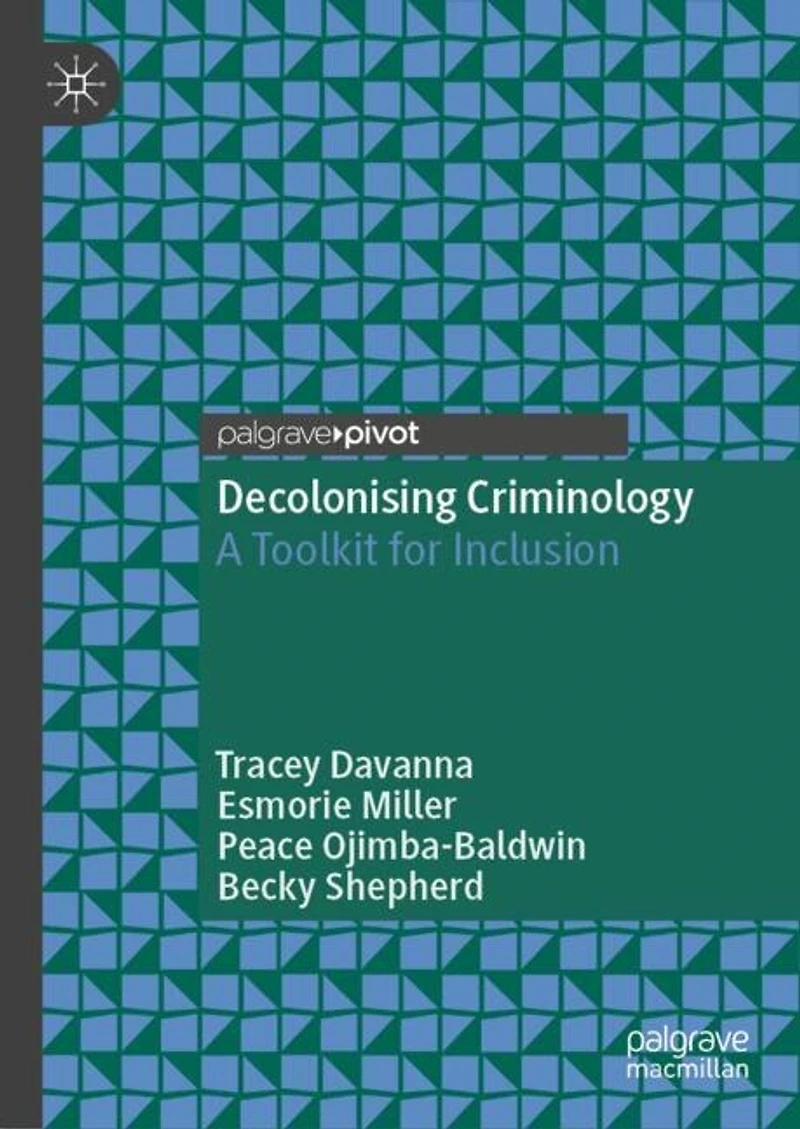
Decolonising Criminology: A Toolkit for Inclusion
Current price: $72.95

Decolonising Criminology: A Toolkit for Inclusion
Current price: $72.95
Loading Inventory...
Size: Hardcover
*Product information may vary - to confirm product availability, pricing, shipping and return information please contact Indigo
This book contends with the question of how to decolonise criminology and discusses a number of key aspects of the debate. It sets out to consider differing aspects of criminology, including its history as a discipline, its context within the empire, its location within higher education (a system itself still steeped in colonial ideas and practices) and its relationship to criminal justice systems, with their own well-documented racially mediated brutality. It aims to expand the criminological lens and seek ways to enhance participation within criminological debate of those groups who have been excluded from participation and power. This book aims to follow a path already established by scholars in the global South, as well as engaging with marginalised communities within the global South who have not yet been fully accepted into the academy. It outlines a practical toolkit to support higher education institutions to decolonise their criminology curricula. It considers what the decolonial endeavour means within academic criminology, criminal justice-related professionals and within communities.
This book contends with the question of how to decolonise criminology and discusses a number of key aspects of the debate. It sets out to consider differing aspects of criminology, including its history as a discipline, its context within the empire, its location within higher education (a system itself still steeped in colonial ideas and practices) and its relationship to criminal justice systems, with their own well-documented racially mediated brutality. It aims to expand the criminological lens and seek ways to enhance participation within criminological debate of those groups who have been excluded from participation and power. This book aims to follow a path already established by scholars in the global South, as well as engaging with marginalised communities within the global South who have not yet been fully accepted into the academy. It outlines a practical toolkit to support higher education institutions to decolonise their criminology curricula. It considers what the decolonial endeavour means within academic criminology, criminal justice-related professionals and within communities.
You May Also Like








More About Indigo at Erin Mills Town Centre
The largest book retailer in Canada also offers toys, music, home décor, gifts and lifestyle products. What's Inside...Books, Magazines, CD’s and DVD’s, Toys and Gifts, Home Accents, Electronics, Baby’s and Children’s Section, Bath and Body, Kitchen and Bedroom, Stationary Located outside in the exterior plaza.
5015 Glen Erin Dr, Mississauga, ON L5M 0R7, Canada
Find Indigo at Erin Mills Town Centre in Mississauga ON
Visit Indigo at Erin Mills Town Centre in Mississauga ON