

GIVE THE PERFECT GIFT
Erin Mills Town Centre Gift Cards are the perfect choice for your gift giving needs.Purchase gift cards at kiosks near the food court or centre court, at Guest Services, or click below to purchase online.PURCHASE HEREHome
Deep Learning for Seismic Data Enhancement and Representation
Indigo
Loading Inventory...
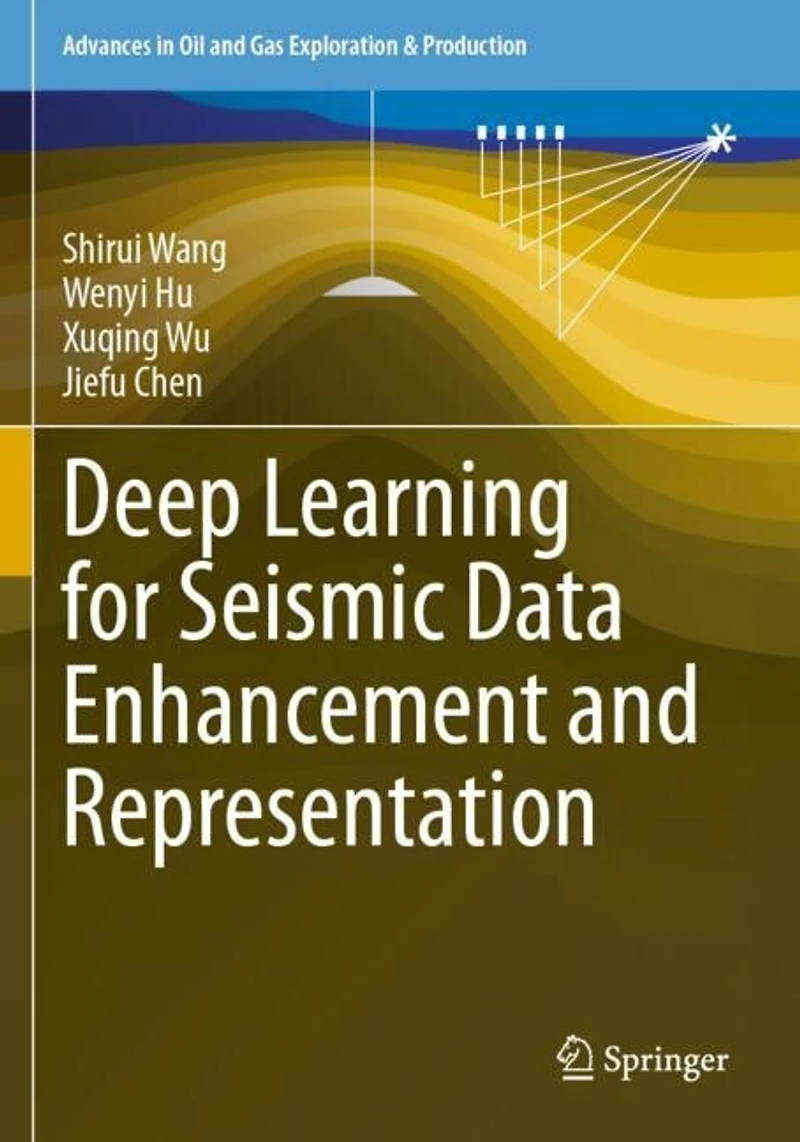
Deep Learning for Seismic Data Enhancement and Representation
Current price: $291.95

Deep Learning for Seismic Data Enhancement and Representation
Current price: $291.95
Loading Inventory...
Size: Paperback
*Product information may vary - to confirm product availability, pricing, shipping and return information please contact Indigo
Seismic imaging is a key component of subsurface exploration, and it depends on a high-quality seismic data acquisition system with effective seismic processing algorithms. Seismic data quality concerns various factors such as acquisition design, environmental constraints, sampling resolution, and noises. The focus of this book is to investigate efficient seismic data representation and signal enhancement solutions by leveraging the powerful feature engineering capability of deep learning. The book delves into seismic data representation and enhancement issues, ranging from seismic acquisition design to subsequent quality improvement and compression technologies. Given the challenges of obtaining suitable labeled training datasets for seismic data processing problems, we concentrate on exploring deep learning approaches that eliminate the need for labels. We combined novel deep learning techniques with conventional seismic data processing methods, and construct networks and frameworks tailored for seismic data processing. The editors and authors of this book come from both academia and industry with hands-on experiences in seismic data processing and imaging.
Seismic imaging is a key component of subsurface exploration, and it depends on a high-quality seismic data acquisition system with effective seismic processing algorithms. Seismic data quality concerns various factors such as acquisition design, environmental constraints, sampling resolution, and noises. The focus of this book is to investigate efficient seismic data representation and signal enhancement solutions by leveraging the powerful feature engineering capability of deep learning. The book delves into seismic data representation and enhancement issues, ranging from seismic acquisition design to subsequent quality improvement and compression technologies. Given the challenges of obtaining suitable labeled training datasets for seismic data processing problems, we concentrate on exploring deep learning approaches that eliminate the need for labels. We combined novel deep learning techniques with conventional seismic data processing methods, and construct networks and frameworks tailored for seismic data processing. The editors and authors of this book come from both academia and industry with hands-on experiences in seismic data processing and imaging.
You May Also Like















More About Indigo at Erin Mills Town Centre
The largest book retailer in Canada also offers toys, music, home décor, gifts and lifestyle products. What's Inside...Books, Magazines, CD’s and DVD’s, Toys and Gifts, Home Accents, Electronics, Baby’s and Children’s Section, Bath and Body, Kitchen and Bedroom, Stationary Located outside in the exterior plaza.
5015 Glen Erin Dr, Mississauga, ON L5M 0R7, Canada
Find Indigo at Erin Mills Town Centre in Mississauga ON
Visit Indigo at Erin Mills Town Centre in Mississauga ON