

GIVE THE PERFECT GIFT
Erin Mills Town Centre Gift Cards are the perfect choice for your gift giving needs.Purchase gift cards at kiosks near the food court or centre court, at Guest Services, or click below to purchase online.PURCHASE HEREHome
Development of a Numerical Simulation Method for Rocky Body Impacts and Theoretical Analysis Asteroidal Shapes
Indigo
Loading Inventory...
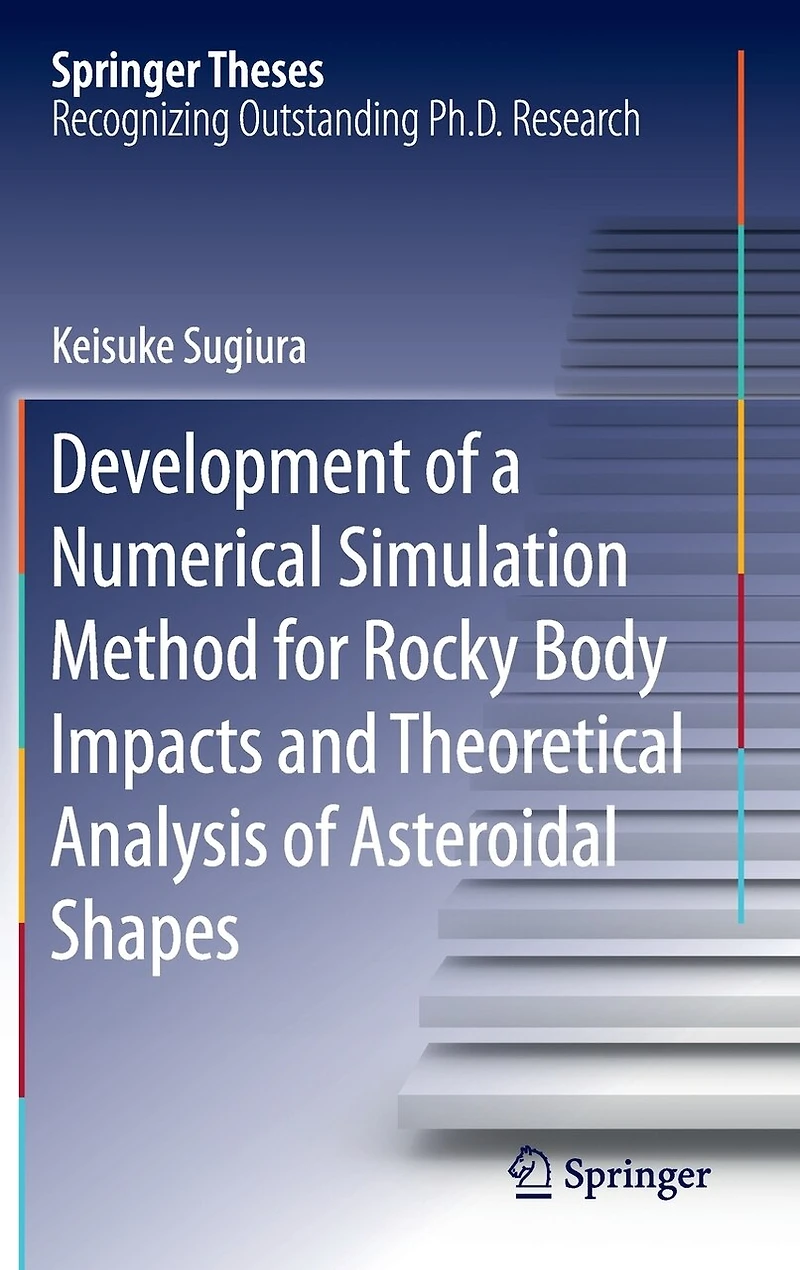
Development of a Numerical Simulation Method for Rocky Body Impacts and Theoretical Analysis Asteroidal Shapes
Current price: $233.95

Development of a Numerical Simulation Method for Rocky Body Impacts and Theoretical Analysis Asteroidal Shapes
Current price: $233.95
Loading Inventory...
Size: Hardcover
*Product information may vary - to confirm product availability, pricing, shipping and return information please contact Indigo
This book describes numerical simulations of collisions between asteroids, based on a unique numerical code developed by the author. The code accurately solves the elastic dynamic equations and describes the effects of fracture and friction, which makes it possible to investigate the shapes of impact outcomes produced by asteroid collisions and subsequent gravitational accumulation of fragments.
The author parallelizes the code with high parallelization efficiency; accordingly, it can be used to conduct high-resolution simulations with the aid of supercomputers and clarify the shapes of small remnants produced through the catastrophic destruction of asteroids. The author demonstrates that flat asteroids can only be produced by impacts involving objects with similar mass and low velocity, which suggests that the flat asteroids in our solar system were created in the planet formation era and have kept their shapes until today. The author also shows that asteroid collisions under certain conditions can produce the extremely elongated shape of an interstellar minor body, 1I/'Oumuamua. In brief, the book offers a comprehensive investigation of asteroid impacts and shapes, making it a uniquely valuable resource.
This book describes numerical simulations of collisions between asteroids, based on a unique numerical code developed by the author. The code accurately solves the elastic dynamic equations and describes the effects of fracture and friction, which makes it possible to investigate the shapes of impact outcomes produced by asteroid collisions and subsequent gravitational accumulation of fragments.
The author parallelizes the code with high parallelization efficiency; accordingly, it can be used to conduct high-resolution simulations with the aid of supercomputers and clarify the shapes of small remnants produced through the catastrophic destruction of asteroids. The author demonstrates that flat asteroids can only be produced by impacts involving objects with similar mass and low velocity, which suggests that the flat asteroids in our solar system were created in the planet formation era and have kept their shapes until today. The author also shows that asteroid collisions under certain conditions can produce the extremely elongated shape of an interstellar minor body, 1I/'Oumuamua. In brief, the book offers a comprehensive investigation of asteroid impacts and shapes, making it a uniquely valuable resource.
You May Also Like







More About Indigo at Erin Mills Town Centre
The largest book retailer in Canada also offers toys, music, home décor, gifts and lifestyle products. What's Inside...Books, Magazines, CD’s and DVD’s, Toys and Gifts, Home Accents, Electronics, Baby’s and Children’s Section, Bath and Body, Kitchen and Bedroom, Stationary Located outside in the exterior plaza.
5015 Glen Erin Dr, Mississauga, ON L5M 0R7, Canada
Find Indigo at Erin Mills Town Centre in Mississauga ON
Visit Indigo at Erin Mills Town Centre in Mississauga ON