

GIVE THE PERFECT GIFT
Erin Mills Town Centre Gift Cards are the perfect choice for your gift giving needs.Purchase gift cards at kiosks near the food court or centre court, at Guest Services, or click below to purchase online.PURCHASE HEREHome
Differential Equations and Population Dynamics I: Introductory Approaches
Indigo
Loading Inventory...
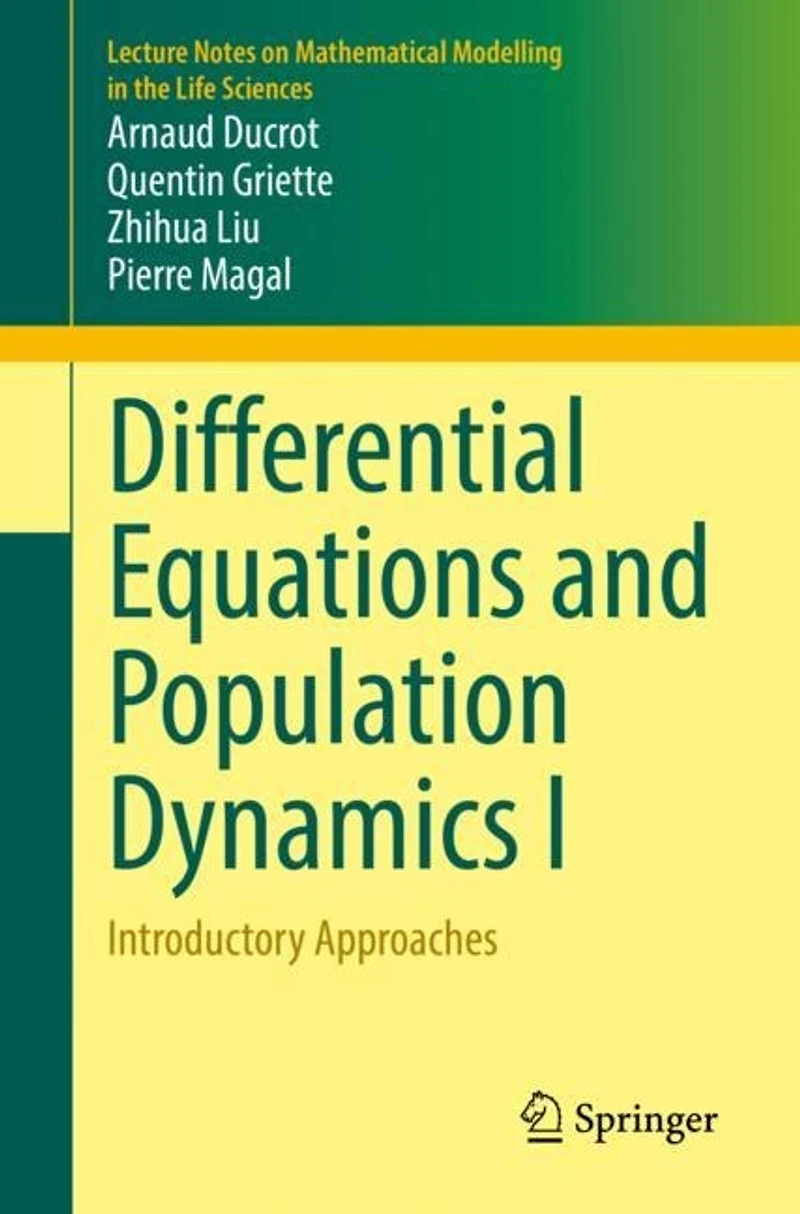
Differential Equations and Population Dynamics I: Introductory Approaches
Current price: $80.50

Differential Equations and Population Dynamics I: Introductory Approaches
Current price: $80.50
Loading Inventory...
Size: Paperback
*Product information may vary - to confirm product availability, pricing, shipping and return information please contact Indigo
This book presents the basic theoretical concepts of dynamical systems with applications in population dynamics. Existence, uniqueness and stability of solutions, global attractors, bifurcations, center manifold and normal form theories are discussed with cutting-edge applications, including a Holling's predator-prey model with handling and searching predators and projecting the epidemic forward with varying level of public health interventions for COVID-19. As an interdisciplinary text, this book aims at bridging the gap between mathematics, biology and medicine by integrating relevant concepts from these subject areas, making it self-sufficient for the reader. It will be a valuable resource to graduate and advance undergraduate students for interdisciplinary research in the area of mathematics and population dynamics.
This book presents the basic theoretical concepts of dynamical systems with applications in population dynamics. Existence, uniqueness and stability of solutions, global attractors, bifurcations, center manifold and normal form theories are discussed with cutting-edge applications, including a Holling's predator-prey model with handling and searching predators and projecting the epidemic forward with varying level of public health interventions for COVID-19. As an interdisciplinary text, this book aims at bridging the gap between mathematics, biology and medicine by integrating relevant concepts from these subject areas, making it self-sufficient for the reader. It will be a valuable resource to graduate and advance undergraduate students for interdisciplinary research in the area of mathematics and population dynamics.
You May Also Like








More About Indigo at Erin Mills Town Centre
The largest book retailer in Canada also offers toys, music, home décor, gifts and lifestyle products. What's Inside...Books, Magazines, CD’s and DVD’s, Toys and Gifts, Home Accents, Electronics, Baby’s and Children’s Section, Bath and Body, Kitchen and Bedroom, Stationary Located outside in the exterior plaza.
5015 Glen Erin Dr, Mississauga, ON L5M 0R7, Canada
Find Indigo at Erin Mills Town Centre in Mississauga ON
Visit Indigo at Erin Mills Town Centre in Mississauga ON